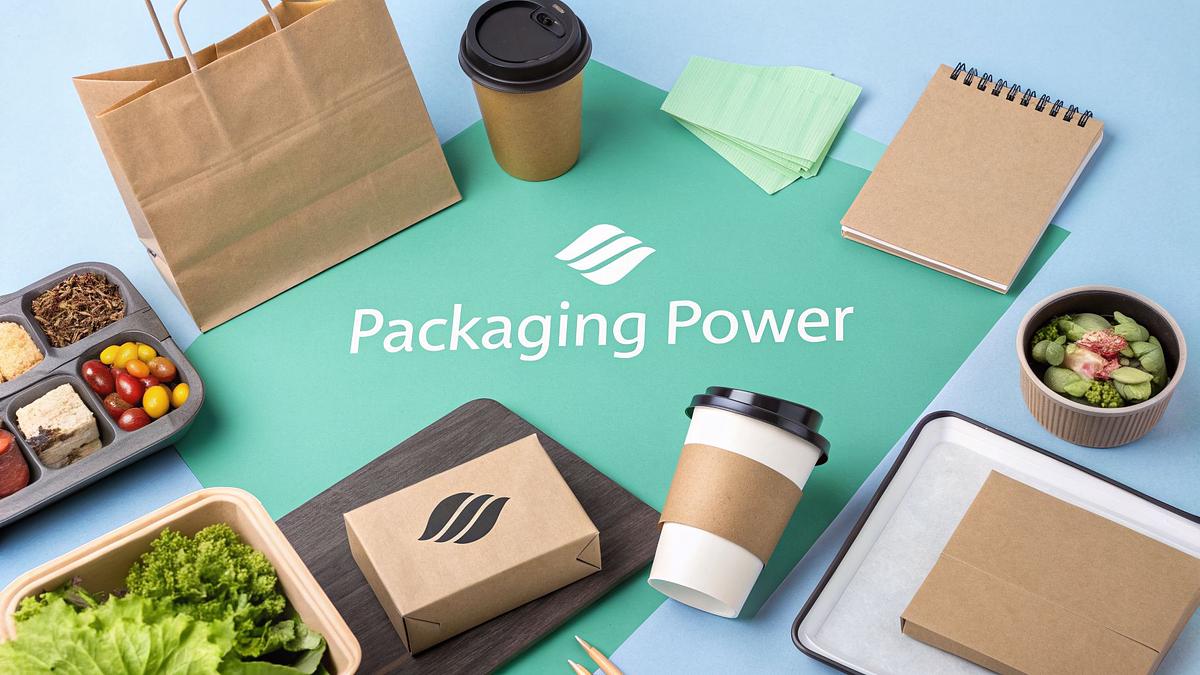
Your food packaging is so much more than just a logo on a box. It’s a powerful, often overlooked, marketing tool that transforms every single takeaway order into a walking advertisement for your business. For any UK hospitality brand, from a city café to a village pub, it’s the crucial first impression, telegraphing your quality, values, and professionalism before a customer even takes their first bite.
Your Packaging Is Your Secret Salesperson

Think about the last great takeaway coffee you grabbed. The cup probably felt just as premium as the drink inside, didn't it? That’s food packaging branding in action. It's the art and science of using everything—from cups and containers to bags and napkins—to tell your brand’s story and craft an experience that sticks.
In the fiercely competitive UK food service scene, you have to find ways to stand out. Your branded packaging works tirelessly long after the sale is complete, travelling through offices, parks, and busy high streets. It becomes your silent salesperson, a mobile billboard that reinforces your identity and catches the eye of potential new customers. A well-designed takeaway bag or coffee cup doesn’t just hold food; it builds brand recognition with every single glance.
It’s Not Just a Container
Treating your packaging as a simple operational cost is one of the biggest missed opportunities for a hospitality business. Reframe it as a core part of your marketing budget. The right packaging can help justify a premium price point, communicate your unwavering commitment to quality, and genuinely foster customer loyalty.
This is especially true when we talk about sustainability. A sturdy, recyclable paper container or a compostable coffee cup subtly tells your customers you care about more than just the bottom line. It shows you're a responsible business, which is a significant factor for many UK consumers.
For any UK food business, the benefits are tangible:
* Boosts Brand Recognition: A consistent, professional look across all your packaging—from cups to napkins—makes your brand instantly identifiable on a crowded high street.
* Improves the Customer Experience: Let's be honest, flimsy packaging that leaks is a disaster. Sturdy, well-designed packaging protects food quality and makes for a much more pleasant takeaway experience.
* Showcases Your Values: Using eco-friendly materials shows your commitment to sustainability—a value that a growing number of UK consumers genuinely care about and actively seek out.
For a takeaway customer, your packaging is often the only physical piece of your brand they interact with. Make it count. It’s a real touchpoint that builds a connection and encourages them to snap a picture and share their experience online.
The Impact on the UK Market
You can see just how important this is by looking at market trends. Here in the UK, food applications represent the single largest segment of the entire packaging industry, driven by the constant need for cafes, restaurants, and takeaways to differentiate themselves.
With more and more consumers actively choosing businesses based on their packaging's environmental impact, smart, sustainable branding isn't just a fleeting trend—it's essential for survival and growth.
You can explore a wide range of customisable and eco-friendly branded products to get a feel for what’s possible. The statistics on the UK packaging market are clear: food branding is leading the charge.
Building Your Packaging Strategy From the Ground Up
Before you even think about logos and colours, a successful packaging project needs a solid plan. It's this strategic thinking that turns a simple branded box into one of your hardest-working marketing assets.
The first question you should ask isn't "What should it look like?" but "What do I need this packaging to do for my business?" The answer to that will guide every single decision you make from here on out. For most UK food service businesses, the main objective usually falls into one of three buckets.
- Boosting Brand Recognition: Is your primary aim to get your brand seen all over town? You'll want packaging that's visually striking and begs to be shared on Instagram.
- Highlighting Sustainability: Maybe your entire brand is built on being eco-conscious. If that's the case, your packaging has to walk the talk, reflecting that commitment through the materials you choose and how you talk about them.
- Improving Customer Experience: For a lot of takeaways, the goal is simply practical excellence. Does the packaging protect the food, keep it at the right temperature, and give the customer a brilliant, hassle-free experience when they open it?
Getting Inside Your Customer's Head
Once your main goal is clear, you need to see it through your customers' eyes. Different people value different things, so creating a few simple customer personas can be a game-changer. It helps you focus your design and make sure it genuinely connects.
Think about who walks through your door in the UK:
- The Eco-Conscious Student: This person is all about sustainability. They’ll actively choose a café using compostable cups or kraft paper bags and are very likely to post about their "green" purchase online.
- The Time-Poor Office Worker: For this customer, convenience is everything. They need packaging that’s a breeze to carry, won’t leak all over their bag, and keeps their lunch warm until they get back to their desk.
- The Foodie Instagrammer: They see food as a shareable experience. They’re looking for unique, beautifully designed packaging that makes for a great photo.
When you truly understand who you're serving, you can design packaging that resonates on a much deeper level. It stops being just a container and becomes a memorable part of their experience with your brand.
Facing the Budget Head-On
Let's be realistic—for any small or independent food business, the budget is a massive piece of the puzzle. The good news? Custom-branded food packaging is more accessible than it's ever been. The trick is to nail down your cost-per-unit and see how that fits into your menu pricing.
Start by working out exactly how much you can afford to spend on each item, whether it's a coffee cup or a takeaway box. Branded packaging is an investment in your marketing, absolutely, but it shouldn't eat away at your profit margins.
One of the biggest shifts that has helped smaller businesses is the drop in minimum order quantities (MOQs). A few years ago, you might have been forced to order tens of thousands of units, which is just not feasible for a local café. Now, you can find brilliant suppliers offering MOQs as low as 1,000 units. This makes it possible to get started without a huge upfront cost or needing a giant stockroom.
To bring all this together into a cohesive visual identity, working with a specialist branding agency can be incredibly valuable at this stage. They have the expertise to translate your goals and customer insights into a design that really works. By defining your objectives, knowing your audience, and setting a realistic budget from day one, you’re laying the foundation for packaging that delivers a genuine return.
Choosing Materials That Tell Your Brand Story
The material you choose for your packaging is a handshake with your customer. Long before they taste your food, they’re feeling the texture of the box, noticing the sturdiness of the cup, or admiring a fresh salad through a crystal-clear lid. In the world of branded food packaging, the substance is every bit as important as the style. It’s a tangible signal of your quality and values.
For any UK food business, the sheer range of materials can feel a bit overwhelming. But it really boils down to getting three things right: your brand identity, your product's needs, and your sustainability goals.
Think about it this way: a rustic, unbleached kraft paper box is a perfect match for an artisanal bakery. It has that natural, earthy feel that just whispers "freshly baked" and "wholesome." On the other hand, a slick, crystal-clear rPET container is exactly what you need to show off a vibrant smoothie or a colourful layered salad. You're letting the product do the talking.
Making this choice means thinking beyond just holding the food. The right material elevates the entire customer experience.
Matching Materials to Your Menu and Brand
Let's get practical. The type of food or drink you serve will automatically narrow down your options. You wouldn’t put a piping hot flat white in the same container as a chilled poke bowl.
For instance, a single-wall paper cup is a solid, cost-effective choice for standard hot drinks. But upgrading to a double-wall paper cup offers far better insulation. It’s a small change, but it stops customers from burning their fingers and keeps their coffee hotter for longer—a premium touch that people really notice and appreciate.
Here are a few popular choices:
- Kraft Paper: This is your go-to for a natural, eco-conscious, and artisanal vibe. It’s brilliant for sandwich bags, takeaway boxes, and rustic-looking bowls.
- rPET (Recycled Polyethylene Terephthalate): Perfect for cold items where you want the food to be the hero. Think salad bowls, smoothie cups, and dessert pots. It's also widely recycled in the UK, which is a massive plus for environmentally aware customers.
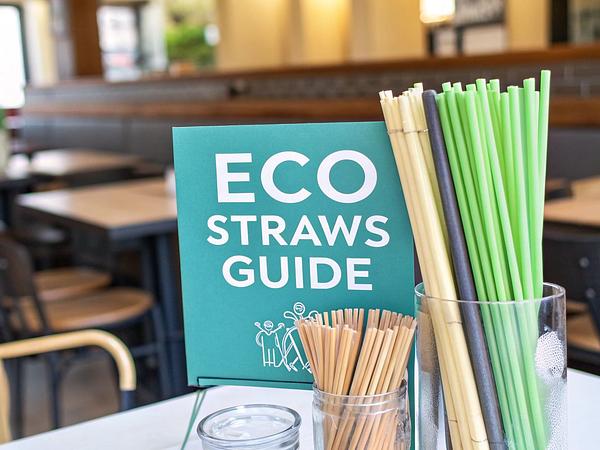
- Bio Fibre: An excellent, sustainable alternative to plastic for things like straws. Materials like our 100% biodegradable Bio Fibre straws give you the same durability and feel as the traditional plastic ones, but without the environmental baggage.
Struggling to decide where to start? It helps to pin down your main objective. Are you focused on brand promotion, championing eco-friendliness, or creating a memorable customer experience? This decision tree can help you clarify your priorities.

As you can see, your primary goal—whether it's shouting your brand from the rooftops, proving your green credentials, or crafting an unforgettable unboxing moment—should steer your material and design choices right from the very beginning.
Sustainability and Cost: Finding the Sweet Spot
In the UK market, sustainability is no longer just a buzzword; it’s a powerful business driver. Customers are actively looking for—and rewarding—businesses that make responsible choices. But "eco-friendly" doesn't have to mean "expensive." The real trick is finding a balance that works for your brand, your customers, and your bottom line.
Luckily, as demand for sustainable solutions has grown, so has their accessibility. The UK Packaging Services industry is on track to hit £8.6 billion by 2025-26, an expansion fuelled almost entirely by the food sector's hunger for custom-branded, eco-friendly options. This surge in competition among suppliers is great news for hospitality businesses, as it drives innovation and helps keep pricing competitive.
Expert Tip: Don’t just choose a sustainable material—tell your customers about it. A simple, clear message on your packaging, like "This cup is compostable" or "Made from recycled materials," is a brilliant way to educate your audience and reinforce your brand's commitment.
When you’re looking at costs, it’s vital to see the bigger picture. That slightly pricier double-wall cup might have a higher per-unit cost, but it completely removes the need for a separate cardboard sleeve. Suddenly, you’re saving money and reducing waste. Likewise, investing in sturdy, leak-proof containers might seem like a bigger outlay, but it dramatically reduces the risk of costly complaints and negative online reviews.
Sustainable Packaging Materials At-a-Glance
To make things easier, here’s a quick comparison of some of the most popular eco-friendly materials available to UK food businesses. This should help you weigh up the pros and cons for your specific needs.
| Material Type | Best For | Sustainability Credential | Branding Feel |
|---|---|---|---|
| Kraft Paper (Unbleached) | Sandwiches, baked goods, dry foods, boxes | Recyclable, biodegradable, compostable (if uncoated) | Natural, artisanal, rustic, earthy |
| rPET (Recycled PET) | Salads, cold drinks, smoothies, desserts | Made from recycled plastic, widely recyclable in the UK | Modern, clean, transparent |
| PLA (Polylactic Acid) | Cold cups, lids, food containers, cutlery | Compostable (industrially), made from plant-based starch | Smooth, premium, clear like plastic |
| Bagasse (Sugarcane Fibre) | Hot food boxes, plates, bowls | Compostable (home & industrial), biodegradable, microwave-safe | Sturdy, textured, natural white |
| Coated Board (Aqueous/PE) | Hot/cold food boxes, noodle pots, soup containers | Recyclable (check coating type), good grease/moisture barrier | Versatile, premium, great for print |
| Bio Fibre Straws | All drinks (hot & cold) | 100% biodegradable, compostable | Functional, eco-conscious |
Choosing the right material is about more than just finding a container. You can explore a huge variety of options in our guide on eco-friendly takeaway containers to find the perfect fit for your budget and brand.
Ultimately, your material choice is a cornerstone of your brand strategy. It needs to protect your product, delight your customer, and proudly represent what your business stands for.
From Design File to Finished Product

This is where the magic really happens—turning your brand vision into a tangible product your customers can hold. It might sound a bit technical, but getting your head around the artwork and printing process is surprisingly straightforward. More importantly, it puts you firmly in control of the final outcome.
It all starts with giving your supplier the right digital files. Getting this right from the beginning is the best way to avoid costly reprints and frustrating delays, ensuring a smooth journey from your designer's screen to your customer's hands.
Preparing Your Artwork for Printing
Think of it this way: your supplier’s job is to replicate your design flawlessly, but they can only work with what you give them. A low-resolution JPEG pulled from your website simply won't cut it for professional printing. If you want a sharp, high-quality finish on your cups and containers, you need to supply the correct file formats.
Here’s a quick checklist of what your packaging partner will almost always ask for:
- Vector Files: This is the big one. Vector files—usually formats like .AI, .EPS, or .SVG—are built on mathematical equations, not pixels. This means they can be scaled to any size, from a tiny logo on a straw wrapper to a huge design on a pizza box, without ever losing quality or looking blurry.
- High-Resolution Graphics: All your logos and key design elements should be in a vector format. If you absolutely have to use a pixel-based image (like a photograph), it must be at least 300 DPI (dots per inch) at its final printed size.
- Specific Colour Codes: To ensure your brand colours are consistent, you'll need to provide Pantone (PMS) colour codes. This universal system makes sure the specific shade of green in your logo looks exactly the same on every single print run, avoiding any nasty surprises.
- Outlined Fonts: This is a simple but vital step. Ask your designer to convert all text to outlines or curves. This essentially turns the text into a vector shape, so the printer doesn’t need your brand’s specific font installed on their machines to print it correctly.
Providing these files right at the start makes the whole process faster and more efficient for everyone.
Understanding Different Printing Methods
Not all printing methods are created equal. The right one for you will depend on the product you’re branding, the complexity of your design, and the quantity you need. For food packaging, you’ll most often come across two key methods: flexography and lithography.
Flexography (Flexo) is a bit like a highly sophisticated rubber stamp. It uses flexible printing plates wrapped around a rotating cylinder, which makes it incredibly fast and efficient for big jobs.
- Best for: Simple, bold designs with just one or two colours. Think of a straightforward logo on a kraft paper bag or a simple pattern on a stack of napkins.
- Cost: It’s very cost-effective for large quantities because it’s so fast and uses less ink.
- Limitations: It can struggle with very fine details or photographic-quality images.
Lithography (Litho), also known as offset printing, is a more detailed process. It involves transferring ink from a metal plate to a rubber blanket and then onto the packaging. The result is much higher resolution and colour accuracy.
- Best for: Complex, multi-coloured designs with intricate details or photos. It’s the perfect choice for a premium ice cream tub with detailed graphics or a custom-designed takeaway box that needs to look flawless.
- Cost: The setup is more expensive, so it’s better suited for medium to large print runs. However, the cost per item drops significantly as the quantity goes up.
- Advantages: It delivers exceptional print quality, spot-on colour accuracy, and sharp detail.
You can see great examples of how these methods work in practice by looking at options for custom-printed single wall coffee cups, where both simple and complex designs are common.
The Non-Negotiable Step: Getting a Physical Sample
Before you sign off on a full production run of thousands of units, there is one step you absolutely cannot skip: approving a physical sample. Digital mock-ups and screen proofs are useful, but they just can't replicate the real thing.
A digital proof shows you what your design looks like. A physical sample shows you what your brand feels like. It’s your only chance to check the material, see the true-to-life colour, and feel the quality before you invest.
Holding that first finished product in your hand allows you to:
- Verify Colour Accuracy: Colours can look completely different on a backlit screen compared to how they appear printed on kraft paper or a coated board.
- Assess Print Quality: This is your chance to spot any imperfections, fuzzy lines, or alignment issues that you might miss on-screen.
- Feel the Material: Is the paper cup sturdy enough? Does the takeaway container feel premium? The tactile experience is a huge part of your brand.
To get ahead of the game, many businesses now use digital tools to refine their ideas even before this stage. Exploring 3D product rendering for business can give you photorealistic insights into how your packaging will look in the real world, helping you catch potential issues early.
Ultimately, insisting on a physical sample is your final, crucial quality control check. It's the confirmation that the product you’ve designed will be one you’re proud to put in your customers' hands.
Getting Your New Packaging Out There and Keeping It Running Smoothly
The delivery of your new branded packaging is a big moment, but the work isn't quite done when the pallets arrive. The real test of your investment comes down to how you manage the rollout. A well-planned launch makes the switch from old to new completely seamless for both your team and your customers.
For many UK cafes and takeaways, the first hurdle is simply space. A huge order of custom-printed cups or boxes can quickly swallow up a small stockroom. This is where getting smart with your inventory is absolutely crucial – it lets you take advantage of bulk-buy prices without drowning in cardboard.
Smart Storage: The Call-Off System
If you're tight on square footage, a call-off stock system can be a total game-changer. It’s an arrangement where you commit to a larger, more cost-effective order, but your supplier stores the bulk of it for you. You just "call off" smaller batches for delivery as and when you need them.
This approach is brilliant for a few reasons:
- Better Unit Prices: Ordering in bigger volumes almost always gets you a lower cost per item, which is great for your margins.
- Frees Up Precious Space: You don't have to sacrifice a huge chunk of your stockroom for packaging, freeing it up for things you actually need on-site.
- A Consistent Supply: It pretty much eliminates the risk of suddenly running out of branded items, so every customer gets the same consistent brand experience.
Think of it as having your own off-site warehouse, but without any of the overheads. You get all the financial perks of a bulk order without the headache of finding a home for thousands of cups or containers.
This system turns what could be a massive storage problem into a real strategic advantage. It makes top-notch branded packaging a viable option even for the most cramped city-centre spot.
Your Go-Live Checklist for a Flawless Rollout
Once you've got your stock sorted, it's time to get your team and customers ready for the launch. A little bit of prep work goes a long way in making the new packaging feel like an exciting upgrade rather than just a change.
A successful launch all comes down to clear communication and getting your staff on board. They're the ones handling these new items day in, day out, so their buy-in and enthusiasm are key.
Here’s a simple checklist to get you started:
- Get the Team Trained Up: Don't just dump the new cups next to the coffee machine. Run a quick team briefing to show everyone how to use the new items properly. This could be anything from the right way to click a new lid on to prevent spills, to the most efficient way to fold a new takeaway box during a frantic lunch rush.
- Explain the ‘Why’: Let your team know the thinking behind the change. If you’ve switched to compostable materials, make sure they know what that means so they can confidently tell customers about it. This turns your staff into genuine brand advocates who can share your commitment to sustainability.
- Create Some Social Media Buzz: Your new packaging is brilliant visual content just waiting to be shared. Plan a few posts for Instagram to announce the new look. Get some high-quality photos and videos of your branded coffee cups, containers, and napkins in action.
- Get Your Customers Involved: Come up with a unique hashtag and encourage customers to tag your business in their photos. This not only builds excitement but also gives you a fantastic library of authentic marketing content to use.
Figuring Out if it's Actually Working
So, how do you know if your investment in new food packaging is paying off? While a deep-dive ROI calculation can get complicated, there are some simple, effective ways to measure the impact.
Start by just listening and watching. Pay attention to what customers are saying when they're in your shop. Are they complimenting the new design? Do they mention how much sturdier the new material feels? These little comments are gold dust.
You can also keep an eye on your digital engagement. Watch your social media tags and mentions closely. If you see a definite spike in people sharing photos of your food and drink in its new packaging, that's a brilliant sign. It shows the design is hitting the mark and helping to spread the word about your brand. That kind of organic sharing is one of the best returns you can ask for.
Making Every Takeaway a Lasting Impression
When all is said and done, branded food packaging isn't just a nice-to-have; it's one of the most direct and effective marketing tools at your disposal. For any UK hospitality business, from a local cafe to a growing restaurant chain, it's a game-changer. With a smart strategy, the right material choices, and a supplier you can count on, you can transform a simple container into a memorable brand moment. And no, you don't need a massive national chain's budget to do it well.
Think about it. Every single coffee cup, sandwich bag, or takeaway box that walks out your door is a mobile billboard. It's your chance to make a connection, tell your story, and build the kind of authentic loyalty that truly fuels growth.
From Container to Connection
It’s easy to get lost in the weeds of print methods and stock levels, but never lose sight of why you're doing this. For a takeaway customer, your packaging is often the only physical thing they'll touch that represents your brand. It's their first taste of your quality and their last reminder of the experience long after the food is gone.
This single touchpoint has the power to turn a quick purchase into a genuine relationship. When a customer notices the quality of a sturdy, eco-friendly box or admires a well-designed logo on their cup, it instantly elevates how they see your entire business.
What does this look like in the real world?
- A student grabbing lunch feels good about their choice, noticing your cafe uses compostable kraft paper containers.
- An office worker really appreciates the well-designed, spill-proof lid and a double-walled cup that actually keeps their coffee hot on the walk back.
- A tourist snaps a photo of their ice cream in a vibrantly printed tub, instantly sharing your brand with hundreds of followers.
Your packaging needs to do more than just hold food. It should tell a story, show what you stand for, and make every customer feel confident they made the right choice. It's that final, vital step in delivering a brilliant experience.
Ultimately, investing in your packaging pays you back in spades through customer loyalty and word-of-mouth marketing. Start seeing every takeaway order not just as a sale, but as a brand ambassador heading out into the world.
Your Top Questions About Branded Food Packaging Answered
Getting started with custom packaging always brings up a few key questions. Here are the straight-talking answers to the queries we hear most often from food and hospitality businesses across the UK.
What’s the Real Minimum Order for Custom Packaging?
This used to be a major hurdle, but things have changed. While some old-school manufacturers might still demand huge commitments, many modern suppliers are geared towards helping small and medium-sized businesses get off the ground.
You'll find that for everyday items like printed coffee cups, containers, or napkins, you can often get started with a minimum order quantity (MOQ) as low as 1,000 units. The best advice? Just ask. Be upfront with potential suppliers about your needs and storage space to find the right fit.
How Much More Will Branded Packaging Actually Cost?
There's no single answer, as the final price tag depends on your design's complexity, the number of colours you use, and the printing method. But the good news is that the price-per-unit drops significantly as your order volume increases.
It's helpful to stop thinking of it as just a packaging cost and start seeing it as a marketing investment. Every single sale becomes a moving billboard, building brand recognition and giving your business a polished, professional edge.
Which Eco-Friendly Material Is the Right Choice?
The "best" material isn't a one-size-fits-all solution; it’s about matching the material to your product and your brand’s personality.
- Serving hot drinks? Insulated double-wall paper cups are a must. They keep the contents hot and are comfortable for your customers to hold.
- Selling fresh salads or cold items? rPET is fantastic for showing off your food and is widely recycled throughout the UK.
- Got that artisanal, rustic vibe? Kraft paper is perfect for bakeries, delis, and sandwich shops.
Think about what your packaging needs to do. It has to be functional, look the part, and ideally, be easy for your customers to recycle locally. For example, swapping to a 100% biodegradable material like our Bio Fibre for straws sends a powerful message about your eco-credentials without any drop in performance.
Can I Bring My Own Designer to the Table?
Of course. Any good packaging supplier will be more than happy to work with your designer or creative agency. The process is pretty straightforward: they’ll provide a specific template, often called a "die-line," for the item you're ordering—be it a box, cup, or napkin.
Your designer’s job is to place your artwork onto this template. The crucial part is that they must send the final file back in a high-resolution vector format (usually an .AI or .EPS file). This is non-negotiable for getting that sharp, professional print quality you’re after.
Ready to turn your packaging into your best marketing asset? At Afida, we make premium food packaging branding simple and accessible for UK businesses. From eco-friendly coffee cups to custom-printed boxes, we offer low minimum orders, free storage, and expert advice to help you get it right. Explore the possibilities on the Afida website.