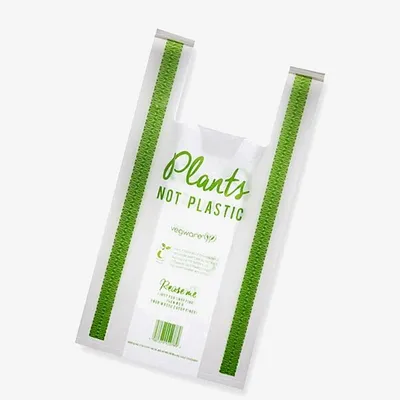
Vegware bags and wraps cover the parts of a takeaway order that hold and protect the food once it leaves the kitchen. The range pairs kraft flat bags and window bags for sandwiches, pastries, and counter pickup with a deep set of greaseproof sheets and burger wraps for the wrapping that goes inside the bag, plus glassine bags with NatureFlex windows for product visibility on bakery and deli items. Every line is certified to EN 13432 for industrial composting, so the bag, the wrap, the cup, and the container can all be disposed of through a single waste stream. This guide covers how the range breaks down and how to match the right bag and wrap to your service.
Key Factors to Consider
Bags Versus Wraps
The two parts of this range solve different problems. Bags hold a complete order: a sandwich and a drink, a pastry and a coffee, a takeaway box and cutlery. They sit on the counter or in a delivery rider's hand. Wraps sit inside the bag, around the food itself, doing the work of stopping grease bleeding through paperboard, holding a burger together, or lining a basket so chips don't stick to the tray. Most operations need both. The bag is what the customer sees and carries; the wrap is what keeps the food intact between kitchen and customer. Specifying them as a single compostable system rather than mixing kraft bags with PE-coated wraps is what makes the EN 13432 claim hold.
Kraft Flat Bags
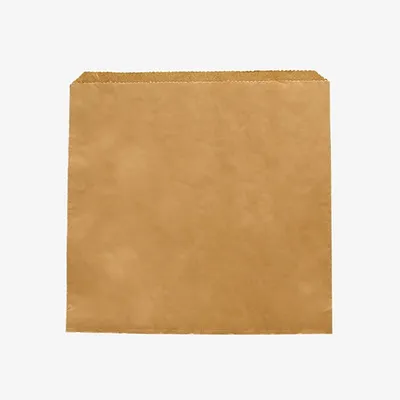
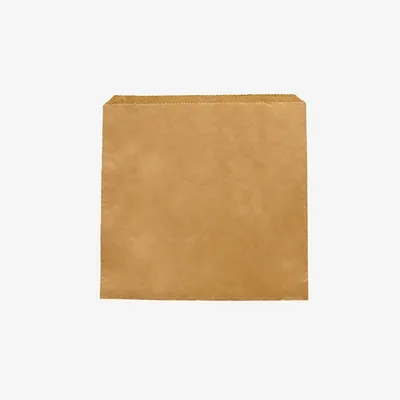
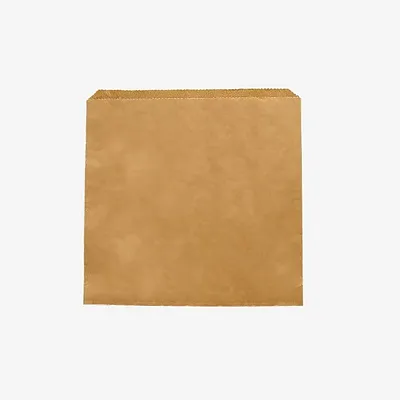
The Vegware flat bag range is structured around two paper colours and a small set of footprint sizes. White kraft flat bags suit operations with a clean, modern brand identity. Brown kraft flat bags suit operations leaning into a craft, sustainability-led, or rustic identity. Functionally the two are identical. Sizes include 8 x 8 inch and 10 x 10 inch as the common bakery and pastry sizes, with larger formats for full sandwiches and small takeaway orders. Cases ship in 500 or 1,000 depending on size. For most cafes, the 8 x 8 white or brown kraft flat bag and the larger sandwich-format bag together cover 80% of front-counter use. The flat bag is open-topped, so it suits dry items wrapped inside a greaseproof sheet rather than loose hot food.
Window Bags
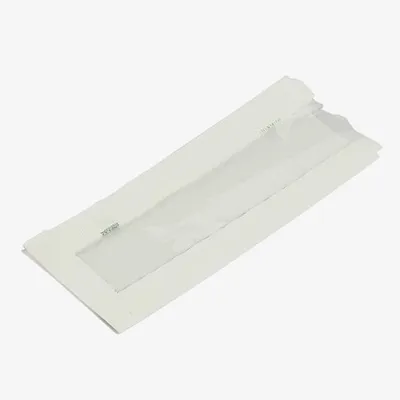
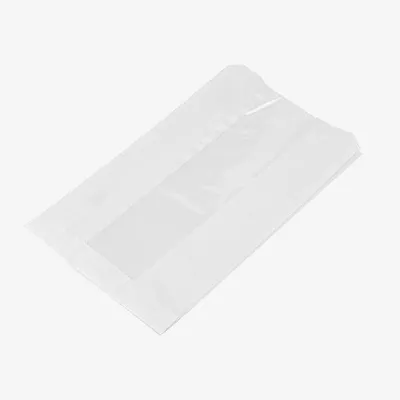
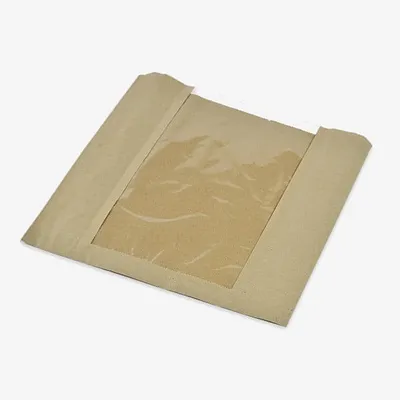
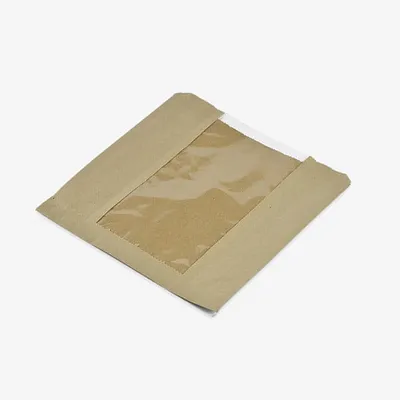
Window bags are kraft flat bags with a clear panel cut into one face, letting the customer see the product before they buy. The clear panel is the key difference from a plain flat bag: visibility on a bakery counter sells more pastries, sandwiches, and grab-and-go items than the same product hidden inside opaque kraft. The Vegware window bag uses a compostable film for the window so the whole bag stays EN 13432 compliant. For deli counters, sandwich shops, and bakeries, the window bag is worth the small premium over the equivalent plain flat bag for everything customer-facing. Behind the counter where the bag is just packing, the plain flat bag is fine.
Glassine Bags With NatureFlex Window
The two NatureFlex bags in the range are a step up from the standard kraft window bag. The bag body is glassine (a smooth, grease-resistant paper used for confectionery and bakery), and the window is NatureFlex, a wood-cellulose-based clear film that is fully home compostable, not just industrially compostable. They suit higher-margin items where presentation matters: artisan biscuits, single-origin chocolate bars, premium pastries, gift boxes from the bakery counter. Both Vegware glassine + NatureFlex bags are heat-sealable, so you can close them with a counter-top heat sealer for a tamper-evident finish. The NatureFlex film is the only home-compostable component in the Vegware bags-and-wraps range, which matters for retail products where customers may dispose of the packaging at home rather than through a commercial waste stream.
Greaseproof Sheets and Burger Wraps
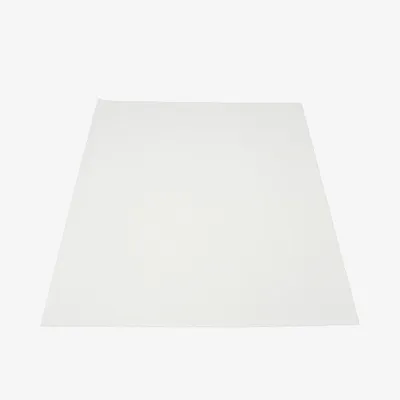
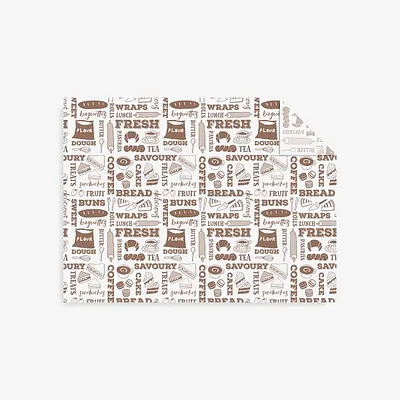
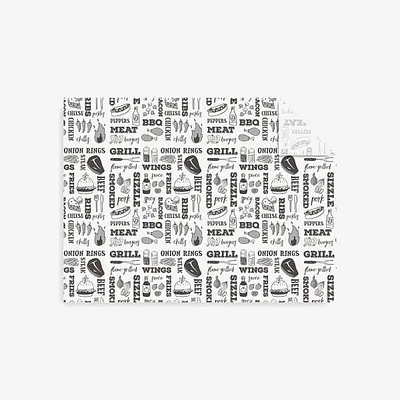
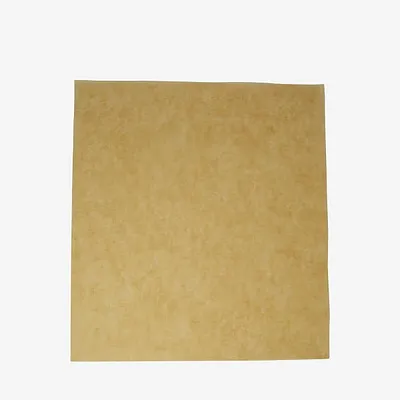
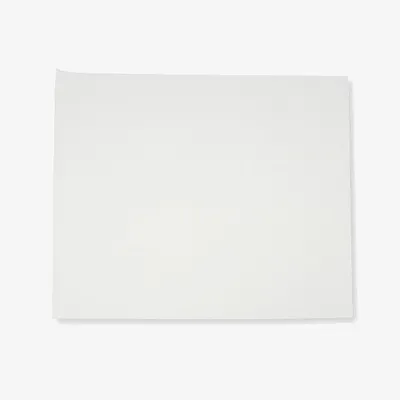
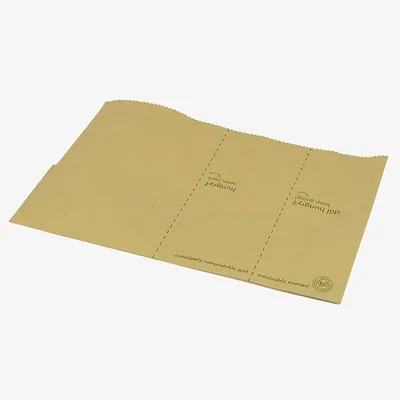
The greaseproof side of the range is broader than most operators expect. The Vegware catalogue includes plain greaseproof sheets in unbleached and bleached white finishes, plus three branded variants: Green Tree print sheets for a sustainability-led identity, Bakery sheets sized for pastry counters, and Grill sheets sized for burger and chicken service. Burger wraps come as plain greaseproof and Green Tree print. Cases run from 500 sheets at the small end up to 1,920 sheets at the large end, with most lines at 960 or 1,000. The greaseproof material itself is paper with a compostable coating that resists oil and moisture for normal service times. Long enough for a burger to travel from grill to customer, not so long that it survives sitting in steam for an hour. For a typical burger or fried-chicken takeaway, one wrap per item plus a flat bag per order is the standard configuration.
Ovenable Wrap
The Vegware ovenable wrap is the specialised line in the range. It's grease-resistant like standard greaseproof but rated for oven temperatures, so caterers can wrap a portion of food, finish it in the oven, and serve it in the same wrap without transferring to a tray. Useful for fish, baked sandwiches, and ready-to-finish portions held for a service push. The shelf life and stocking pattern is different from standard greaseproof: ovenable wrap turns over more slowly because the use case is narrower, so order in smaller cases and only when the menu actually calls for oven-finishing in packaging.
Cost and Case Sizes
Cost per unit on bags and wraps is significantly lower than on cups or rigid containers, but case sizes are larger so the per-case cash outlay is similar. A case of 1,000 kraft flat bags lands in the £25 to £45 range depending on size and finish. A case of 1,000 greaseproof sheets sits in the £30 to £60 range. NatureFlex glassine bags carry a clear premium and run about 50% to 100% more per unit than equivalent kraft window bags, which is the cost of the home-compostable film. For a small cafe doing 200 takeaway orders a week, one case of flat bags lasts about ten weeks. Order in cases that match your turnover; bags and wraps don't have shelf-life issues, but they take up storage space, and an over-ordered case sitting in a stockroom is working capital tied up for no benefit.
Compostability End to End
The point of specifying compostable bags and wraps as a system is that they let you commit to a single waste stream front-of-house. If your bag is kraft with a PLA-compatible window, your greaseproof wrap is paper-based, and your cups and hot food containers are already Vegware, the customer can drop the entire takeaway packaging set into one compost bin without sorting. That assumes either home-composting access for retail items or a commercial route for dine-in and event service. As with cups and tableware, the certification holds at the product level; the practical disposal route is what closes the loop. For takeaway specifically, where the customer eats away from your premises, home compostability of the NatureFlex bag is the only line in this range that survives the full journey, which is why those two SKUs are priced higher.
Pro Tips
- For a counter operation, stock 8 x 8 kraft flat bags in your house colour (white or brown) plus one or two window-bag sizes for grab-and-go items. Skip the rest until the menu demands them.
- Match the wrap to the food temperature and grease load. Plain greaseproof for cold sandwiches and pastries, Grill sheets for burgers and fried chicken, ovenable wrap only when you're actually finishing food in the oven inside the wrap.
- Keep the Green Tree branded variants visible to the customer and the plain unbleached variants for back-of-house lining and prep. The branded sheets sell the sustainability story; plain sheets do the work.
- For premium retail products in glassine + NatureFlex bags, invest in a £40 counter-top heat sealer. The hand-folded version of the same bag looks domestic; the heat-sealed version looks bought-in and tamper-proof.
- Don't mix a Vegware compostable bag with a non-compostable wrap inside it. The whole package is only as compostable as its weakest component, and a single PE-coated wrap inside a kraft bag breaks the EN 13432 chain that the rest of your packaging depends on.
Summary
Vegware bags and wraps cover two related but distinct jobs: the bag that holds the customer's order, and the wrap that protects the food inside it. The bag side runs from plain kraft flat bags in white and brown through window bags with a compostable clear panel, up to glassine bags with home-compostable NatureFlex windows for premium retail products. The wrap side covers plain and printed greaseproof sheets, burger wraps in plain and Green Tree finishes, dedicated bakery and grill sheet sizes, and a specialised ovenable wrap. The strongest case for the range is operations that already buy Vegware cups or containers and want the bag and wrap to share the same EN 13432 certification, so the entire takeaway package sits in one waste stream. The trade-offs are the per-unit premium on the NatureFlex lines and the discipline of not undermining the system by reaching for a non-compostable wrap when stocks run low. The bags and wraps range is one part of the wider Vegware compostable packaging range, which covers cups, hot food, cold food, tableware, and back-of-house supplies under the same single-supplier certification.