Stocking packaging for a takeaway is a balancing act between three things that pull in different directions: keeping food hot and intact through a delivery journey, keeping the per-order packaging cost low enough to protect your margin, and meeting the sustainability expectations customers now bring to every order. Get the spec wrong and you pay for it twice, once in wasted stock and once in the one-star review that mentions a leaked curry. This guide walks through what to buy across containers, boxes, bags, and cutlery, where the trade-offs sit, and how to plan volume so packaging does not quietly eat your profit.
Key Factors to Consider
Food Containers: Match the Container to the Dish
The most expensive packaging mistake is using one container for everything. A saucy curry in a flat kraft tray leaks before the driver reaches the door; a portion of fries sealed in a tight pot arrives steamed and soggy. Match the container to the food first, and worry about branding second.
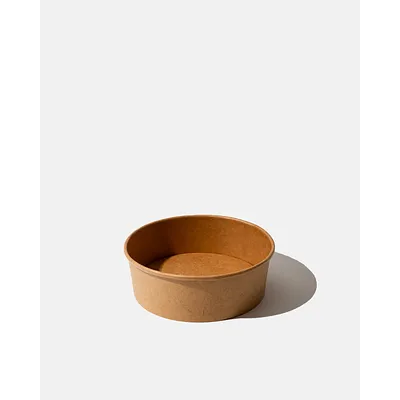
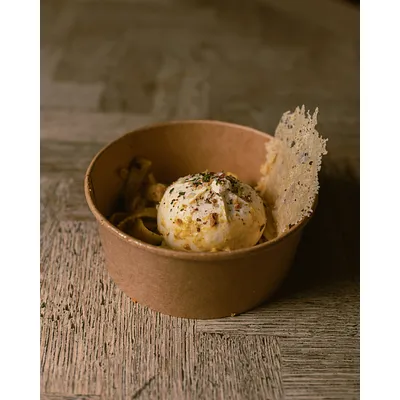
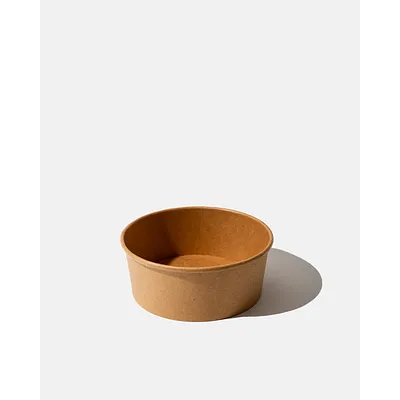
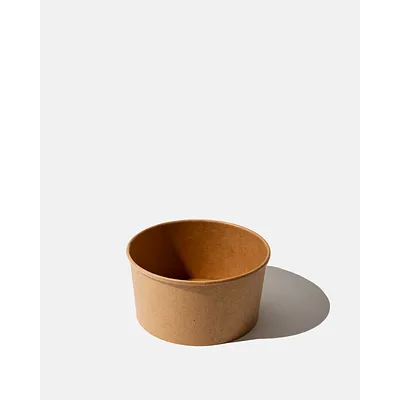
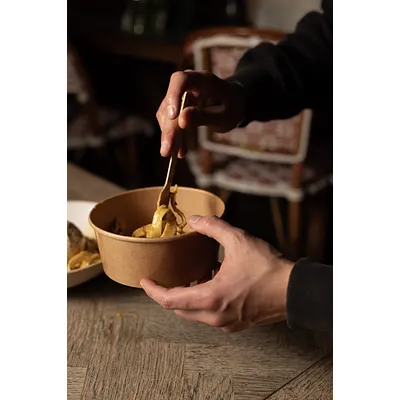
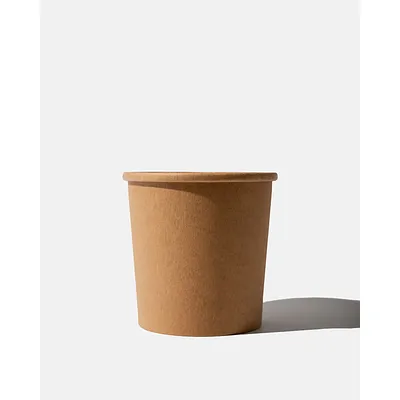
For wet, saucy dishes (curries, stews, rice bowls, noodles), use a leak-resistant container with a snug lid. Round kraft bowls from 500ml up to 1000ml with snap-fit lids handle most main portions, and they look the part when the customer opens the bag. For drier hot food (fried chicken, fish and chips, loaded fries), an open or vented kraft tray lets steam escape so the food stays crisp. Rectangular kraft food containers around 1000ml suit sharing portions and mixed dishes. For soups, broths, and saucy sides, dedicated soup containers in 12oz and 16oz with matching lids seal far better than a general-purpose tray.
The rule of thumb: round bowls for wet, trays for dry, soup cups for liquid. Carrying two or three container families rather than one is cheaper overall, because you stop over-packaging dry food in expensive sealed pots.
Takeaway Boxes: The Classic Hot-Food Workhorse
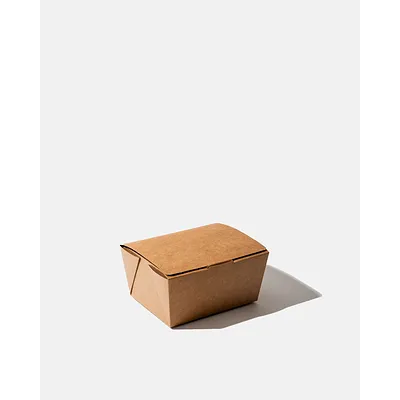
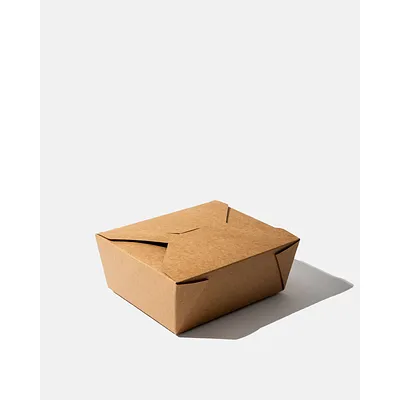
Standard kraft takeaway boxes (the No.1 and No.8 sizes, roughly 755ml and 1300ml) are the backbone of Chinese, Indian, and Thai takeaways. They stack flat for storage, fold quickly at service, and hold a generous main without crushing. The No.1 suits a single curry or rice portion; the No.8 takes a sharing dish or a large main with sides. They are kraft board, so they work for hot food but are not built for long-term liquid contact, the same lined-versus-unlined trade-off that applies to all paperboard packaging.
Pizza Boxes: Size to the Pie, Not the Menu
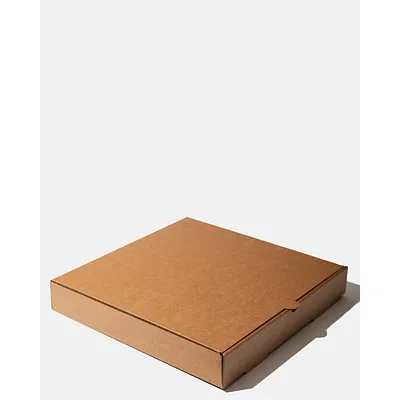
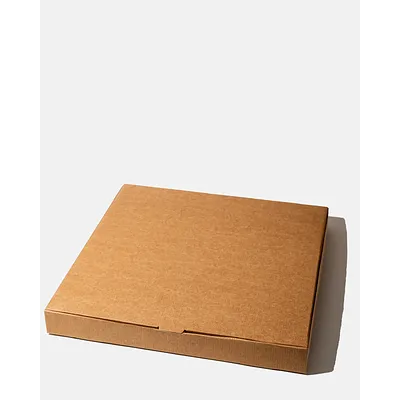
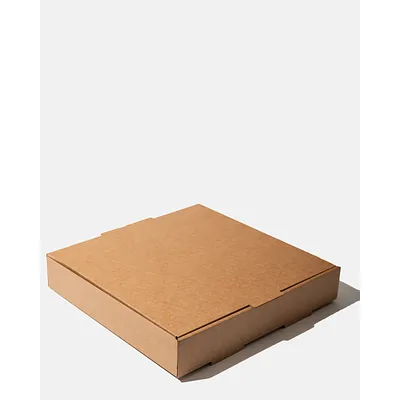
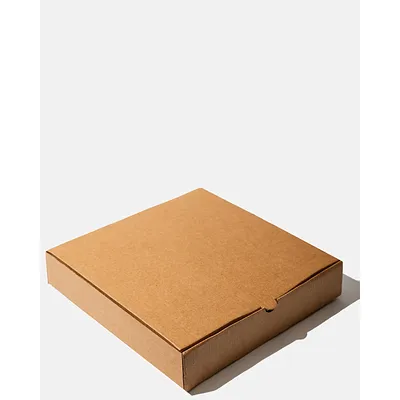
Pizza boxes are sold by inch size, and stocking the wrong sizes is a common source of waste. Carry boxes that match your actual pizza diameters: 7-inch for personal pizzas and calzones, 9-inch for standard, 12-inch for large, and 16-inch for sharing or party sizes. Kraft pizza boxes are recyclable when clean and grease-free, which is worth communicating to customers so the boxes do not default to general waste. Order the smaller sizes in larger case counts (they move fastest) and the 16-inch in smaller quantities to avoid dead stock.
Bags: The Last Thing the Customer Touches
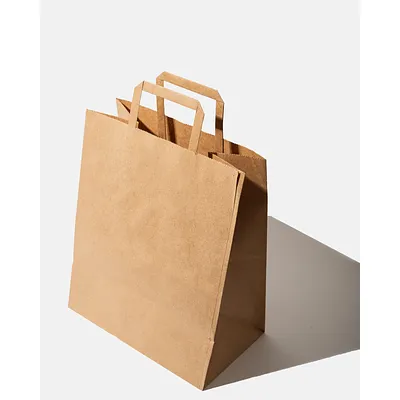
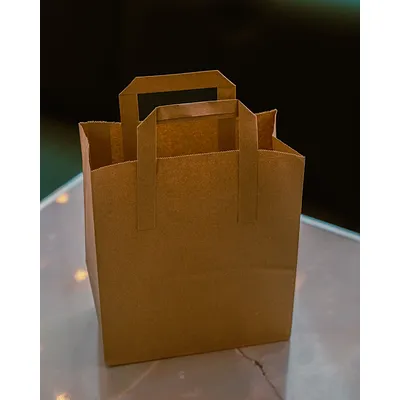
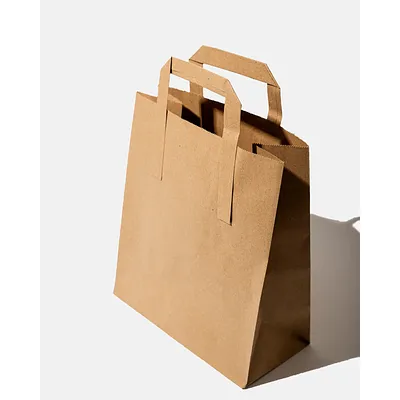
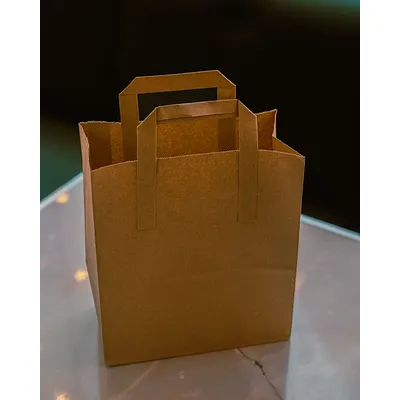
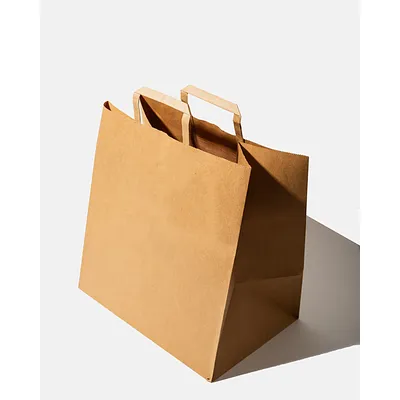
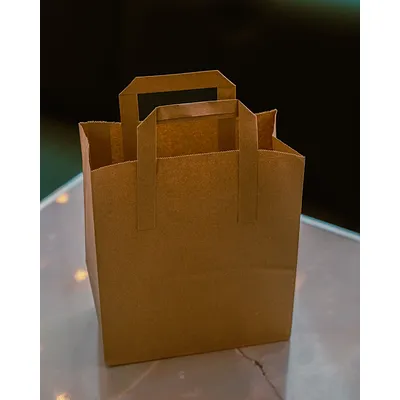
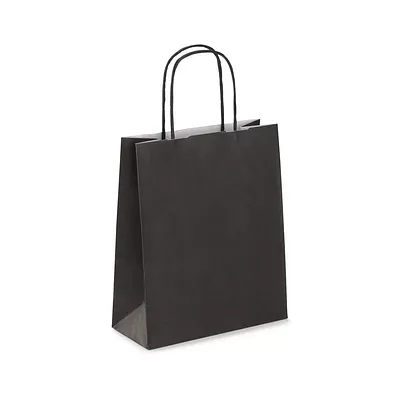
The carrier bag is the first impression at the door and the last point where an order can go wrong. Paper handle bags need to be big enough and strong enough for a full order without the handle tearing. Twisted-handle bags suit lighter orders and have a tidy, branded-retail look; flat-handle kraft bags in small, medium, and large cover the bulk of takeaway orders and carry more weight. Size the bag to your largest typical order, not your average, because the one bag that splits on the doorstep is the one the customer remembers. For delivery via couriers, a flat base that keeps containers upright matters more than handle style.
Cutlery: Plastic Is No Longer an Option
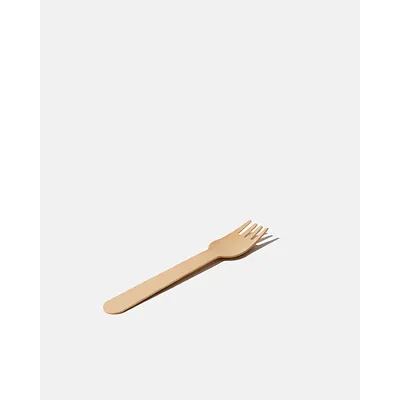
Single-use plastic cutlery has been banned for businesses in England since 2023, so wooden cutlery or PLA is the compliant choice, not a nice-to-have. Wooden forks and spoons (around 6.5 inches) are sturdy, compostable, and now the default for takeaways. Only include cutlery when the order needs it: defaulting to "no cutlery unless requested" at checkout cuts cost and waste, and many customers eating at home would rather use their own. Where you do supply it, smooth-finished birchwood avoids the splintering and bending that make cheap wooden cutlery feel like a downgrade.
Lids and Compatibility: The Quiet Cost Trap
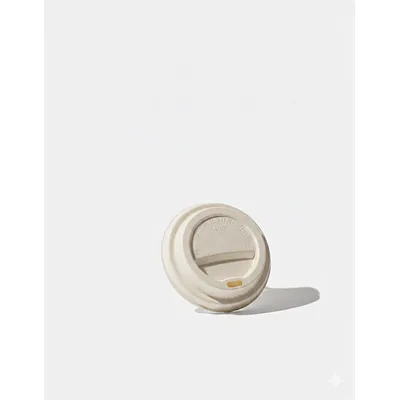
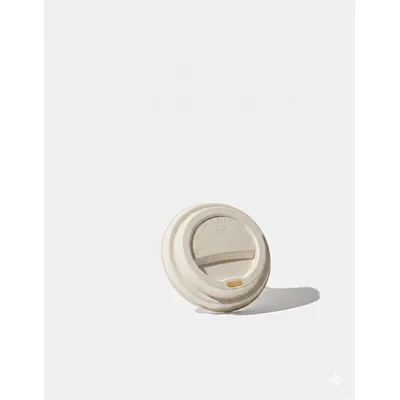
Lids are where takeaways quietly lose money and patience. A lid is specific to its container series, so a 16oz soup lid will not fit a 12oz cup, and a bowl lid is not interchangeable with a tray. Because lids are sold separately, it is easy to end up with a stack of containers and the wrong lids, or to over-order one and run short of the other. Always note the series or size on the product page and order lids to match the containers you actually use most, not one-to-one across every line.
Material and Reheating: Set Customer Expectations
Most takeaway packaging is kraft board with a moisture-resistant lining, which is fine for serving hot food but not for the microwave. If a meaningful share of your customers reheat leftovers, that is worth knowing: bagasse (moulded sugarcane) containers and aluminium trays are microwave and oven safe, while kraft and PLA-lined containers are not. You do not need to switch your whole range, but stocking a bagasse option for the dishes most likely to be reheated saves complaints.
Cost and Volume Planning
Packaging is a per-order cost, so the number that matters is pence per cover, not the case price. Work out the typical packaging set for your top three or four orders (for example: one main bowl, one lid, one bag, cutlery if needed) and price that set. Then order the high-turnover items, bags, mid-size bowls, and your most common takeaway box, in larger case counts to bring the unit price down, and keep the slow movers (16-inch pizza boxes, the largest bowls) in smaller quantities so cash is not tied up in dead stock. Everything is priced by the case with bulk pricing built in, so consolidating your order rather than topping up weekly is usually cheaper.
Sustainability as a Selling Point
Eco-friendly packaging is now an expectation, not a differentiator, but it still works in your favour when you make it visible. Kraft, bagasse, paper, and wood are renewable and recyclable or compostable, and a short line on your menu or a sticker on the bag ("recyclable box, compostable cutlery") tells customers you have made the effort. The practical caveat: compostable only delivers its benefit with the right disposal route, so be honest about what is recyclable at home versus what needs a food-waste collection.
Pro Tips
- Order free samples before you commit. Samples are free and you only pay delivery, so test the bowls, boxes, and bags with your actual dishes and a real delivery run before you buy a pallet. Order a free sample pack.
- Default to "no cutlery unless requested" at checkout. It cuts cost, cuts waste, and most home diners do not need it.
- Size bags to your largest order, not your average. The bag that splits is the one that gets remembered.
- Buy lids and containers in proportion to use, not one-to-one. Mismatched lid stock is the most common takeaway over-order.
- Stock one microwave-safe option, bagasse or aluminium, for the dishes customers reheat most.
- Match pizza box sizes to your menu, ordering the small sizes deep and the large sizes shallow.
Summary
A well-stocked takeaway carries a small number of container families matched to its food, the right takeaway box and pizza box sizes for its menu, strong handle bags sized to the largest order, and compliant wooden cutlery supplied only when needed. Buy by the case, consolidate the high-turnover lines to keep the unit cost down, and stock a microwave-safe option for reheaters. Get the match between container and dish right and the rest of the operation, cost, presentation, and the customer's experience at the door, follows. Not sure where to start? Order free samples of the containers and bags you are considering, or browse the full takeaway range below.

.jpg)
.jpg)
.jpg)
.jpg)