Trying to navigate the world of eco friendly packaging can feel like a real headache, especially when you're busy running a UK café or restaurant. You need something that’s genuinely sustainable, but it also has to work for your food, your budget, and your customers. This guide cuts through the noise to give you clear, practical advice on making the right choice for your food service business.
Your Practical Guide to Sustainable Packaging
Choosing sustainable packaging isn't just a "nice to have" anymore; it's a core business decision for anyone in UK hospitality. It's what your customers are asking for, and it’s where government policy is pushing us.
The UK's sustainable packaging market is growing rapidly, driven by regulations like the UK Plastic Packaging Tax, which charges a levy on any plastic packaging containing less than 30% recycled material.
For a busy café or takeaway owner, this all creates both a challenge and an opportunity. How do you pick the right materials? What on earth does "compostable" actually mean for the person buying your flat white? And, crucially, how do you make the numbers work?
Think of this as your essential buyer's guide—no greenwashing, just straight-talking advice to help you make smart packaging choices that are good for your business.
This guide is built to give you practical answers to all those questions. We'll demystify the key terms and materials you'll come across, helping you find the perfect fit for your menu and your brand.
We’re going to cover:
The real-world difference between compostable, biodegradable, and recyclable.
The pros and cons of popular materials like bagasse, kraft paper, and PLA.
How to spot legitimate certifications and avoid misleading claims.
Practical tips for managing the cost of making the switch.
Getting a handle on these basics is the first step toward building a packaging strategy you can be proud of. For a closer look at specific products, check out our guide on eco-friendly takeaway containers. It's the perfect next step to find solutions that meet your sustainability goals and the real-world demands of your business.
Getting to Grips with Eco-Packaging Lingo
When you start looking into eco friendly packaging, it’s easy to get lost in the jargon. You'll see terms like ‘compostable’, ‘biodegradable’, and ‘recyclable’ thrown around, often as if they mean the same thing. They don't.
Understanding the real-world difference is the first, and most important, step in choosing the right products for your business. Getting it wrong can lead to good intentions ending up in the wrong bin, which isn't great for you or your customers. Let’s clear up the confusion.
To help you see the differences clearly, here's a quick breakdown of what these common terms actually mean for you and your customers in the UK.
Eco Packaging Terms at a Glance
| Term | What It Means | End-of-Life Process | UK Customer Action |
|---|---|---|---|
| Recyclable | The material can be broken down and remade into something new. | Processed at a Materials Recovery Facility (MRF) and turned into new products. | Place in the correct recycling bin (e.g., paper, plastic), but only if it's clean and dry. |
| Biodegradable | The material can be broken down by microbes over time. | Breaks down naturally, but with no set timeframe or guarantee it won't leave residue behind. | Generally, must go into general waste as it contaminates recycling and doesn't break down in landfill. |
| Compostable | Breaks down into natural, non-toxic elements (compost) under specific conditions and within a set timeframe. | Processed at an industrial composting facility (most common) or in a home compost bin (less common). | Must be placed in a commercial food waste collection that accepts compostable packaging. Cannot go in standard recycling. |
As you can see, the action your customer needs to take is completely different for each type. Now, let’s dig a bit deeper into what this means for your day-to-day operations.
What Recyclable Really Means
We’re all familiar with recycling. Think of the glass bottles and cardboard you sort for your weekly council collection. A product is recyclable if it can be collected, processed, and remanufactured into a new item. In a hospitality setting, this often includes materials like kraft paperboard, certain plastics (like rPET for cold drink cups), and aluminium.
But here’s the catch for food businesses: contamination. A greasy pizza box or a paper cup with leftover latte foam can ruin a batch of recycling, even if the material itself is perfectly recyclable. This is a massive challenge in the UK and a crucial point to get across to your staff and customers.
Biodegradable: The Slow and Unpredictable Route
Biodegradable simply means a material can be broken down by natural microorganisms like bacteria and fungi over time. The problem is that "over time" is a dangerously vague phrase. An item might take years, or even decades, to disappear, and it could leave behind microplastics or other residues along the way.
Because the term lacks a specific timeframe or set of conditions, 'biodegradable' on its own offers very little environmental guarantee. That's why focusing on certified compostable or widely recyclable materials is a much more practical and verifiable strategy for UK businesses.
Compostable: A Clearer Path for Food Packaging
This is where things get interesting, especially for food and drink packaging. Compostable means a material will break down into non-toxic, natural elements in a controlled environment, leaving behind nutrient-rich soil (compost). But in the UK, it’s vital to know there are two distinct types.
Home Compostable vs Industrial Compostable
Understanding this difference is absolutely critical, as it directly affects how your customer should dispose of their packaging.
Home Compostable: This packaging, often marked with a logo like 'OK compost HOME', can be thrown into a well-managed garden compost heap. It’s designed to break down at lower temperatures over a longer period. It’s a great option if your customers are keen gardeners, but it’s less common for commercial-grade food packaging.
Industrial Compostable: This is what you'll find for most heavy-duty items like PLA-lined coffee cups or bagasse food containers. This type of packaging needs the high heat (around 55-60°C) and specific conditions of an industrial composting facility to break down properly, usually within 90-180 days.
For a customer leaving your shop, an industrially compostable cup is a problem if they don't know what to do with it. It can't go in their home compost bin, and it definitely can't go in the general recycling. It must go into a dedicated commercial food waste stream that accepts compostable packaging—a service that varies hugely by council and waste contractor.
This is exactly why clear labelling and communication are so important. Our range of eco-essentials includes clearly marked options for cups, containers, napkins, and straws to help guide your customers. And with free samples available, you can test their performance and see the labelling for yourself before you commit.
Comparing Popular Eco-Friendly Materials
With the key terms out of the way, let's talk about what really matters: how these materials actually perform in a busy kitchen and in your customers' hands. Choosing the right eco friendly packaging comes down to understanding the real-world strengths and weaknesses of each option.
This is all about matching the material to your menu. We'll look at everything from how well a container holds heat for a winter stew to whether a cup shows off the vibrant colours of a freshly made smoothie. It's about finding that perfect balance where sustainability works seamlessly with the practical demands of your business.
Bagasse: A Sugarcane Superstar
First on our list is bagasse (pronounced ba-gass), a fantastic material you'll see used for sturdy hot food containers, plates, and bowls. It’s made from the dry, fibrous pulp that's left over after sugarcane stalks have been crushed for their juice—a brilliant example of turning a waste product into something valuable.
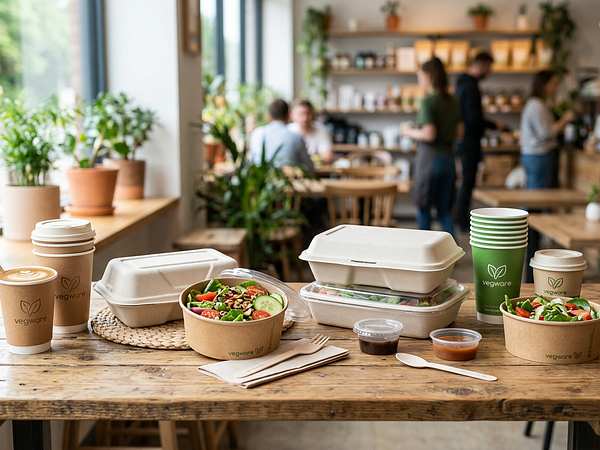
Its popularity comes from its impressive performance. Bagasse is tough, microwave-safe, and naturally holds its own against grease and moisture. That means it won’t go soggy or collapse under a hot curry or a generous portion of pasta.
Pros: Works brilliantly for both hot and cold food, is home compostable, comes from a recycled waste stream, and has a premium, sturdy feel.
Cons: Can sometimes be a little more expensive than paper-based options, and its natural off-white colour might not suit every brand's look.
Kraft Paper: The Versatile Classic
You already know kraft paper. It’s the familiar brown, unbleached paperboard that’s the workhorse of the takeaway world—think coffee cups, soup bowls, carrier bags, and pizza boxes. It gets its strength from a production process that keeps most of the wood fibres long and intact.
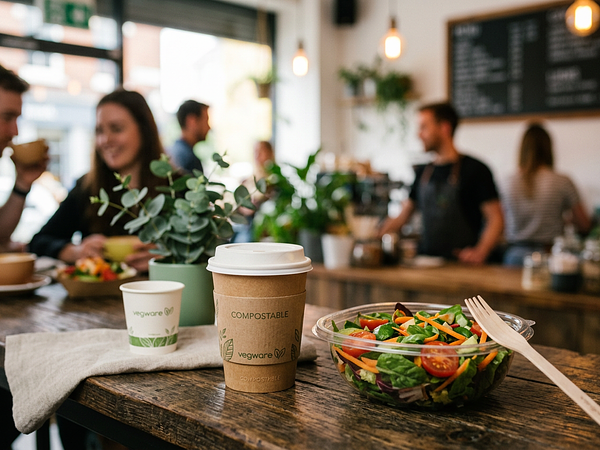
The crucial detail with kraft paper is the lining. An uncoated kraft box can go straight into your standard cardboard recycling. However, items like coffee cups need a thin, waterproof lining. In the past, this was always plastic, but modern eco friendly versions now use a plant-based PLA (Polylactic Acid) lining, making the cup commercially compostable. You can dive deeper into these options in our guide to recyclable vs compostable coffee cups.
PLA: A Clear Choice for Cold Items
PLA is a bioplastic made from renewable plant starches, like corn or sugarcane. You'll usually find it used as a clear material for cold drink cups, smoothie pots, salad boxes, and deli containers—anywhere you want to show off the fresh product inside. It is also used to make compostable straws. To the eye and touch, it’s almost indistinguishable from traditional plastic.
The single most important thing to grasp about PLA is that it is industrially compostable only. It needs the high temperatures and specific conditions of a commercial composting facility to break down and must not be put in with conventional plastic recycling. This makes clear disposal instructions for your customers absolutely vital.
PLA is a brilliant alternative to fossil-fuel plastic for cold food and drinks, but its end-of-life journey is very specific. Always make sure it's heading to a commercial food waste stream that accepts compostable packaging.
Bamboo: A Fast-Growing Fibre
Bamboo is another excellent source of fibre for packaging. As one of the world's fastest-growing plants, it's a superb renewable resource. You'll often see it used to make robust disposable cutlery, coffee stirrers, and napkins.
Bamboo products feel solid and have a natural, rustic look that many customers really appreciate. Just like wood, bamboo products from a good source should carry an FSC (Forest Stewardship Council) certification, giving you confidence that they come from responsibly managed forests.
This chart helps to visualise where these materials sit within the main eco friendly categories.
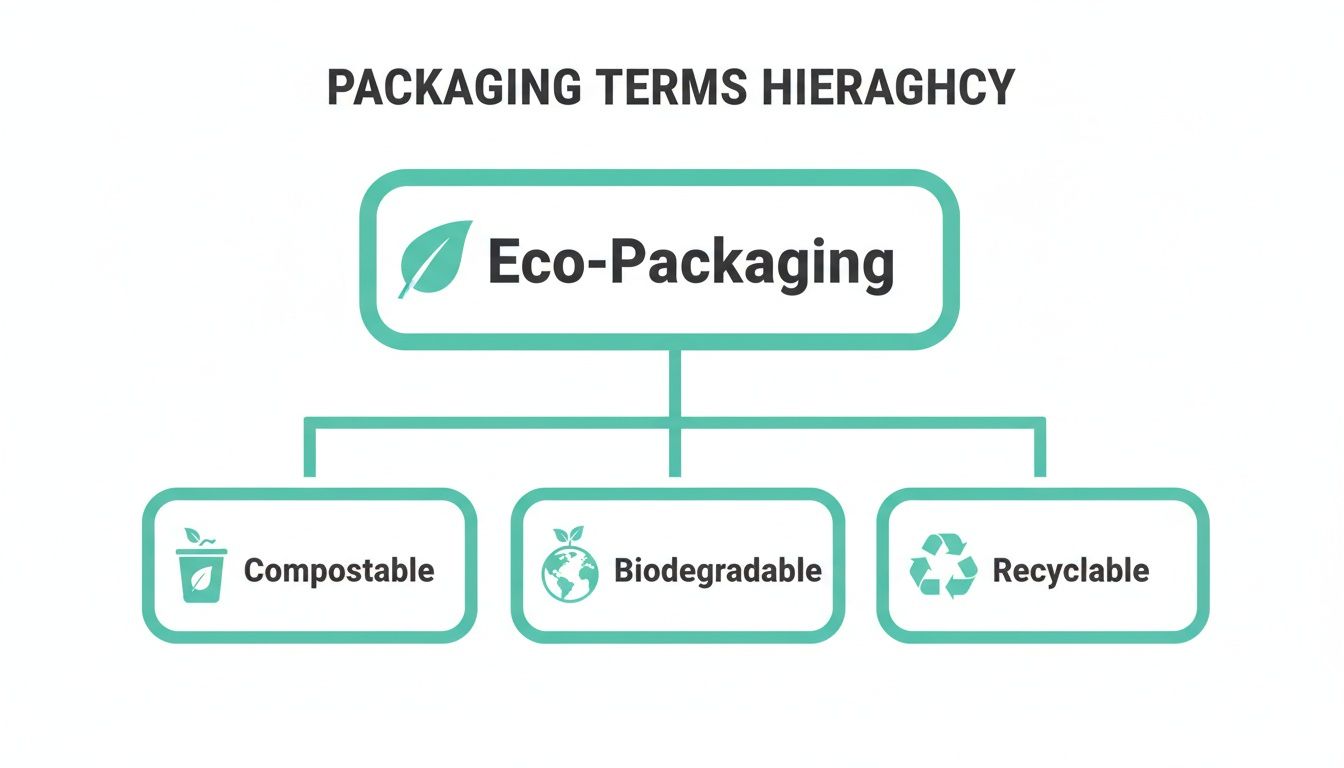
As the hierarchy shows, while all these materials aim for sustainability, their end-of-life paths—whether that’s composting, recycling, or biodegrading—are quite different and require different actions from both you and your customers.
The only way to be certain about which material is right for your menu is to try it for yourself. Feel free to browse our full range of eco-essentials, and remember that free samples are available. This is your chance to see exactly how a bagasse container handles your signature burger, or how a PLA-lined cup feels in a customer's hand, before you commit to a full order.
The Cost Reality: How to Justify the Switch to Eco Packaging
Let's be honest, the first question on any hospitality owner's mind is usually about the cost. And yes, it's true that many eco friendly packaging options carry a higher price tag per item than their old-school plastic equivalents. But looking at that price difference as just another expense on the spreadsheet is missing the bigger picture.
It’s far more useful to see this shift for what it really is: a smart business investment. One that pays you back in tangible, long-term ways. When you switch to greener packaging, you’re not just buying boxes and cups; you're investing in your brand's reputation, building rock-solid customer loyalty, and getting your business ready for the future.
Suddenly, your packaging stops being a simple overhead and becomes one of your most effective marketing tools. It sends a powerful, unspoken message to your customers about what your business stands for.
Today’s Customers Expect More
Your customers, especially here in the UK, are savvier than ever before. They actively look for businesses that share their values, and sustainability is right at the top of that list. Study after study confirms that a huge number of consumers are happy to pay a little extra to support brands they see as doing the right thing.
For a local café, restaurant, or takeaway, this is a golden opportunity. The moment a customer walks past your competitor to buy from you because your coffee cups are compostable or your takeaway boxes are made from bagasse, that slightly higher unit cost pays for itself. You’ve not only made a sale but you’ve likely gained a loyal customer who feels great about their choice.
Investing in eco friendly packaging isn't about pleasing a handful of activists. It's about connecting with the mainstream majority and directly meeting a clear market demand.
This approach helps build a more resilient customer base—people who support you for reasons that go far beyond just price or convenience. You’re building a community around a shared belief.
Crafting a Brand That Stands Out
In a takeaway or delivery world, your packaging is often the first and last physical touchpoint a customer has with your brand. A generic plastic container does its job, but it’s forgettable. It’s functional, and that’s it.
On the other hand, a thoughtfully chosen piece of eco friendly packaging makes a statement.
It quietly tells your customer you care about quality and responsibility, strengthening your brand image and helping you stand out in a sea of competitors. Think about the impact:
A More Premium Feel: Natural materials like kraft paper and bagasse just feel higher quality, which can instantly make the food inside seem more valuable.
A Story to Tell: Your packaging becomes a conversation starter. It gives you a reason to share your sustainability journey on social media, your website, or even with a simple message printed on the box itself.
Getting Ahead of Regulations: With rules like the UK Plastic Packaging Tax already in force and more green legislation almost certainly on the way, making the switch now puts you ahead of the game.
Ultimately, justifying the investment comes down to seeing the whole board. Those extra few pence per container are a tiny price to pay for happier customers, a stronger reputation, and a business that’s built to last. The question changes from, "How much does this cost?" to, "What's the return on this investment?"
How to Spot Genuine Eco Credentials and Certifications
Let's be honest, navigating the world of eco friendly packaging can feel a bit like the Wild West. With terms like "green" and "eco" thrown around so freely, how do you separate genuine sustainable products from clever marketing? The secret is to look for official certifications.
These logos are your shortcut to the truth. They act as a guarantee from a trusted third party, confirming a product has passed rigorous tests and meets specific, recognised standards. For a busy hospitality business, knowing which logos to look for is the quickest way to dodge "greenwashing," build real trust with your customers, and make sure your packaging choices are actually making a difference.
Key Certifications for UK Businesses
When you're sourcing everything from coffee cups to takeaway boxes, a few key symbols should be on your radar. Think of them as a quality mark for sustainability – they verify claims about compostability and responsible sourcing, giving you total confidence in what you're buying.
Here are the most important ones to recognise in the UK:
OK compost INDUSTRIAL: This seedling logo from TÜV Austria is your sign that a product meets the European standard (EN 13432) for industrial composting. That PLA-lined soup bowl you're looking at? If it has this logo, it's guaranteed to break down completely in a commercial facility, leaving nothing harmful behind.
OK compost HOME: You'll spot this on products designed for the garden compost heap. These items, like many bagasse takeaway boxes, break down at much lower temperatures than their industrial cousins, making them genuinely convenient for customers who compost at home.
FSC (Forest Stewardship Council): If you see the FSC logo on a kraft paper bag or box of napkins, it’s a certification that the wood pulp comes from a responsibly managed forest. It’s a holistic standard that ensures the forest's biodiversity is protected and the whole operation is economically sound.
Looking for these certifications isn't just about ticking a box. It's about investing in a transparent, accountable supply chain that truly reflects your business's values.
Why These Labels Matter
Getting to grips with these certifications helps you make practical, smart choices that actually work with the UK's waste infrastructure. Knowing the difference between 'HOME' and 'INDUSTRIAL' compostability, for instance, is crucial. It means you can give customers the right advice – because an 'INDUSTRIAL' certified cup chucked in a home compost bin simply won't break down.
This attention to detail is only going to get more important. The market for sustainable packaging in the UK is growing fast as part of a much bigger push for better, more circular packaging. You can discover more insights about this packaging services trend and what it means for the industry.
By insisting on products with clear, verifiable certifications, you're not just buying packaging; you're future-proofing your business. You're aligning with best practices, meeting the high expectations of eco-conscious consumers, and ensuring the eco friendly packaging you choose performs exactly as it should. It turns your sustainability goals from hopeful guesswork into a guaranteed, measurable strategy.
Your Practical Checklist for Making the Switch
Ready to make a change? Moving to eco friendly packaging can feel like a massive project, but if you break it down into smaller, manageable steps, the whole process becomes much simpler. Think of this checklist as your practical roadmap, guiding you from that first spark of an idea to a final decision you can feel good about.
Use this framework to build a packaging strategy that genuinely reflects your brand, works brilliantly for your menu, and resonates with your customers.
Step 1: Audit Your Current Packaging
Before you start looking at new products, it's crucial to take a proper look at what you’re using right now. For every single item—from coffee cups and lids to takeaway boxes and napkins—ask yourself a few simple questions.
What's it made from? (e.g., plastic, coated paper, polystyrene)
What’s its main job? (e.g., holding hot liquids, keeping food crispy)
What are its biggest flaws? (e.g., the lids always seem to leak, the boxes go soggy)
How much do you get through each week? (This is essential for forecasting future needs and costs.)
This quick audit gives you a clear, honest picture of your operational needs. It's the perfect starting point for finding sustainable alternatives that actually work.
Step 2: Define Your Sustainability Goals
Your "why" really matters here. What are you actually trying to achieve? Maybe you want to eliminate all single-use plastics from your operation. Or perhaps the goal is to switch to fully compostable containers, or simply prioritise materials with a high recycled content.
Having a clear mission will focus your search and prevent you from getting overwhelmed.
A great goal isn't vague; it's specific. For example: "Replace our polystyrene burger boxes with a certified home-compostable alternative, like bagasse, within the next three months." This is clear, measurable, and achievable.
Setting a clear, practical goal turns a vague ambition into an actionable business objective. It keeps you focused and makes it easier to measure your success.
Step 3: Research and Test Your Materials
Now for the interesting bit. Armed with your audit, you can start matching new materials to your menu items. For instance, if you need a sturdy container for hot, greasy food, bagasse is a fantastic contender. For cold drinks and salads where presentation is everything, PLA offers that crystal-clear, plant-based solution.
But remember, performance is everything. A leaky cup or a flimsy box can completely ruin a customer's experience, no matter how green the packaging is. This is why testing is non-negotiable.
The only way to be certain a product works for you is to try it with your own food and drink, in your own kitchen. That’s precisely why we make it easy to get free samples available—so you can put our packaging through its paces in a real-world environment.
Step 4: Check for Certifications
Once you've shortlisted a few promising options, your final check is to look for legitimate certifications. As we've covered, logos like FSC and OK compost (both INDUSTRIAL and HOME) are your guarantee of authenticity.
These marks are proof that the packaging meets recognised UK and European standards. This protects your business from accidental greenwashing and gives you the confidence to proudly share your sustainability story with customers. It's the final piece of the puzzle, letting you make a choice you can truly stand behind.
Frequently Asked Questions
Even with the best plan in place, making the switch to eco friendly packaging throws up a few practical, day-to-day questions. Let’s tackle some of the most common queries we hear from food service owners across the UK, giving you that last bit of clarity to move forward.
Can I Put Industrially Compostable Cups in My Food Waste Bin?
This is a big one, and the honest answer is: it depends. It all comes down to your local council or your commercial waste contractor's capabilities.
Industrially compostable packaging needs the specific high-heat environment of a commercial composting facility to break down properly. Some commercial food waste collections are set up for this, but many standard council food waste bins are not.
The golden rule is to always check directly with your waste management provider. This way, you know your packaging is actually being composted, and you can give your customers the right advice on how to dispose of it.
Will Eco-Friendly Containers Make My Food Soggy?
We get it – nobody wants a soggy bottom on their takeaway box. It's a valid concern, but you'll be pleased to know that modern eco-packaging is designed to perform.
Materials like bagasse, for example, are naturally brilliant at resisting grease and moisture, making them ideal for everything from curries to fried chicken. Likewise, our lined kraft paper bowls are built to handle soups, salads, and saucy dishes without falling apart.
Of course, the proof is in the pudding. We always recommend you see for yourself, which is why we offer free samples available for you to test. Put our containers through their paces with your own menu to be absolutely sure they meet your standards.
Is It Worth Getting My Eco Packaging Custom Branded?
Without a doubt. Think of it this way: custom branding turns a functional necessity into a mobile marketing tool. Every customer walking down the street with your branded coffee cup or takeaway bag is a mini-billboard for your business.
When you brand eco friendly packaging, it does double duty. It not only promotes your business but also loudly and clearly communicates your commitment to sustainability. This really helps build a connection with customers who share those values. It’s no longer just for the big chains, either – with accessible minimum order quantities, it’s a smart and affordable move for independent businesses too.
Ready to explore high-performance, sustainable packaging that tells your brand’s story? Afida offers a complete range of cups, containers, and accessories designed for the demands of UK hospitality.
Browse our eco-essentials collection and request your free samples today.