Switching to compostable foodservice packaging sounds straightforward until you actually try to do it. Suddenly you're navigating certifications, material science, and the uncomfortable reality that not all "eco-friendly" products perform equally. Vegware has emerged as one of the most recognised names in this space, but recognition doesn't automatically mean they're right for your operation.
This complete Vegware product guide cuts through the marketing to examine what the brand actually offers in 2026, which products deliver genuine value, and where the limitations lie. Whether you're running a café, managing a festival, or overhauling a corporate catering operation, understanding Vegware's ecosystem helps you make purchasing decisions you won't regret six months later.
Vegware at a Glance
- What they're known for: Plant-based, commercially compostable foodservice packaging made from renewable materials like PLA, bagasse, and sustainably sourced paper
- Price range: Premium positioning, typically 15-30% higher than conventional disposables, though bulk ordering narrows the gap
- Key differentiator: Closed-loop service including collection schemes and composting partnerships in select regions
- Best for: Businesses with genuine sustainability commitments, access to commercial composting facilities, and customers who value environmental credentials
About Vegware
Vegware launched in Edinburgh in 2006, well before plant-based packaging became mainstream. The company built its reputation on a simple premise: foodservice disposables shouldn't rely on fossil fuels or persist in landfills for centuries.
The brand now operates across Europe, North America, and Australia, supplying everything from coffee cups to catering trays. Their materials include PLA (derived from plant starches), CPLA (crystallised PLA for heat resistance), bagasse (sugarcane fibre), and FSC-certified paper with plant-based linings.
What genuinely sets Vegware apart from competitors is their focus on the entire lifecycle. They don't just sell products; they offer collection services, composting partnerships, and staff training resources. This matters because compostable packaging only delivers environmental benefits when it actually gets composted. Products ending up in landfill or contaminating recycling streams defeat the purpose entirely.
The company holds EN13432 certification across their range, meaning products break down within 12 weeks in industrial composting conditions. They're transparent about the fact that home composting won't work for most items, which is refreshingly honest in a market full of greenwashing.
Vegware Product Lines
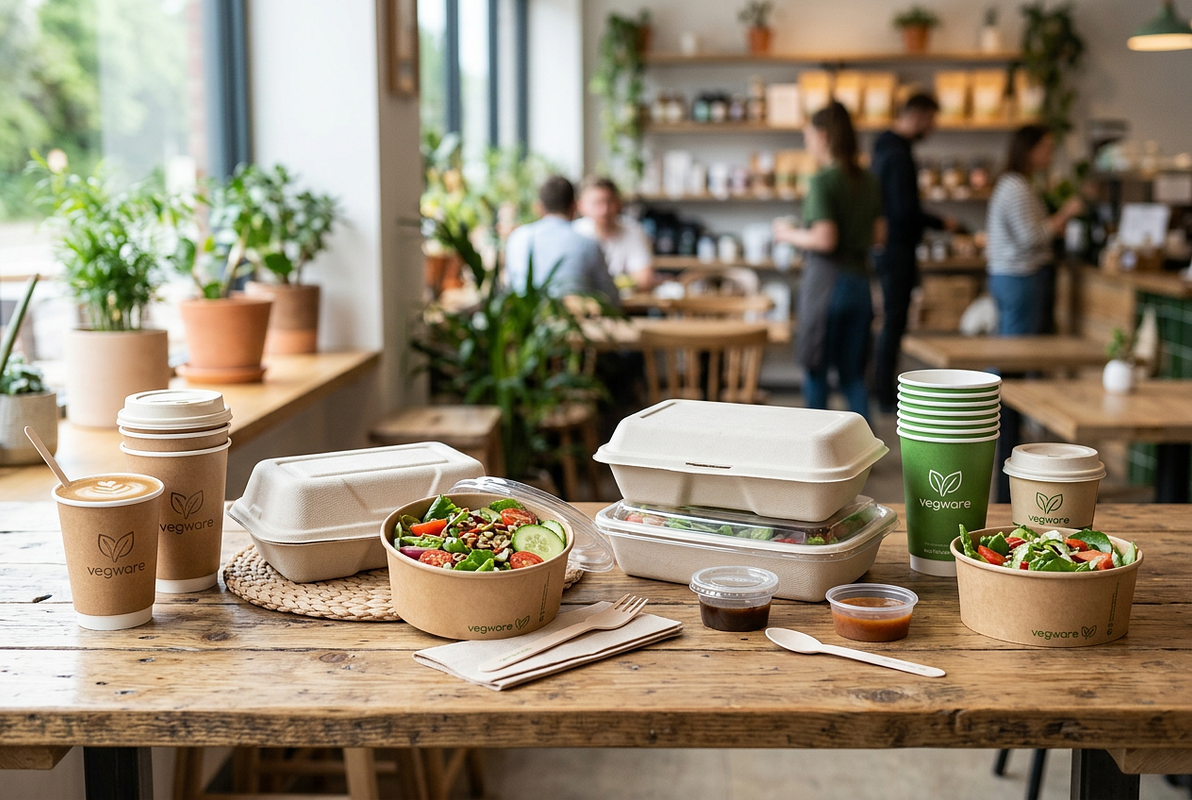
Vegware organises their catalogue into distinct categories, each addressing specific operational needs.
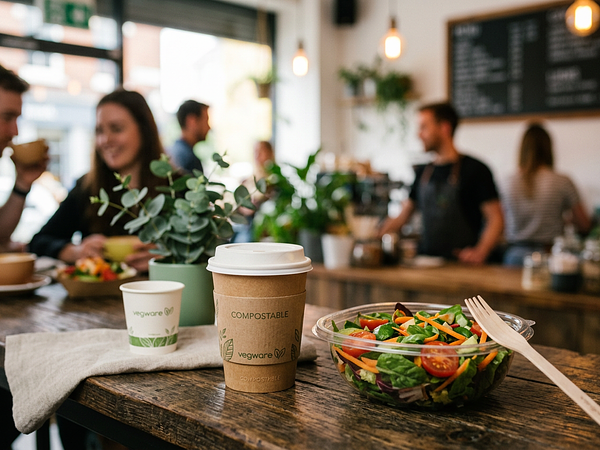
Hot Cups and Lids form their flagship range. These feature plant-based PLA linings rather than petroleum-based plastic, available from 4oz espresso cups to 20oz takeaway sizes. The double-wall options provide insulation without cardboard sleeves.
Cold Cups and Lids use clear PLA that looks and performs like plastic but composts completely. These work well for smoothies, iced drinks, and cold desserts, with sizes ranging from portion cups to large tumblers.
Food Containers span the full spectrum: bagasse clamshells for hot meals, PLA deli containers for salads, and paper food pots for soups. The bagasse range handles temperatures up to 100°C and resists grease effectively.
Cutlery and Straws include CPLA utensils (heat-stable to 85°C) and paper or PLA straws. The wooden cutlery alternative offers a lower-cost option for events.
Catering Supplies cover larger operations: platters, trays, napkins, and carrier bags. These items suit events, conferences, and high-volume catering.
Specialist Items address niche needs: sushi trays, sauce pots, sandwich wedges, and custom-printed options for branded operations.
Best Vegware Products in 2026
After examining customer feedback and operational performance, these products consistently deliver value.
Double Wall Hot Cups (12oz) remain their bestseller for good reason. The kraft brown exterior looks premium, the double wall eliminates sleeve requirements, and heat retention matches conventional alternatives. Pricing sits around £0.15-0.18 per unit at volume.
Bagasse Clamshell Boxes (9x6 inch) handle hot, greasy food without structural failure. They're microwave-safe, won't go soggy during delivery, and the hinged design works efficiently for takeaway operations. Expect £0.20-0.25 per unit.
CPLA Cutlery Sets solve the heat-stability problem that plagues basic PLA utensils. These won't bend in hot curry or warp in soup. The wrapped knife-fork-napkin sets streamline service for around £0.25 per set.
Clear PLA Cold Cups (16oz) showcase drinks beautifully while matching the clarity of petroleum-based plastic. Ideal for smoothie bars, juice operations, and iced coffee service at approximately £0.12 per unit.
Paper Food Pots (32oz) with PLA lining handle soups, stews, and noodle dishes. The secure lids prevent spillage, and the material maintains structural integrity even with hot liquids. Around £0.18 per unit.
Bagasse Plates (9 inch) offer genuine rigidity that cheaper alternatives lack. They won't buckle under a full English breakfast or fold when carrying substantial portions. Approximately £0.12 per plate.
Wooden Cutlery Range provides an economical alternative to CPLA for events where heat resistance matters less. The natural aesthetic appeals to certain customer demographics, and pricing drops to around £0.08 per piece.
Vegware Pros and Cons
Advantages:
Vegware products genuinely compost when processed correctly, backed by EN13432 certification and independent verification. The closed-loop collection service, available in major UK cities, removes the guesswork from disposal. Product quality consistently matches or exceeds conventional alternatives for heat resistance, grease-proofing, and structural integrity. The comprehensive range means you can source everything from one supplier, simplifying procurement. Staff training resources and marketing materials help communicate sustainability efforts to customers. Their supply chain transparency exceeds industry norms, with clear sourcing information available.
Drawbacks:
Premium pricing remains the primary barrier, with costs 15-30% higher than conventional disposables. Commercial composting access varies dramatically by location; without it, products offer limited environmental advantage. Some items, particularly basic PLA cutlery, underperform with very hot foods. Lead times can extend during peak seasons, requiring better forward planning. The products require customer education since they look similar to conventional items and might get binned incorrectly. Minimum order quantities for custom printing exclude smaller operations.
Where to Buy Vegware Products
Direct from Vegware offers the full range, bulk pricing, and access to their closed-loop services. Their website includes a distributor finder for local options. Direct purchasing suits larger operations buying regularly.
Authorised Distributors including Bunzl, Bidfood, and regional wholesalers stock popular Vegware lines. Distributors often offer faster delivery and lower minimum orders, though range may be limited.
Catering Suppliers like Nisbets and Alliance Online carry core Vegware products alongside conventional alternatives. Useful for comparing options and consolidating orders.
Amazon Business stocks some Vegware items, though pricing typically exceeds direct purchasing. Convenient for small quantities or urgent needs.
To avoid counterfeits and mislabelled products, verify EN13432 certification marks and purchase only from authorised channels. The Vegware website maintains a current distributor list. Bulk purchasing directly or through major distributors typically yields 10-20% savings compared to retail channels.
Vegware FAQ
Does Vegware work in regular bins? Technically yes, but it defeats the purpose. Products need commercial composting facilities to break down properly. In landfill, they decompose anaerobically and produce methane. Check local composting availability before committing.
How does Vegware compare to recycled plastic alternatives? Different approaches to the same problem. Recycled plastic keeps existing materials circulating; Vegware creates new materials that return to soil. Neither is universally "better" since context matters. Operations with composting access benefit from Vegware; those without might achieve more with recycled alternatives.
Is Vegware more expensive than conventional disposables? Yes, typically 15-30% more. However, the gap narrows at volume, and some operations offset costs through customer willingness to pay premium prices for demonstrable sustainability.
Can customers compost Vegware at home? Most items require industrial composting temperatures (55-60°C) that home compost bins don't reach. Vegware is transparent about this limitation. Their unlined paper products may work in home composting, but PLA and CPLA items won't break down properly.
What's the shelf life? Properly stored products last 12-18 months. PLA items should avoid direct sunlight and temperatures above 40°C during storage, as the material can begin degrading.
Making the switch to Vegware represents a genuine commitment rather than a quick fix. The products perform well, the certifications are legitimate, and the environmental benefits are real, provided you have the composting infrastructure to complete the loop. For operations serious about sustainability credentials and willing to invest in proper disposal systems, Vegware delivers on its promises. For those seeking a simple swap without operational changes, the premium pricing may not justify the investment.