Every year, the food service industry generates millions of tonnes of packaging waste. Most of it ends up in landfills, where it sits for centuries, or worse, in our oceans. The shift toward plant-based packaging represents one of the most practical changes businesses can make to address this problem. Vegware has emerged as a leading solution in this space, offering a complete range of food service disposables made entirely from plants. Unlike conventional packaging that relies on fossil fuels, these products are designed to return to the earth through commercial composting. The appeal extends beyond environmental benefits. Businesses are discovering that switching to compostable alternatives makes operational sense too. Waste management becomes simpler when everything goes in one bin. Customers respond positively to brands that demonstrate genuine environmental commitment. And the products themselves perform remarkably well, handling hot food, greasy takeaways, and steaming beverages without compromising on quality. For cafes, restaurants, caterers, and event organisers wrestling with sustainability goals, understanding what plant-based packaging can actually deliver is essential.
The Environmental Impact of Plant-Based Materials
The environmental case for plant-based packaging starts with a simple fact: we cannot keep extracting petroleum to make single-use items that last for 500 years. The mismatch between a product's useful life and its decomposition timeline is staggering. A coffee cup used for fifteen minutes should not persist in the environment for half a millennium.
Plant-based materials offer a fundamentally different approach. They come from renewable resources, primarily corn starch, sugarcane bagasse, and sustainably sourced paper. These materials can be grown, harvested, and regrown within human timescales. When disposed of correctly through commercial composting, they break down into nutrient-rich soil within twelve weeks.
Moving Beyond Petroleum-Based Plastics
Traditional food packaging relies heavily on petroleum-derived plastics. Polystyrene containers, plastic-lined cups, and conventional cutlery all begin their lives as crude oil. The extraction, refining, and manufacturing processes generate significant carbon emissions before these products even reach a customer.
Vegware products sidestep this dependency entirely. Their clear cups and containers use PLA, a bioplastic derived from corn. Hot cups feature paper from responsibly managed forests, lined with plant-based materials rather than polyethylene. This shift from fossil fuels to renewable crops represents a genuine change in how we think about disposable packaging.
Reducing the Carbon Footprint of Food Service
The carbon savings from plant-based packaging extend throughout the product lifecycle. Growing crops absorbs carbon dioxide from the atmosphere. Manufacturing processes for plant-based materials typically require less energy than plastic production. And at end of life, composting releases far fewer greenhouse gases than landfill decomposition or incineration.
Studies suggest that switching to compostable packaging can reduce a food service operation's packaging-related carbon footprint by 30-70%, depending on the specific products replaced and the waste management systems in place.
Versatile Solutions with Compostable Food Containers
Food containers face demanding requirements. They must hold hot, cold, wet, and greasy foods without failing. They need to look professional and feel substantial in customers' hands. And increasingly, they must do all this while remaining environmentally responsible.
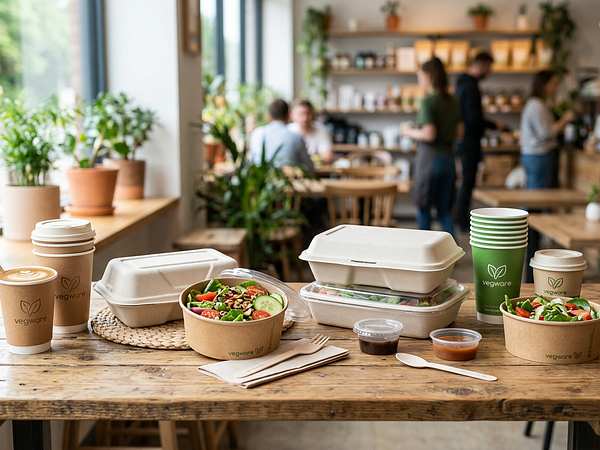
Modern compostable food containers meet these challenges through clever material science and design. Bagasse, the fibrous material left after sugarcane processing, creates sturdy containers that handle a remarkable range of foods. These containers work equally well for a steaming curry or a cold salad.
Heat Resistance and Durability for Hot Meals
One common concern about plant-based packaging involves heat tolerance. Early compostable products sometimes struggled with very hot foods, becoming soft or losing structural integrity. Current formulations have largely solved these issues.
Bagasse containers withstand temperatures up to 100°C without warping or weakening. They can go directly from microwave to table, making them practical for meal prep services and food delivery operations. The material's natural rigidity means containers maintain their shape even when filled with heavy, saucy dishes.
Greaseproof Properties for Takeaway Efficiency
Greasy foods present particular challenges for packaging. Oil can seep through paper products, creating mess and compromising the container's integrity. Compostable food containers address this through natural grease resistance and specialised coatings.
Bagasse fibres naturally resist oil penetration better than standard paper products. For applications requiring extra protection, plant-based coatings provide an additional barrier. Fish and chips, fried chicken, and pizza all travel safely in properly specified compostable containers, arriving at their destination looking professional rather than soggy.
Eco-Friendly Beverage Service with Biodegradable Coffee Cups with Lids
Hot beverages represent one of the most visible packaging challenges in food service. The UK alone uses an estimated 2.5 billion disposable coffee cups annually. Most conventional cups, despite appearing to be paper, contain a plastic lining that makes them virtually impossible to recycle through standard systems.
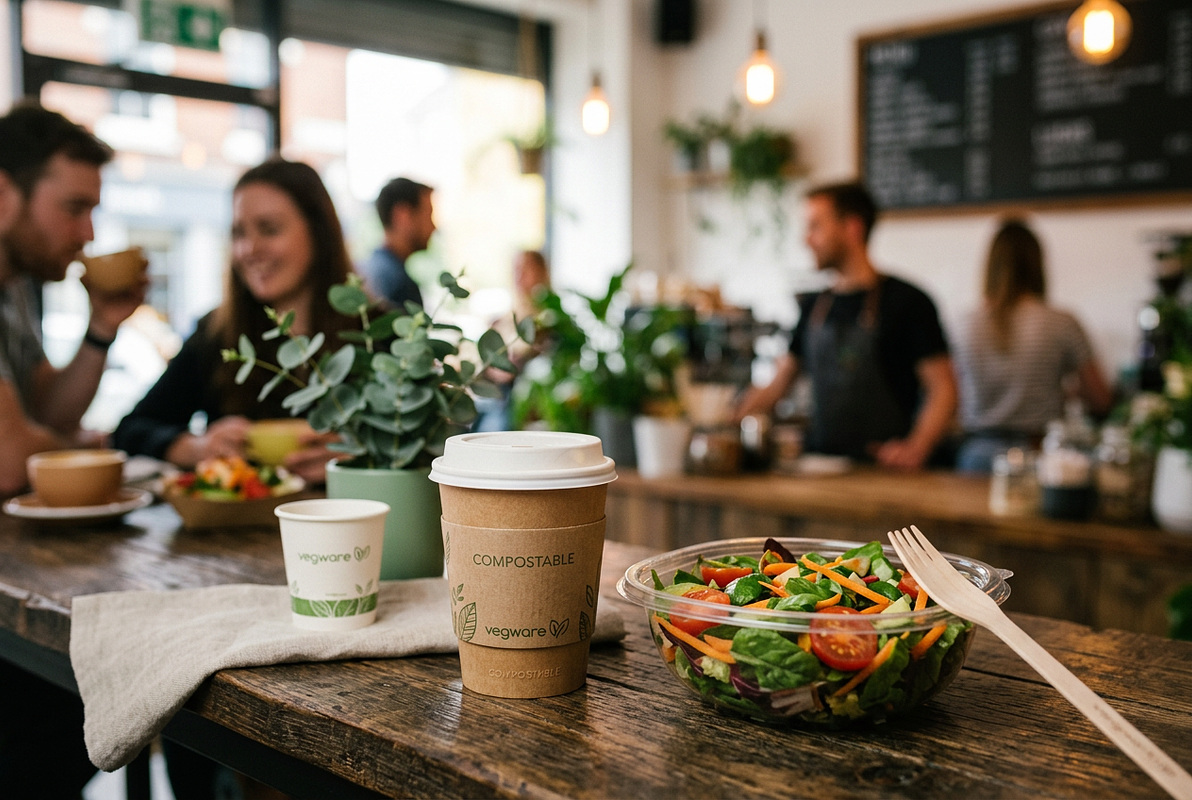
Biodegradable coffee cups with lids offer a genuine alternative. These products look and perform like conventional cups but are designed for commercial composting from the outset. The entire cup, including the lid, breaks down together, eliminating the sorting problems that plague mixed-material packaging.
Plant-Based Linings for Leakproof Performance
The key innovation in compostable hot cups lies in their lining. Traditional cups use polyethylene, a petroleum-based plastic, to create a waterproof barrier. Compostable alternatives use PLA or other plant-based materials that provide identical leakproof performance while remaining commercially compostable.
These linings bond securely to the paper outer layer, preventing leaks and maintaining structural integrity even with boiling liquids. Customers notice no difference in performance. The cup feels the same, holds heat similarly, and performs reliably from first sip to last.
Secure Lids Designed for Commercial Composting
Lids matter enormously for beverage service. A poorly fitting lid creates spills, frustrates customers, and wastes product. Compostable lids must match the precision engineering of conventional options while using entirely different materials.
CPLA lids, made from crystallised PLA, provide the rigidity and snap-fit precision that food service operations require. They withstand the heat of fresh espresso without softening and maintain their seal during transport. Crucially, they compost alongside the cups they accompany, creating a genuinely unified waste stream.
Streamlining Waste Management via Commercial Composting
Waste management often receives less attention than it deserves in sustainability discussions. Yet how packaging is disposed of determines whether its environmental benefits are actually realised. The best-designed compostable products achieve nothing if they end up in landfill.
Commercial composting provides the conditions necessary for plant-based packaging to break down properly. Industrial facilities maintain temperatures of 55-60°C, turning waste into usable compost within weeks. This process differs significantly from home composting, which typically cannot achieve the temperatures needed to break down PLA-based products.
The Advantage of Zero Waste to Landfill
When all food service disposables can go in one bin destined for commercial composting, operations can achieve genuine zero waste to landfill. Food scraps, napkins, containers, cups, and cutlery all process together, converting waste into a valuable soil amendment.
This simplification transforms waste management from a complex sorting challenge into a straightforward single-stream process. Staff training becomes easier. Contamination issues decrease. And the environmental outcome improves dramatically compared to sending mixed waste to landfill.
Simplifying Clean-up for Events and Catering
Events and catering operations face particular waste management challenges. Large volumes of waste accumulate quickly, often in locations without established recycling infrastructure. Sorting becomes impractical when thousands of guests generate waste simultaneously.
Compostable packaging eliminates sorting entirely for food service waste. Everything goes in one bin. This approach reduces staffing requirements, speeds clean-up, and ensures that sustainability goals are actually met rather than compromised by practical limitations.
Enhancing Brand Reputation and Customer Loyalty
Consumer attitudes toward environmental responsibility have shifted markedly. Surveys consistently show that customers, particularly younger demographics, prefer businesses that demonstrate genuine sustainability commitment. Packaging choices send visible signals about a brand's values.
Plant-based packaging provides tangible evidence of environmental commitment. Unlike vague corporate statements, compostable cups and containers represent real investment in sustainable alternatives. Customers can see and touch the difference.
Meeting the Demand for Sustainable Business Practices
The demand for sustainable business practices extends beyond individual consumers. Corporate clients increasingly require suppliers to demonstrate environmental credentials. Event organisers specify sustainable catering requirements. Local authorities encourage or mandate compostable packaging for certain applications.
Businesses using Vegware and similar products position themselves advantageously for these requirements. They can respond positively to sustainability questionnaires, meet tender specifications, and attract environmentally conscious clients who might otherwise look elsewhere.
Certified Quality and Safety Standards
Certification matters in food service packaging. Products must be safe for food contact, perform reliably, and actually compost as claimed. Reputable plant-based packaging carries multiple certifications that verify these essential qualities.
Look for products certified to EN13432, the European standard for compostable packaging. This certification confirms that products will break down within the specified timeframe under commercial composting conditions. Food contact certifications ensure materials are safe for their intended use. FSC certification for paper products confirms responsible forestry sourcing.
These certifications provide assurance that plant-based packaging delivers on its environmental promises. They distinguish genuinely compostable products from greenwashed alternatives that may look similar but lack the same credentials.
Making the switch to plant-based packaging requires some adjustment, but the benefits compound over time. Waste management simplifies. Customer perception improves. Environmental impact decreases measurably. For food service businesses serious about sustainability, compostable packaging represents one of the most practical and visible changes available. The technology works, the products perform, and the environmental case is clear.