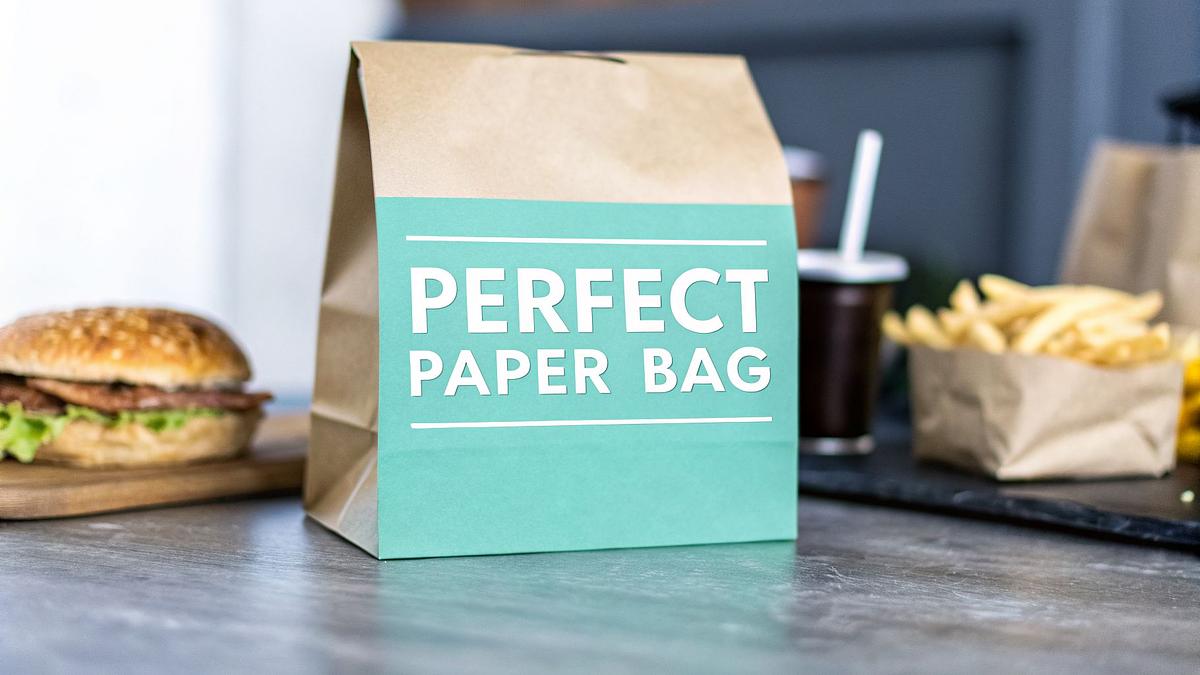
A paper bag for food is so much more than just a way to get an order from your counter to a customer's hands. For any modern hospitality business here in the UK, it’s a statement. It speaks volumes about your quality, your brand, and your commitment to the environment, long after the customer has left your premises.
As diners increasingly vote with their wallets for sustainable, quality-conscious businesses, the humble paper bag has become a critical piece of the puzzle. It needs to protect the food you’ve so carefully prepared, represent your brand out in the wild, and stand up to the rigours of a busy service.
Why Your Choice of Paper Bag Matters More Than Ever
In the crowded UK food scene, every single detail of the customer experience is a chance to stand out. And believe it or not, that paper bag is often the final handshake with your customer. It’s the last thing they touch and the very item that carries your brand's name down the street.
This isn't just about looking good, though. With single-use plastic regulations getting tighter and customers becoming more eco-savvy, thoughtful packaging is no longer a "nice-to-have"—it's a business necessity. A well-chosen paper bag for food shows you’re serious about quality and the planet, which goes a long way in building loyalty with today's diners.
Beyond a Simple Container
Thinking of a bag as just a carrier is a massive missed opportunity. The right choice delivers tangible benefits that ripple through your entire operation, from keeping food perfect to acting as a free marketing tool.
Protecting Food Quality: Nobody wants a lukewarm meal or a soggy bag. A sturdy, well-made bag ensures hot food arrives hot, and grease or sauces stay where they belong—inside the container, not on your customer's clothes.
Enhancing Brand Image: A crisp, custom-printed bag is your walking billboard. It projects a professional image and reinforces your brand identity every time a customer walks out the door. It turns a simple purchase into a visible endorsement.
Meeting Customer Expectations: Today's customers are actively looking for businesses that align with their values. Offering packaging like recyclable or compostable paper bags, cups, napkins and straws shows you’re listening and that you care about the same things they do.
The specific paper bag you choose is a practical decision that directly shapes how people see your brand, how smoothly your takeaway service runs, and ultimately, your bottom line. It’s a choice that reflects your dedication to an excellent end-to-end experience.
This guide is here to help UK hospitality businesses make a smart, sustainable, and profitable decision. We'll go far beyond just looking at sizes and shapes to dig into the details that really matter: the science of different paper materials, what food-safety compliance actually means for your business, and how to manage the logistics without a headache.
From picking the right paper grade for heavy curry orders to understanding the real-world difference between 'compostable' and 'recyclable', you’ll get the knowledge you need. We'll also share practical tips on managing costs and turning your entire packaging suite—from bags to coffee cups and food containers—into one of your most effective marketing assets.
Choosing the Right Type of Paper Bag for Your Menu
Picking the right paper bag for food goes far beyond just getting the size right. It’s about making a smart match between the bag’s material, its design, and the food you’re putting inside. Get this right, and your food arrives looking and tasting exactly as you intended, which says everything about your brand’s quality.
Think of it like choosing the right pan for a dish. You wouldn't use a delicate crêpe pan for a hearty stew, and the same logic applies here. A simple, unlined kraft bag is perfect for dry goods like a crusty loaf or a fresh pastry, but it just won't hold up against a saucy takeaway curry.
This choice is more important than ever. While plastic has long dominated the UK’s takeaway scene, paper and paperboard are quickly gaining ground as businesses and consumers alike prioritise sustainability. The food sector is actually the fastest-growing market for paper packaging, which tells you a quality paper bag is now a cornerstone of the modern takeaway experience.
Matching Bag Style to Your Service
Your first big decision is about the bag's fundamental shape and how it functions in a busy service environment. Different bags are engineered for different jobs.
Standard Kraft Bags: These are the classic brown or white paper bags you see everywhere. They’re a versatile and cost-effective choice for lighter fare like sandwiches, individual bakery items, or small retail purchases. Available with or without handles, they are a straightforward solution for simple grab-and-go orders.
SOS (Stand-on-Shelf) Bags: The key feature here is the flat, rectangular base that lets the bag stand up on its own. This is a game-changer for packing multiple items, like a lunch combo with a drink and a sandwich. It prevents everything from tipping over and makes the packing process much quicker for your staff.
This flowchart breaks down the selection process, helping you balance the needs of your food, your brand, and the planet.

As the guide shows, the ideal bag is where your menu's practical demands, your branding goals, and your sustainability values all meet.
Matching the Bag to Your Menu
Choosing between the main types of paper bags can feel tricky, but it's much simpler when you match the bag's features directly to your menu items. This quick-reference table breaks down the most common options to help you find the perfect fit.
| Bag Type | Material | Best For | Key Feature |
|---|---|---|---|
| SOS Bag | Kraft Paper | Multi-item orders, lunch combos, groceries | Flat bottom lets it stand upright for easy packing. |
| Glassine Bag | Thin, glossy paper | Pastries, fried goods, sausage rolls, doughnuts | Grease-resistant and prevents oily marks. |
| Lined Bag | Paper with PLA liner | Curries, pasta, saucy dishes, hot food | Waterproof barrier contains leaks and moisture. |
| Kraft Bag | Standard Paper | Sandwiches, bread, dry goods, retail items | Economical and versatile for non-greasy items. |
By aligning the bag's properties with what you serve, you ensure every order arrives in perfect condition, protecting both your food and your reputation.
Handles, Linings, and the Hidden Details
Once you've settled on a style, it's time to zoom in on the finer details. For any UK food business serving hot, greasy, or heavy food, this is where the real performance comes from.
The choice of handle, for instance, directly affects how much weight the bag can safely carry and how comfortable it is for the customer. Flat paper handles are a great, economical choice for lighter lunch orders. But for heavier loads, like a large family meal or several takeaway containers, you'll want reinforced twisted handles. They provide far superior strength and durability, giving you peace of mind that the bag won't fail.
That brings us to what's happening inside the bag. This is where specialised linings prove their worth.
Think of a liner as a built-in raincoat for your paper bag. It’s an invisible feature that works hard to protect both the food and the bag itself from moisture and grease, ensuring a mess-free delivery every time.
A glassine lining, for example, is made from a super-smooth, glossy paper that offers excellent grease resistance. It's the ideal barrier for items like warm sausage rolls, chips, or fried chicken.
For anything with more moisture or sauce, you'll need something more robust. A PLA (polylactic acid) lining creates a completely waterproof barrier. This plant-based bioplastic liner ensures that even the sauciest curries or pasta dishes are fully contained. It stops any leaks that could soak through the paper, weaken the bag, and ultimately create a terrible experience for your customer. Matching the right lining to your menu really is the secret to a reliable paper food bag.
Ensuring Durability and Food Safety Compliance
For anyone running a hospitality business in the UK, a couple of questions are always front of mind when choosing packaging: "Will this bag actually hold up?" and "Is it safe for my food?" Let's be honest, a flimsy bag that tears or a material that isn't food-grade can undo all your hard work in an instant. Getting durability and safety right isn’t just about ticking boxes—it's about protecting your reputation.

It’s no surprise, then, that the UK's bustling food scene has made a decisive shift toward higher-quality paper options. We’re seeing independent cafés, takeaways, and restaurants moving away from plastic, making the humble paper bag for food a true staple. The numbers back this up. Kraft liners, the backbone of sturdy food bags, are a huge part of the UK packaging market. This isn't just a fleeting trend; it’s a clear signal that businesses demand reliable, eco-conscious packaging that actually performs.
How to Tell a Good Bag from a Bad One
The real secret to a bag’s strength comes down to its GSM (Grams per Square Metre). Think of GSM as the paper's density and thickness. A higher GSM means a sturdier, more robust paper that won't buckle under the pressure of a full takeaway order with multiple containers or drinks. For lighter items like a single pastry or a sandwich, a lower GSM will do the job perfectly well.
But strength is only half the story. You also need to think about grease and moisture. This is where two key terms come into play:
- Grease-Resistant: This is paper that's been treated to slow down oil absorption. It’s a great fit for things like sausage rolls, croissants, or fried chicken, giving you a good window of time before any greasy marks start to show.
- Greaseproof: This is the next level of protection, usually thanks to a specialised lining inside the bag. A greaseproof paper bag for food creates a solid barrier, stopping oils and sauces from ever leaking through. It’s absolutely essential for messier dishes like curries, loaded chips, or anything with a generous serving of sauce.
Matching the right GSM and grease protection to your menu is the key to making sure your food looks as good when your customer gets home as it did when it left your kitchen.
What You Need to Know About UK Food Safety Rules
Just as important as performance is making sure your packaging is 100% legal and safe for direct contact with food. Here in the UK, all food packaging materials have to meet strict regulations designed to prevent anything harmful from transferring from the packaging to the food itself.
When you see a "food-safe" mark, it's a guarantee. It means the paper, inks, and any glues or linings have been properly tested and are certified non-toxic. It’s your peace of mind that you're protecting both your customers and your business.
This is completely non-negotiable. Any reputable supplier should be able to provide documentation proving their products meet these standards. If you're serving particularly hot, greasy, or saucy items, looking into specialised options like our fully lined food bags gives you that extra layer of confidence in both performance and safety.
The Ultimate Test: Putting Samples to Work
Reading a spec sheet is one thing, but the only way to know for sure is to see how a bag handles your actual food. Before you commit to a big order, always get your hands on some free samples and put them through a real-world stress test.
Here’s a simple checklist to run through:
- Load It Up: Fill a sample bag with one of your heaviest, most awkward orders. Carry it around. Do the handles feel solid? Is the bottom holding its shape?
- Bring the Heat (and Grease): Put your hottest and greasiest food inside. Let it sit for about 20-30 minutes—the average time it might take a customer to get home. Look for any weak spots, grease stains, or signs of the paper softening from steam.
- The Sauce Challenge: Test the bag with your sauciest dish. A proper greaseproof bag should come out completely clean on the outside, with no leaks.
This hands-on approach takes all the guesswork out of the equation. It's the final, crucial step to finding a durable and reliable paper bag for food and ensuring you deliver a perfect experience, every single time.
Navigating Sustainability Claims and Disposal
Choosing eco-friendly packaging is a big part of your brand's story now, especially in the UK hospitality scene. But when you're faced with terms like ‘recyclable’, ‘compostable’, and ‘biodegradable’ all being thrown around, it can feel like you need a science degree to figure out what’s genuinely good for the planet.
Getting it right is crucial. Your sustainable intentions are fantastic, but they need to translate into real-world positive impact. Let's break down what these claims actually mean for a busy food business, so you can make choices that truly align with your values and, just as importantly, with the UK's waste disposal systems.
Recyclable vs Compostable: What Is the Difference?
This is where most of the confusion happens. People often use 'recyclable' and 'compostable' as if they mean the same thing. They don't. And mixing them up can do more harm than good by contaminating entire batches of waste.
- Recyclable: A recyclable paper bag is meant to be turned back into paper. Its fibres get pulped and repurposed to create new paper products. It’s a great circular idea, but it has a huge weak spot: dirt and grease.
- Compostable: A compostable bag is made to break down into soil. It’s designed to return to the earth as organic matter, but only if it’s put in the right conditions.
The one thing that almost always stops a paper bag for food from being recycled is the food itself. That leftover grease from a bacon butty or the sauce from a curry just can’t be separated from the paper fibres.
Think about a greasy pizza box or a bag stained from a pasty. That's a classic contaminant. It'll almost certainly be rejected at the recycling plant. In these cases, composting might seem like the answer, but it's not always that simple.
Understanding Linings and Disposal
This brings us to the special linings that make bags grease-resistant. A plain, uncoated kraft paper bag is a dream for recyclers – as long as it's clean and dry. But what about the bags designed to handle your hot, greasy, or saucy menu items?
A bag with a PLA (polylactic acid) liner is a common example. This is a plant-based plastic, which sounds great. However, it is commercially compostable only. This is a key detail. It means the bag needs the intense heat and specific environment of an industrial composting facility to break down properly. It can’t go in a customer’s home compost bin and it definitely can’t go in their paper recycling.
For any UK food business, this has a couple of major implications:
- Check Your Local Council: Before you invest in PLA-lined bags or food containers, you have to confirm that your local commercial waste service actually collects and processes this type of packaging. Not all areas do.
- Tell Your Customers What to Do: You need to give clear instructions. A simple icon or a message like "Commercially Compostable Only – Not for Home Recycling" on the bag itself can stop well-meaning customers from putting it in the wrong bin.
The Importance of Certifications
To cut through the marketing fluff and be sure your claims are solid, you need to look for trusted, independent certifications. For any paper bag for food, the big one to look for is the FSC (Forest Stewardship Council) logo.
Seeing that FSC mark is your guarantee that the paper in your bags comes from responsibly managed forests. It's confirmation that the timber was harvested in a way that protects biodiversity and doesn't harm local communities. Choosing FSC-certified products is a simple, direct way to ensure your supply chain starts on the right ethical and environmental footing.
You can learn more by exploring our complete guide to eco-friendly packaging choices for your business.
Turning Your Paper Bag into a Marketing Asset
Every single order that walks out your door is a missed opportunity if it's in a plain, unbranded bag. Think about it: a custom-printed paper bag for food is your very own walking billboard, carrying your brand's name and logo all over town. It turns a simple takeaway into a powerful, moving advertisement.

This isn't a strategy reserved for the big chains with deep pockets anymore. Thanks to modern printing and smarter logistics, getting your own custom branding is a genuinely smart and affordable move for independent cafés, takeaways, and food trucks across the UK. It’s a simple way to punch above your weight, creating a professional look that not only sticks with your customers but also catches the eye of everyone they pass.
The Financial Sense of Custom Branding
Let's be clear: custom branding isn't just another expense—it's an investment that pays for itself. The widespread switch to paper bags and food containers is a core part of the modern UK food service landscape. The numbers show that investing in quality, customised packaging is where the industry is heading.
Branded packaging turns a sunk cost—the bag you have to buy anyway—into a proactive marketing asset that works for you long after the food is gone. It builds brand recognition with every single order.
Good suppliers have made this process incredibly straightforward. At Afida, for instance, we’ve set our minimum order quantities (MOQs) for custom printing as low as just 1,000 units. This tears down the old barriers, making professional branding a reality for smaller businesses without needing a huge upfront investment or tying up cash.
Smart Logistics for Small Spaces
We get it. One of the biggest headaches for any independent business is storage. Ordering in bulk to slash your per-unit cost sounds great, but where on earth do you put thousands of bags, cups, and napkins?
This is exactly where smart logistics come in. Services like free off-site storage solve this problem entirely. You can place a larger, more cost-effective order to lock in that excellent price, and we’ll simply store the stock for you in our warehouse. When you're running low, you just "call off" what you need, and we'll get it to you with our standard 48-hour UK-wide delivery.
It’s the best of both worlds, really:
* Cost Savings: You get the financial benefits of buying in bulk.
* Space Efficiency: Your precious back-of-house space stays clear for things that actually make you money.
* Cash Flow Management: You pay for what you need as you go, not all at once.
Designing a Bag That Gets Noticed
A brilliant design doesn't have to be complicated. In fact, a clean, bold logo is often far more effective than a busy, cluttered one. The goal is to be memorable and instantly recognisable.
Here are a few practical tips for creating a winning paper bag design:
- Keep It Simple: Let your logo and business name be the stars of the show.
- Add Your Socials: An Instagram handle or TikTok username encourages customers to connect and tag you online.
- Craft a Tagline: A short, snappy phrase that captures your brand's personality can work wonders.
- Think About Colour: Even a simple one-colour print on a standard kraft or white bag can look incredibly sharp and professional.
For those wanting to take it a step further, your bag can become a gateway to your digital world. It's worth looking into advanced QR code marketing strategies that can link customers directly to your menu, special offers, or loyalty programmes. If you need a hand, our team is here to guide you through creating impactful designs. You can find out more about Afida's custom branding services here.
Right, you’ve picked out the perfect paper bag for food, but how you actually buy it is where you can really make a difference to your bottom line. Thinking strategically about how you order all your disposables—from bags and cups to napkins and straws—can save you a surprising amount of money and a whole lot of stress.
The aim is to find that sweet spot. You never want to run out of bags mid-service, but you also don't want your stockroom crammed to the ceiling with boxes you won't touch for months. It’s a balancing act, and it all comes down to a bit of forward planning and working with a supplier who gets the rhythm of a busy UK food business.
Calculating Your Needs and Minimising Waste
One of the quickest ways to leak money is by using the wrong-sized bag. We’ve all seen it: a single, lonely pastry swimming in a huge carrier. It looks a bit unprofessional, and it's essentially like throwing cash straight in the bin. On the flip side, trying to squeeze a family-sized order into a bag that’s too small is just asking for rips, spills, and an unhappy customer.
Before you even think about ordering, take five minutes to match your menu items to your bag sizes. It’s a simple exercise that pays dividends.
- Small Bags: These are your go-to for single items. Think a sausage roll, a slice of cake, or a couple of freshly baked cookies.
- Medium Bags: Ideal for the classic lunch combo—a sandwich, a bag of crisps, and a drink container.
- Large Bags: You'll need these for bigger takeaway meals, bulky salad boxes, or multi-person orders.
By keeping a few core sizes on hand, you can make sure every order is packed perfectly. It’s a tiny change in your routine that cuts down on material waste and directly trims your packaging costs.
Unlocking Savings with Bulk Orders and Smart Logistics
It’s no secret that buying in bulk saves money. The price per bag drops significantly when you order a larger volume. But this immediately brings up the classic problem for most UK hospitality businesses: where on earth do you store it all?
A great supplier doesn't just sell you packaging; they help you manage it. Free off-site storage is a solution that allows you to buy in bulk at a lower price, while we store the stock for you.
This model is a lifesaver for businesses tight on space. You get to lock in fantastic pricing by placing a large order for your custom-branded bags or food containers. Then, you simply ‘call off’ what you need, and we deliver it right to your door. The benefits are clear:
- You get bulk-order pricing without the storage nightmare.
- You free up precious space in your stockroom for things that matter more.
- It helps you manage your cash flow by only paying for the stock as you need it.
Of course, this all hinges on having a supplier who can deliver quickly and reliably. At Afida, for instance, we offer free 48-hour delivery on orders over £100 (ex. VAT), so you’re never left in the lurch. This blend of smart pricing and dependable logistics means you’ll always have the right paper bag for food when you need it, helping your business run that little bit smoother.
Your Paper Food Bag Questions Answered
When you're choosing the right paper bags for your food business, a few practical questions always pop up. We’ve heard them all from UK café, restaurant, and takeaway owners over the years, so we’ve put together some straightforward answers to help you make the right call.
Are Paper Bags Strong Enough for Heavy Orders?
This is probably the number one question we get, and the answer is a definite yes—if you choose the right bag. It all comes down to the paper's weight, measured in GSM (grams per square metre). Think of it like the difference between printer paper and thick card; a higher GSM means a much stronger, sturdier bag.
For a hefty takeaway order loaded with food containers and drinks, you'll want a bag with a high GSM. Just as important, though, are the handles. Look for bags with reinforced twisted paper handles. They’re specifically designed to distribute weight evenly and prevent tearing, unlike standard flat handles. We always encourage businesses to grab some free samples first. There’s no better way to get a real feel for the bag’s strength than to test it with your own products.
How Do the Costs of Branded Paper Bags Compare?
It's true that a custom-branded bag costs a little more per item than a plain one, but it’s best to think of it as a marketing investment, not a packaging expense. Every customer walking down the street with your bag becomes a mobile advert for your brand. When you stack it up against plastic, the pricing is becoming much more competitive, especially with things like the UK Plastic Packaging Tax evening the playing field.
We've also structured our services to make branding accessible for everyone.
- Low Minimum Orders: You can get started with a run of just 1,000 units, so you don’t have to commit to a huge, expensive order straight out of the gate.
- Free Storage Services: To get the best price, you can order a larger volume. We'll store the stock for you at no extra cost, and you can simply call it off as you need it. This frees up both your cash and your precious storage space.
Can a Paper Bag Be Both Recyclable and Greaseproof?
Yes, it can, but this is where you need to pay close attention to the materials to get disposal right. Modern greaseproof papers often use a water-based coating that’s eco-friendly. It creates a decent barrier for mildly greasy items like pastries or sandwiches, and as long as the bag isn’t too soiled, it can still go into the paper recycling.
However, if you’re dealing with really saucy or oily dishes, you'll likely need a bag with a PLA (polylactic acid) lining. This plant-based plastic is a fantastic barrier, but it means the bag is commercially compostable, not recyclable with household paper. Always double-check the specs. We can help you find the perfect balance between the performance you need and the eco-friendly disposal you want.
Ready to find the perfect packaging solution for your business? At Afida, we offer a wide range of high-quality, eco-friendly paper bags, cups, food containers, and more, all designed for the UK's demanding food service industry. Explore our full collection and request your free samples today.