Picking the right disposable coffee cup for your business is a bigger decision than you might think. It’s a choice that ripples through your budget, your branding, and even how your customers feel about their daily brew. At its core, you're choosing between three main players: the budget-friendly single wall cup (which needs a sleeve for hot drinks), the insulated double wall for a more premium feel, and the textured ripple wall for the best grip and heat protection.
This guide will walk you through the options, helping you find the perfect match for your UK coffee business.
A Practical Guide to Choosing Coffee Cups
Think about it – your takeaway packaging is one of the most direct ways you connect with your customers. It’s the one piece of your brand they carry with them long after they've walked out the door. Getting this choice right from day one means you're serving drinks safely, keeping your costs in check, and showing everyone what your brand is all about.
Consider this your friendly expert guide. We'll cut through the industry jargon and help you place that first order with confidence, focusing on the key decisions you'll need to make.
The Core Choices for Your Business
First up, we'll dive into the three main types of paper cups: single wall, double wall, and ripple wall. Getting to grips with the real-world differences in insulation, price, and customer experience is your starting point. Each style has its place, and knowing the pros and cons is crucial for matching the cup to the drink and your budget.
Next, we'll talk materials. You'll need to decide between standard PE-lined cups or the compostable PLA-lined alternatives. This isn't just an environmental choice; it affects your messaging and how customers dispose of the cups. We’ll also break down the most popular sizes – 8oz, 12oz, and 16oz – and explain why the 12oz cup is the reigning champion for most UK coffee shops.
A great disposable coffee cup does more than just hold coffee. It keeps your customer's hands comfortable, stops leaks with a solid lid, and works as a pocket-sized billboard for your business.
Finally, we'll cover the importance of pairing your cups with the right lids (a surprisingly critical detail!) and explore how custom printing can turn a simple cup into a powerful branding tool. To help you decide, we also offer a free Coffee Shop sample pack so you can feel the quality for yourself before you commit. Our aim is to give you everything you need to choose the perfect cups for your entire takeaway range, from containers and napkins to straws.
1. Single Wall vs Double Wall vs Ripple Cups Explained
Picking the right disposable coffee cup is one of those crucial first decisions for any café or coffee business. It’s about so much more than just holding hot liquid; it’s a direct reflection of your brand, a key part of the customer experience, and a major factor in your day-to-day running costs.
Let's walk through the three main styles you'll come across in the UK, so you can figure out which one really fits what you’re trying to achieve with your menu and your budget. The best way to think about it is that each cup is a different tool for a different job.
This simple flowchart can help you see which direction to go in based on your main priorities – whether that’s keeping costs low, building a premium brand, or focusing on your eco-credentials.
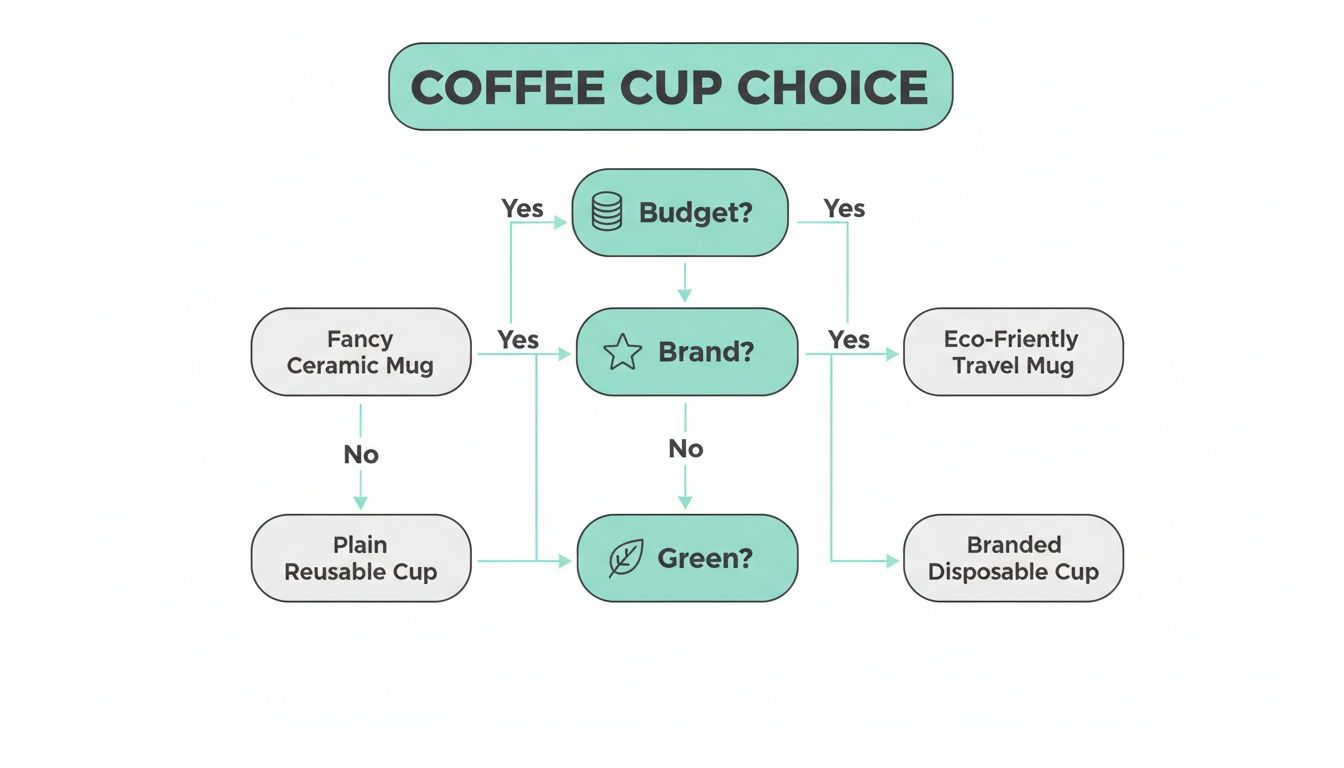
As you can see, if budget is your absolute top concern, single-wall cups are the obvious starting point. But for businesses that want to create a more premium feel, the conversation quickly moves towards double or ripple wall options.
Single Wall Cups: The Everyday Essential
The single wall cup is the most straightforward and budget-friendly choice out there. It’s made from a single layer of paperboard, making it a simple, lightweight option.
Because of that basic construction, it offers very little insulation. This is perfect for cold drinks like iced lattes, juices, or smoothies, but it’s a no-go for hot drinks on its own. If you want to serve a hot Americano or flat white, you absolutely have to pair it with a cardboard sleeve. That means another item to order, store, and factor into your costs.
- Best For: Cold drinks, or hot drinks only when used with a protective sleeve.
- Pros: The lowest cost per unit you'll find.
- Cons: You need to buy and stock sleeves for hot drinks, which eats into those initial savings.
Double Wall Cups: The Industry Standard
For most UK coffee shops, the double wall cup is the go-to workhorse for hot drinks. It’s designed with a second layer of paperboard which cleverly creates an insulating air gap. This keeps the coffee inside piping hot while your customer's hands stay comfortably cool.
That built-in insulation means you don't need a separate sleeve, which simplifies things for both your baristas and your customers. These cups also have a sturdier, more substantial feel, which immediately signals a higher quality product. A classic example is the ever-popular 12oz Kraft Double Wall Cup, a real favourite for its great performance and timeless look.
That extra layer in a double wall cup isn't just for insulation. It adds a rigidity and a sense of quality that customers genuinely notice. It tells them you've invested in giving them a better experience.
Ripple Wall Cups: The Premium Choice
Finally, we have the ripple wall cup, which offers the best insulation you can get and has a very distinctive look and feel. It has a corrugated outer layer that creates lots of little air pockets, giving you excellent protection from heat and a wonderfully textured, secure grip.
This unique texture makes the cup really comfortable to hold, even with the hottest of drinks. Plus, its standout appearance helps your brand pop. While ripple wall cups are usually the most expensive of the three, many high-end cafés find the investment is well worth it for the premium experience they deliver.
To help you see the differences at a glance, here’s a quick comparison of the three types.
At-a-Glance Comparison of Disposable Cup Types
This table breaks down the key features, best uses, and other considerations for single, double, and ripple wall cups, helping you make a quick decision based on your needs.
| Cup Type | Key Feature | Best For | Sleeve Needed? | Cost Level |
|---|---|---|---|---|
| Single Wall | Single layer of paperboard | Cold drinks or hot drinks with a sleeve | Yes (for hot) | £ |
| Double Wall | Two layers with an insulating air gap | Hot drinks like coffee and tea | No | ££ |
| Ripple Wall | Corrugated outer layer for max insulation | Premium hot drinks, brand distinction | No | £££ |
Ultimately, the right choice depends on balancing your budget with the quality of experience you want to provide for your customers. To help you decide, we also offer a free Coffee Shop sample pack, which includes a selection of our best-selling cups, lids, and other essentials for you to test out.
Choosing the Perfect Cup Size for Your Menu
Once you’ve nailed down the right cup material for your business, the next big decision is sizing. This isn't just a case of offering 'small, medium, and large'. Your choice of cup sizes has a direct knock-on effect on your drink recipes, pricing, and how customers perceive value. Get it right, and you’ll have a clear, profitable menu that just makes sense.
For most UK cafés and coffee shops, the market has naturally settled on three core sizes that do the job perfectly: the 8oz, 12oz, and 16oz disposable cup. Let's break down what each one is really for, which will help you decide whether to stock all three or just focus on the big sellers to keep your inventory lean. This is a crucial call for managing costs and stockroom space, especially if you're a mobile vendor or running a smaller café.
The 8oz Cup: For the Coffee Purists
The 8oz (approx. 227ml) cup is the smallest of the mainstays, but it plays a vital role. Think of it as the specialist’s choice, perfect for drinks where the quality and intensity of the coffee are the real stars of the show. It’s the industry standard for a proper flat white, a cortado, or a traditional cappuccino.
Using an 8oz cup keeps the coffee-to-milk ratio exactly as it should be for these classics. Trying to serve a flat white in a bigger cup would just dilute the flavour and ruin the whole experience. It also happens to be the ideal size for a 'small' filter coffee or Americano, hitting the spot for customers who want a quality brew without a huge volume. If you take your coffee programme seriously, the 8oz cup is non-negotiable.
The 12oz Cup: The Undisputed Bestseller
If you were forced to pick just one size, this would be it. The 12oz (approx. 340ml) is, by a country mile, the most popular size for takeaway coffee in the UK. This is your 'regular'—the one most customers will instinctively order. It’s the perfect all-rounder for a standard latte, mocha, or a satisfying Americano.
The 12oz cup is the anchor of any takeaway menu. It’s the size customers expect for their daily coffee, making it the bedrock of your stock. If you get your ordering right for this size, you'll consistently meet the bulk of your demand without a hitch.
Because it's the top seller, you’ll fly through 12oz cups and lids faster than anything else. When you’re planning your first order, it’s a smart move to put a bigger chunk of your budget and storage space towards this size. Keeping a healthy supply is fundamental to a smooth-running service.
The 16oz Cup: The Upsell and the Value King
Finally, we have the 16oz (approx. 454ml) cup, your 'large' option. This size is for the customer who needs an extra kick to power through their day, or simply wants more of their favourite drink. From a business perspective, it's a key tool for upselling and nudging up your average customer spend.
You'll almost certainly sell fewer 16oz cups than 12oz, but they're still a vital part of a complete menu. They offer a clear value proposition for anyone wanting a bigger portion. This size is also fantastic for other high-volume drinks like iced coffees, fully-loaded hot chocolates, and seasonal speciality lattes. Having it in your lineup means you never have to say no to a customer looking for a larger size.
The best way to figure out what works for you is to get your hands on them. See how they feel and perform by ordering a free Coffee Shop sample pack. It lets you test them out with your own drinks before you commit to a full order.
What Are Your Cups Made Of? A Practical Guide to Materials
The design of your disposable cups is one thing, but the material they're made from is just as crucial. Your customers are more clued-up than ever about environmental impact, and the packaging you use is a very visible statement about your brand's values. Getting this choice right means you're not just serving coffee; you're showing you care.
Let's break down the two main options you'll come across. No jargon, no long-winded science lessons—just the practical, real-world differences to help you decide what’s best for your business.
Standard PE-Lined Cups: The Traditional Choice
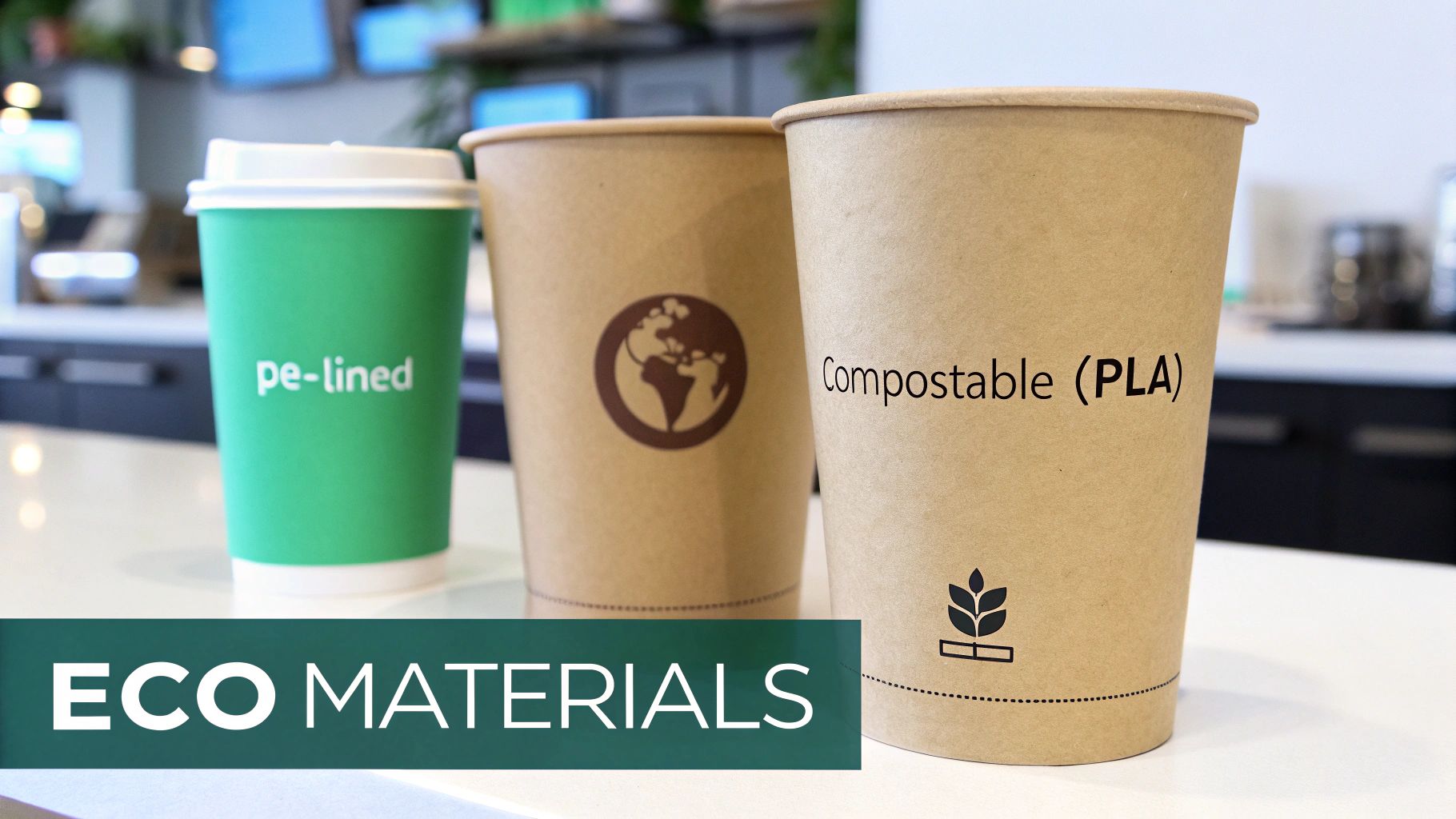
For years, the go-to paper coffee cup has been lined with a thin layer of PE (polyethylene). This plastic film is the magic ingredient that makes the paperboard waterproof, stopping a hot latte from turning the cup into a soggy mess. PE-lined cups are reliable, they do the job well, and they’re generally the most budget-friendly option out there.
They are a dependable workhorse. The major snag, however, comes at the end of their life. Because that plastic lining is bonded so tightly to the paper, these cups can't just be tossed into standard paper recycling bins. They need specialist facilities to separate the materials, and frankly, those aren't widely available across the UK just yet.
Compostable PLA-Lined Cups: The Greener Alternative
Enter the increasingly popular alternative: the PLA (polylactic acid) lined cup. PLA is a bioplastic made from renewable plant-based resources, like corn starch. Functionally, it does exactly the same job as its PE cousin, providing a robust, waterproof barrier to keep drinks safely inside. The real difference is what happens after that last sip.
Cups with a PLA lining are designed to be commercially compostable. This means that when they get to an industrial composting facility, they break down into organic matter in about 12 weeks. It’s a much more circular solution, turning single-use waste into a useful product like soil improver. If you want to get into the nitty-gritty, we cover this in more detail in our guide to recyclable coffee cups.
Choosing PLA-lined cups is more than just a stock decision; it's a powerful marketing message. It tells your customers that you've thought carefully about your environmental impact and have actively chosen a more sustainable path.
Making the Right Call for Your Business
So, which one should you go for? It really boils down to balancing three key things: your budget, your brand, and the reality of local waste disposal.
- Cost: There’s no getting around it—PE-lined cups are typically cheaper per unit. If your budget is the number one priority, this might be your most practical starting point.
- Brand Values: PLA-lined cups are a perfect match for an eco-conscious brand. If sustainability is a core part of your story, compostable packaging is a non-negotiable.
- Disposal Reality: The true environmental win for PLA cups only happens if they actually make it to a commercial composting facility. It's well worth investigating the waste collection services available in your local area.
For many businesses today, offering a fully compostable range of cups, containers, and napkins is a real competitive edge. It shows a commitment that resonates with environmentally aware customers, building loyalty and getting people talking for all the right reasons. While the unit cost might be a fraction higher, the value it adds to your brand can be immense.
The best way to know for sure is to get your hands on them. You can order a free Coffee Shop sample pack to test our range of disposable coffee cups and see for yourself which material and style feels right for your brand.
Why the Right Lid Is a Non-Negotiable Detail
A fantastic cup is only half the story. You can pick the perfect style, size, and material, but if the lid doesn’t fit properly, the whole customer experience crumbles. A leaky lid isn't just a minor annoyance; it can lead to spills, burns, and a serious dent in a customer's trust in your brand.
Think of it this way: the cup and lid are the only things your customer interacts with once they’ve left your shop. Investing in high-quality, compatible lids is one of those small details that makes a massive difference. It's an absolute must for ensuring safety and satisfaction with every takeaway coffee you serve.
Ensuring a Secure and Reliable Fit
Here’s the first rule of buying disposable cups and lids: they are not universally compatible. A 12oz cup from one supplier won't necessarily fit a 12oz lid from another. That’s because the rims are often made to slightly different diameters, even if the cup holds the same amount of liquid.
To avoid ending up with a stockroom full of useless packaging, always buy lids that are specifically designed for the cups you’re ordering. This is the only way to guarantee that secure, snap-on fit that stops drips and leaks in their tracks, giving your customers total peace of mind as they walk away with their hot drink.
The Two Main Types of Lids
For your coffee menu, you’ll mainly be dealing with two types of lids. Each one is designed for a different kind of drink, and having the right ones on hand means every beverage goes out the door exactly as you intended.
Sip-Thru Lids: This is your classic, everyday coffee lid. It has a small, raised opening that makes sipping easy while minimising the risk of splashes. They are the go-to choice for hot drinks like Americanos, lattes, and cappuccinos. For a greener alternative, these white bagasse sip-thru lids are a fantastic compostable option.
Dome Lids: With their raised, bubble-like shape, these lids create extra space above the cup rim. This makes them absolutely essential for any speciality drinks piled high with whipped cream, thick foam, or other fancy toppings. They’re perfect for those indulgent hot chocolates, frappés, or seasonal specials that need a bit more headroom.
A secure lid is the final quality check on every drink you sell. It’s the handshake that tells your customer their coffee is safe, secure, and ready for the journey. A weak seal undermines all the care you put into making the drink itself.
Getting the lid right is a simple but vital step. It protects your customers, cuts down on complaints, and reinforces the quality your business is known for. Always double-check compatibility and think about the drinks on your menu to make sure you have the perfect lid for every single cup.
Turning Your Cup Into a Powerful Branding Tool
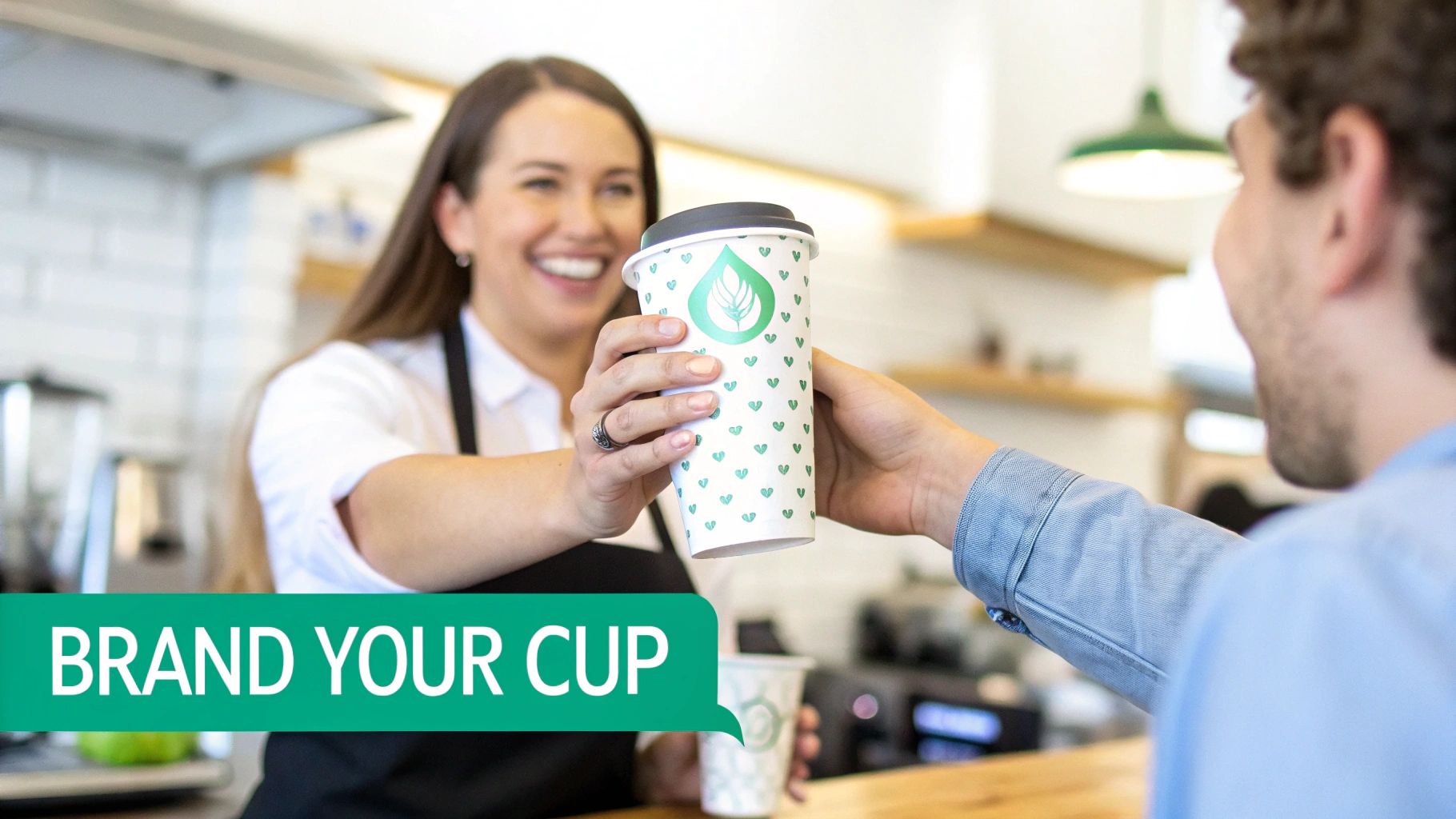
Think about it: your disposable coffee cup is much more than just a container. It's a mobile billboard. Every customer walking out your door becomes a brand ambassador, carrying your logo through the streets. This makes custom printing one of the most cost-effective marketing tools you can get your hands on.
Modern printing tech means you can get crisp, vibrant designs that really bring your brand to life. Whether your look is a clean, minimalist logo or a full-on colourful illustration, you can create a professional cup that helps you stand out from the café next door.
Making Custom Branding Accessible
The best part? Customisation isn't just for the big chains anymore. Thanks to low minimum order quantities, even small independent coffee shops and mobile vendors can create their own branded packaging. This lets businesses of any size project a polished, established image from the get-go.
A branded cup just elevates the whole experience, making a daily coffee feel that little bit more special. It builds recognition and loyalty in a way that a generic, plain cup simply can't.
This is more important than ever. With single-use packaging under the microscope, a well-designed, high-quality cup shows you care about the details. As customers become more eco-conscious, making your packaging appealing and responsible is a very smart move. You can read more about the sheer scale of UK coffee cup usage on wwf.org.uk.
Smart Logistics for Small Spaces
"But where would I store thousands of cups?" It's a fair question, especially for businesses where every square foot counts. This is where a call-off stock service is a complete game-changer.
Call-off stock means you can order in bulk to get a better price, but we store the packaging for you. You just "call off" smaller batches as you need them. It’s the perfect blend of cost-effectiveness and practicality.
This service takes the storage headache right off your plate, freeing up precious space while making sure you never run out of crucial supplies like cups or lids. It simplifies your ordering and helps you manage your cash flow much more effectively.
Not sure where to begin? The best way is to see the quality for yourself. You can explore our full range of customisable options for coffee shops or test out the real thing by ordering a free Coffee Shop sample pack. It's the ideal way to get a feel for our cups and lids before you commit to your first custom order.
Frequently Asked Questions About Disposable Cups
Placing your first order for disposable cups can feel a bit daunting, and it's normal to have a few last-minute questions. To help you get it right the first time, we’ve put together answers to the queries we hear most often from UK café owners and managers.
Which Cup Type Is Best for Hot Drinks?
For hot drinks, you’ll want to be looking at either double wall or ripple wall cups. Think of them as having a built-in cardboard sleeve – the extra layer provides insulation to keep the coffee hot while protecting your customers' hands.
Double wall cups are the classic, industry-standard choice. They offer great insulation and have a smooth, premium feel. Ripple wall cups take that heat protection up a notch with a textured, corrugated outer layer, which also gives customers a more secure grip and helps your brand stand out. You can use single wall cups for hot drinks, but you absolutely must pair them with a protective sleeve.
What Is the Most Popular Cup Size?
Without a doubt, the 12oz cup is the bestseller in the UK coffee scene. It's the perfect size for a standard latte, cappuccino, or Americano. While you'll definitely need 8oz (small) and 16oz (large) options to offer a full menu, you'll find the 12oz cups fly off the shelves much faster. When you're planning your stock, make sure the lion's share of your budget and storage space goes to this size.
What Is the Difference Between PE and PLA Linings?
Every paper cup needs a waterproof inner coating, and this is where the lining comes in.
- PE (polyethylene) is the traditional plastic liner. It’s been used for years because it's reliable and cost-effective, but it makes the cup very difficult to recycle.
- PLA (polylactic acid) is a modern, plant-based alternative. Cups lined with PLA are designed to be commercially compostable, breaking down into organic matter under the right industrial conditions.
Opting for PLA-lined cups is a clear way to show customers you care about sustainability, which is a big draw for many people these days.
Can I Get My Logo Printed on the Cups?
Of course! Custom branding is one of the best ways to turn a simple takeaway cup into a mini-billboard for your business. We offer high-quality printing with low minimum order quantities, so even small independent cafés can get in on the action. A well-designed cup really elevates the customer experience and gets your brand seen all over town.
Unsure which cup is right for you? The best way to decide is to see and feel the options yourself. It helps you compare the insulation of a double wall, the grip of a ripple, and the quality of different materials.
Getting your disposables sorted is a crucial step in setting up your business. From cups and lids to containers and napkins, we have everything you need. Explore our full range for coffee shops.
Ready to feel the quality for yourself? Afida offers a free Coffee Shop sample pack, so you can test our best-selling products before you place your first order. Request your free samples at https://afida.com today.