Before you can even think about serving your first canapé, you need a solid plan. Launching a catering business in the UK is about more than just great food; it’s about finding your place in a bustling market, understanding what customers truly want, and building a business that can go the distance. Getting these fundamentals right from the start is the difference between a flash in the pan and a long-term success story.
Building Your Foundation for a Successful Catering Business
So, you're ready to turn your passion for food into a business. That's fantastic. But before you start looking at shiny new equipment, we need to talk strategy. This early stage is all about building a solid foundation—it's the blueprint that will guide every decision you make, from the menus you create to the clients you attract.
The good news? You’re entering a healthy market. The UK catering industry has shown impressive resilience, growing at an annual rate of 10.0% over the last five years. It's expected to hit a revenue of £1.4 billion by 2025, with over 7,000 businesses already in the game. That’s not a market to be intimidated by; it’s one filled with opportunity for fresh, innovative caterers like you.
This flow chart breaks down the first crucial steps we'll walk through: finding your niche, getting to know the local market, and writing a business plan that actually works.
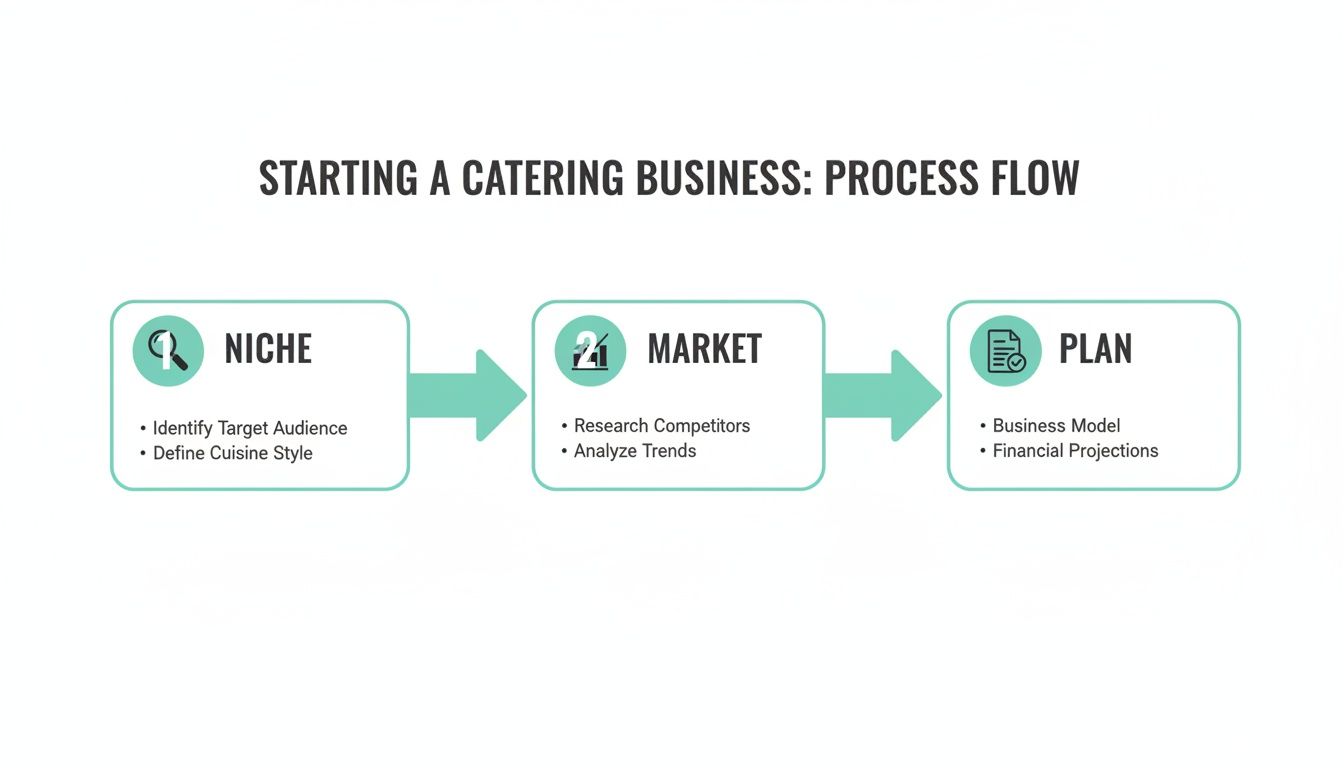
Think of it as a logical path—each step builds directly on the one before it, taking you from a brilliant idea to a business ready to launch.
Find Your Compelling Niche
The catering world is a crowded one. If you try to be everything to everyone, you'll end up being nothing to anyone. The key is to find your unique selling proposition (USP)—that one thing you do better than anyone else. Specialising makes you memorable and your marketing a whole lot easier.
Not sure where to start? Here are a few ideas to get you thinking:
- Corporate Lunches: Reliable, fresh, and healthy meals delivered to local offices. This is a brilliant way to build consistent weekday income.
- Bespoke Wedding Feasts: Think high-end, personalised dining experiences that make a couple's big day unforgettable.
- Sustainable & Vegan Events: Tap into the growing demand for plant-based menus and eco-conscious catering.
- Private Dinner Parties: Bring a restaurant-quality, exclusive experience right into your clients' homes.
Your best niche will be at the intersection of your passion, your skills, and what people in your local area are actually looking for. For example, if you’re passionate about sustainability, you could build a brand around locally sourced ingredients and eco-friendly packaging like compostable containers, cups and paper straws. This not only reduces your environmental impact but also appeals to a growing number of clients who value responsible businesses.
Research Your Local Market
Once you have a niche in mind, it's time to do a bit of detective work. You need to understand the local landscape inside and out. Start by checking out your direct competitors—who’s already doing what you want to do in your area?
Dive into their websites, scroll through their social media, and read their customer reviews. What are they brilliant at? And more importantly, where are the gaps? Maybe their menus feel a bit dated, or their commitment to sustainability is unclear. Those weaknesses are your opportunities.
Expert Tip: Your market research isn't just about sizing up the competition. It's about getting into the heads of your ideal customers. What do they need? What do they value? What are they willing to pay a premium for? This insight is gold—it will shape everything from your menu design to your marketing.
Create a Business Plan That Works
A business plan isn’t just a stuffy document you write to get a loan and then forget about. It's your operational playbook. It forces you to think through every single detail, from your grand mission to the nitty-gritty financial projections. For a deep dive into all the elements you'll need, check out this excellent guide on how to start a catering business.
At a minimum, your plan needs to cover:
- Mission Statement: A punchy summary of your purpose and what you stand for.
- Company Description: Details on your niche, legal structure, and what makes you special.
- Market Analysis: All that great research you did on competitors and customers goes here.
- Services & Menu: A clear description of your offerings, with sample menus and pricing ideas.
- Financial Projections: Get real about your startup costs, revenue forecasts, and when you expect to turn a profit. Aim for at least a three-year forecast.
This document will be your north star as you navigate the inevitable ups and downs of launching a new business.
Estimated Startup Costs for a New UK Catering Business
To help you with your financial planning, here’s an overview of the potential startup and ongoing costs you'll need to consider. Remember, these are just estimates—your actual costs will depend on your specific business model, location, and scale.
| Cost Category | Estimated One-Time Cost | Estimated Monthly Cost |
|---|---|---|
| Business Registration & Fees | £100 – £500 | – |
| Licensing & Certifications | £200 – £1,000 | – |
| Kitchen Equipment | £5,000 – £25,000+ | – |
| Initial Food Inventory | £1,000 – £3,000 | Varies |
| Website & Marketing Materials | £500 – £2,500 | £100 – £500+ |
| Insurance | – | £50 – £200 |
| Vehicle & Transport | £2,000 – £15,000+ | £150 – £400 |
| Rent (Commercial Kitchen) | – | £500 – £2,000+ |
| Utilities | – | £200 – £600 |
| Staff Wages | – | Varies |
This table should give you a realistic starting point for your financial projections. Always build in a contingency fund—unexpected costs are a certainty in any new venture.
Navigating UK Food Safety and Legal Compliance
Right, you’ve got your business plan taking shape. Now comes the serious bit: getting all your legal ducks in a row. This isn't just about ticking boxes to keep the council happy. It’s about building a solid, trustworthy reputation and, most importantly, keeping the people who eat your food safe. If you're wondering how to start a catering business in the UK, this is the one part you absolutely cannot afford to get wrong.
Registering Your Catering Business
First things first, you need to tell your local council you exist. You have to register your food business with their environmental health department at least 28 days before you even think about trading. It’s free, and it doesn't matter if you're working from a shiny new commercial unit or your kitchen at home – the rule is the same for everyone.
Once you're registered, expect a visit from an Environmental Health Officer (EHO). They'll come and inspect your premises to make sure you’re meeting all the required food hygiene standards. After the inspection, you’ll be awarded a Food Hygiene Rating. Getting a high score, like a 4 or 5, is a massive win and something you should shout about. It’s a brilliant marketing tool.
Getting a Grip on Food Safety Management
Every food business in the UK, no matter how small, needs a documented food safety management system. The official term for this is a HACCP (Hazard Analysis and Critical Control Point) plan. I know, it sounds terribly complicated, but it doesn't have to be.
The Food Standards Agency (FSA) has created a fantastic resource called the ‘Safer Food, Better Business’ pack, which is perfect for small caterers. It walks you through everything you need to do, from checking your fridge is at the right temperature to preventing cross-contamination between raw and cooked foods. It’s your bible for day-to-day safety.
A robust HACCP plan isn't just a legal requirement; it's your operational backbone. It demonstrates professionalism to clients and inspectors, proving you are serious about safety at every stage, from sourcing ingredients to serving the final dish.
Allergen Management Is Not Optional
This is a big one, and the responsibility is huge. You are legally required to provide clear and accurate information on the 14 major allergens if they're in any of the food you serve.
If you’re providing pre-packaged for direct sale (PPDS) food – think boxed sandwiches you’ve made yourself for a client to pick up – then Natasha's Law applies. This means a full ingredients list on the packaging, with all allergens clearly highlighted. For something like a buffet, you’ll need clear signs and a foolproof system so you or your staff can answer any questions about allergens with total confidence.
Insurance and Your Other Legal Duties
Beyond the food itself, you need to protect your business, your staff, and your clients from other risks.
- Public Liability Insurance: This is non-negotiable. It covers you if someone gets sick, is injured, or their property is damaged because of your business.
- Employers' Liability Insurance: The moment you hire your first person, even on a casual basis, you legally need this.
- Health & Safety: You have a legal duty of care. This means doing proper risk assessments for all sorts of tasks – from the risks of lifting heavy stockpots (manual handling) to operating deep-fat fryers safely.
Proper waste management is another area you need to get right. To meet hygiene standards and be environmentally responsible, knowing the rules for commercial kitchen oil disposal is essential. And while you're thinking about waste, consider your disposables. Choosing sustainable options like compostable containers, cups, napkins and straws can really enhance your brand's image and simplify your clean-up process.
Designing Your Menu and Sourcing Quality Suppliers
Your menu is the heart of your catering business. It’s your story, your brand, and your promise to clients all rolled into one. At the same time, your suppliers are the lifeblood that keeps that heart beating. Getting these two elements working in harmony is absolutely critical to creating a catering experience people will remember and recommend.
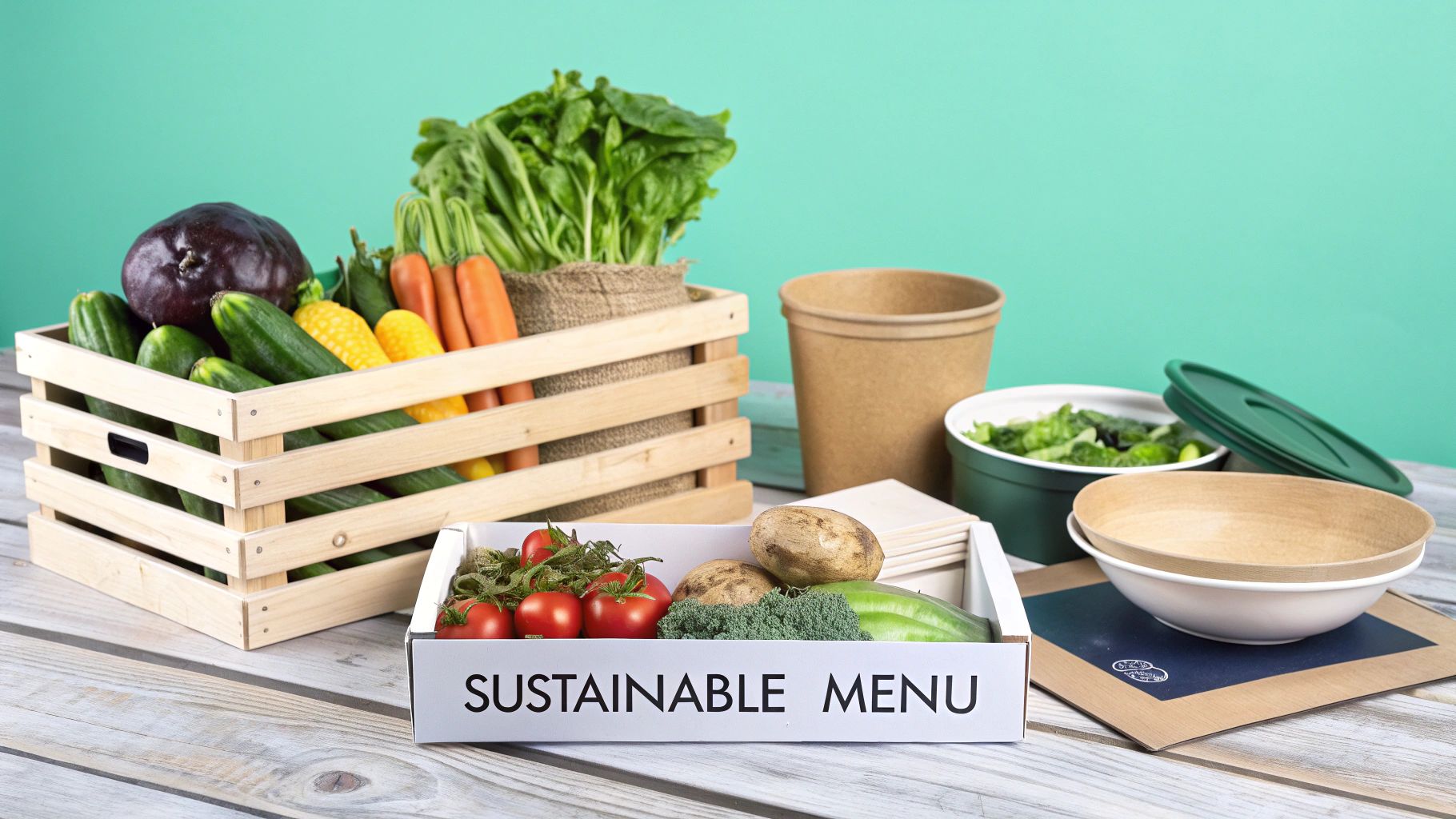
This is an exciting time to be making your mark. The UK catering industry is set to expand massively, hitting an estimated £13.7 billion by 2030. What's driving this? A huge shift towards things like zero-waste kitchens and plant-based menus. It’s clear that clients are actively looking for more conscious, thoughtful catering choices.
Crafting a Winning Menu
Before you get lost in creative recipe ideas, let's talk logistics. A dish that looks stunning when plated for one person in a restaurant can quickly become a logistical nightmare when you need to produce it for 100 people at an off-site event.
Your menu has to be designed from the ground up for scalability, consistency, and transport.
Think about dishes that hold their temperature and texture well. Things like slow-cooked meats, robust grain salads, and hearty root vegetable dishes are often much safer bets than delicate preparations that need last-minute attention. Your menu has to reflect your unique style, but it must be practical enough to execute flawlessly under pressure.
A great way to start is by perfecting a handful of signature dishes. These will become your calling card and the foundation of your reputation.
- Scalability: Can you make this dish for 10 people just as easily and consistently as you can for 100?
- Transport: Will it survive a journey in an insulated food carrier without turning into a soggy mess?
- Profitability: Have you costed every single ingredient, right down to the pinch of salt?
One of the most common pitfalls for new caterers is creating an overly complex menu. Keep it focused. Start with a smaller, curated offering you can execute to an exceptionally high standard. You can always expand your repertoire once your operations are a well-oiled machine.
The Art of Food Costing
Profitability in catering is a game of fine margins, and it all comes down to the numbers. To price your menu correctly, you need to get forensic with your food cost percentage for every single item you sell. This is simply the cost of your ingredients divided by the dish's selling price.
A healthy target for most caterers is somewhere between 28% and 35%.
Don't just guess. Create a detailed spreadsheet for each recipe, listing every ingredient and its exact cost. This might seem tedious, but it’s the only way to truly know which dishes are your money-makers and which are barely breaking even. This data helps you make much smarter decisions about what to push and what to rethink.
Finding Reliable Suppliers
Think of your suppliers as your business partners, because that's what they are. A good supplier delivers quality ingredients on time. A great supplier understands your business, shares your values, and becomes an integral part of your success. Building strong relationships with them from day one is non-negotiable.
Start by looking local. Partnering with local farms, bakeries, and butchers isn't just a trend; it's a powerful selling point. It supports the local economy, often reduces your carbon footprint, and guarantees a freshness that your clients will absolutely be able to taste.
When you're vetting potential suppliers, dig a little deeper:
- Quality and Consistency: Always ask for samples. Chat with other local chefs or business owners to check their reputation.
- Reliability: Can they guarantee delivery times, especially during the mad rush of peak season? What's their backup plan if something goes wrong?
- Values Alignment: If sustainability is core to your brand, do they share that commitment? Ask about their sourcing practices.
- Pricing and Terms: Are their prices competitive? Are their payment terms reasonable for a new business?
Embracing Sustainable Packaging
These days, your packaging is just as much a part of the client experience as the food itself. Eco-friendly solutions are no longer a "nice-to-have"—they're an expectation. This is a brilliant opportunity to show what your brand is all about.
Opting for sustainable packaging demonstrates a commitment to quality and responsibility that clients really do notice and appreciate. Think beyond the basics and consider how your disposables can actively enhance your brand image.
- Food Containers: Branded kraft food bowls are perfect for everything from vibrant salads to hearty hot dishes.
- Cups: Quality double-wall paper cups for hot drinks immediately feel more premium.
- Cutlery & Straws: Choose biodegradable paper straws or classic wooden cutlery.
- Napkins: Custom-printed paper napkins are a small touch that adds a big dose of professionalism.
Making thoughtful choices here isn't just good for the planet; it’s genuinely smart business. It appeals directly to environmentally conscious clients, especially in the corporate and wedding sectors where brand values matter.
To help you navigate the options, here's a quick comparison of some popular sustainable materials.
Sustainable Packaging Options for Modern Caterers
A comparison of eco-friendly packaging materials to help you make informed choices that align with your brand's values and operational needs.
| Material Type | Key Benefits | Best For | Considerations |
|---|---|---|---|
| Kraft Paper | Biodegradable, compostable, stylish, versatile | Bowls, boxes, bags, hot/cold food containers | Not always suitable for very wet or oily foods |
| Bagasse (Sugarcane) | Compostable, microwave-safe, sturdy, great insulation | Clamshells, plates, bowls for hot/cold food | Can become soft with prolonged moisture exposure |
| PLA (Corn Starch) | Compostable, clear (looks like plastic), strong | Cold cups, salad containers, cutlery, lids | Not suitable for hot foods; requires industrial composting |
| Recycled PET (rPET) | Reduces plastic waste, recyclable, durable, clear | Cold drink bottles, fruit and salad pots | Not biodegradable; recycling infrastructure varies |
Ultimately, the right packaging reflects your commitment to quality from start to finish. For a closer look at your options, you might find our guide to eco-friendly takeaway containers helpful.
Getting Your Operations and Equipment in Order
You’ve designed a knockout menu and have your suppliers on speed dial. Fantastic. Now it's time to build the engine room of your business: your operations. This is all about where you'll work, what gear you'll need, and how you’ll pull it all together efficiently, especially when the pressure is on. Nailing this part is what separates the pros from the amateurs and is the foundation for a reputation built on reliability.
The very first big decision, and one with serious cost implications, is where you'll base yourself. For most people just starting out, their own kitchen is the most sensible jumping-off point.
Your Kitchen, Your Headquarters
Running your business from home is a brilliant way to keep your start-up costs right down. It lets you test the waters and build up a client list without the terrifying prospect of a monthly commercial lease hanging over your head.
Just remember, even if it's your home kitchen, you're still a food business. You’ll need to meet the exact same strict food safety and hygiene standards as any restaurant. An Environmental Health Officer will pop round for an inspection to make sure you're up to scratch.
The alternative is renting a spot in a shared commercial or "ghost" kitchen. These are a great halfway house – you get access to professional-grade equipment and they’re already compliant with all the health regulations, which saves you a massive headache and a lot of cash upfront.
A Quick Word of Advice: Think carefully about your niche here. If you're focusing on corporate lunch drop-offs, your home kitchen will probably do just fine. But if you’re dreaming of catering huge weddings, you'll quickly find the storage and sheer production space of a commercial kitchen becomes absolutely essential.
Kitting Out Your Business for Success
Don't fall into the trap of thinking you need every shiny gadget from day one. Smart investing is about prioritising the equipment that genuinely affects your food quality, safety, and efficiency. You want reliable, durable kit that can take a beating.
Think about your equipment in a few key categories:
Cooking and Prep: Of course, you need ovens and hobs. But you’ll also want to think bigger: large stockpots for sauces and soups, a commercial-grade food processor that won’t burn out, and a serious collection of gastronorm pans. These are the absolute workhorses of any catering kitchen.
Chilling and Storing: You can't compromise on cold storage. A dedicated, commercial-grade fridge is one of the best investments you'll make, keeping your ingredients at safe temperatures and well away from the family's milk and cheese. You’ll also need stacks of sturdy, airtight containers and decent shelving for all your dry goods.
Transport and Holding: This is where so many new caterers slip up. Insulated food carriers (often called 'hot boxes') are non-negotiable. They are the only way to guarantee your food arrives at the perfect temperature – safe and delicious. And for any kind of hot buffet, a set of chafing dishes is a must.
Serving and Disposables: Presentation is everything. A good collection of professional serving platters, bowls, and utensils will make your food look the part. This also extends to your disposables – the napkins, cups, and containers you choose say a lot about your brand's commitment to quality.
Don't Underestimate Good Disposables
These days, clients – especially for corporate gigs and weddings – are much more aware of the environmental impact of their events. Choosing eco-friendly disposables isn't just a "nice-to-have"; it’s a real competitive advantage.
Put yourself in your client's shoes. A sturdy, branded paper coffee cup just feels more premium than a flimsy, plain white one. A delicious salad served in a compostable kraft bowl shows you care about the details. Using quality paper straws or wooden cutlery proves a commitment that reflects brilliantly on you and them. These little touches really elevate the whole experience and help justify your pricing.
Creating a Smooth Workflow
An efficient workflow is the secret to a calm, organised kitchen. It’s simply the logical flow of every task, from the moment a delivery arrives to the point you’re loading up the van. Taking the time to map this out will save you countless headaches, minimise mistakes, and create a clear system for everyone to follow.
A well-thought-out workflow might look a bit like this:
- Receiving: A set area to check deliveries against invoices and give everything a quality check.
- Storage: Moving items straight to their correct home – fridge, freezer, or dry store. No loitering.
- Prep: A clear "prep zone" for all the washing, chopping, and initial cooking.
- Cooking & Assembly: The main event, where dishes are finished and plated.
- Packing: A dedicated station for carefully loading food into transport boxes and gathering up all the necessary disposables like cups, containers and napkins.
- Dispatch: One final check to make sure absolutely everything is there before it goes out the door.
Getting this system in place makes everything less stressful. It cuts down the risk of errors and helps your team work together like a well-oiled machine, which is ultimately what every successful catering business is built on.
Marketing Your Business and Winning Your First Clients
You can cook incredible food, but if no one knows about it, you don't have a business. Now that your operations are taking shape, it's time to shift your focus to building a memorable brand and, most importantly, attracting those crucial first clients. A smart mix of online and real-world tactics, specifically for the UK market, is what will make you stand out and start building a loyal following.
And believe me, the opportunity is there. Recent figures show that sales at Britain’s top contract caterers have shot up by 12.2% in just one year, signalling a real boom in the industry. With office workers returning and a huge appetite for quality dining experiences, the door is wide open for new caterers who can bring something fresh to the table. You can read more about this UK contract catering boom on nielseniq.com.
Build Your Digital Shopfront
Think of your website as the first handshake with a potential client. It absolutely must look professional, be a breeze to navigate, and make your food look completely irresistible. This is your platform to tell your story, show off your passion, and spell out exactly what you offer.
A clean, effective website needs a few key things:
- High-Quality Photography: This is non-negotiable. Grainy phone pictures won't cut it. Either hire a professional food photographer for a day or learn the basics yourself. Good lighting and styling make all the difference.
- Sample Menus: Give people a clear idea of what you can do. Include pricing guidelines to help them see if you fit their budget from the outset.
- A Clear Call-to-Action: Don't make people hunt for your contact details. A prominent "Get a Quote" button, a contact form, and a phone number are essential.
- Your Story: What makes you different? Are you all about local, seasonal ingredients? Do you have a zero-waste philosophy? A short, authentic "About Us" section helps people connect with you.
Harness the Power of Social Media
For a food business, a platform like Instagram is gold. It’s a living, breathing portfolio that lets you connect directly with customers in your area. Use it to share vibrant photos of your latest dishes, show some behind-the-scenes action from the kitchen, and post pictures of happy clients (always with their permission, of course).
Get savvy with local hashtags like #SurreyCatering or #LondonEvents to pop up in local searches. It’s also a great idea to engage with other local businesses—think wedding venues, corporate event planners, and florists. A simple comment or share can open the door to a valuable partnership.
Your marketing is in every detail, from your website down to the napkins you provide. Using high-quality, eco-friendly disposables like branded paper cups or compostable containers subtly communicates your commitment to quality and sustainability. It's a small touch, but one that really resonates with modern clients.
Gather Glowing Testimonials
Word-of-mouth is still the most powerful marketing tool, and a brilliant review is its digital equivalent. A testimonial from a genuinely happy client is far more convincing than anything you could write about yourself.
Make it a habit to politely ask for feedback after every single event. Once you get those glowing reviews, put them front and centre on your website and share snippets on your social media. This social proof builds instant trust and gives new clients the confidence they need to make a booking.
Network to Build Real Connections
While a strong online presence is vital, you can't beat the power of a real-world conversation. Building relationships with key people in the local events industry can become your most reliable source of referrals.
- Event Planners: They are constantly on the lookout for dependable, creative caterers to recommend.
- Wedding Venues: Do whatever it takes to get onto their preferred supplier lists.
- Corporate Office Managers: These are your gateway to lucrative and regular corporate lunch contracts.
Show up at local business fairs and wedding fayres. A small stand with a few delicious samples and some professional-looking flyers can easily lead to your first big contract.
Craft Proposals That Actually Win Business
When a potential client asks for a quote, don't just send them a price list. Your proposal is a sales document. It needs to show that you've listened to their vision and have the expertise to bring it to life flawlessly.
Make every proposal personal, professional, and packed with detail. Break down the costs clearly, outline the specific menu you've discussed, and itemise exactly what's included – from staff and equipment to those quality disposable cups and napkins. This level of transparency builds trust, justifies your pricing, and sets the stage for a great working relationship.
Got Questions About Starting Your Catering Business?
As you begin to piece together your new catering venture, it’s completely normal for a million questions to start buzzing around your head. Don't worry, we've been there.
To help clear things up, I’ve put together answers to some of the most common queries we hear from aspiring caterers just like you. Think of this as a quick chat with someone who's already navigated the maze.
What’s the Real Cost to Start a Catering Business in the UK?
Honestly, this is a "how long is a piece of string?" question. The startup costs can swing wildly depending on the kind of business you're dreaming of.
If you’re starting small, perhaps doing local drop-offs from your home kitchen, you could get the ball rolling with as little as £2,000 to £5,000. That budget would realistically cover the essentials: getting registered, sorting your public liability insurance, a bit of marketing, and maybe a few key equipment upgrades.
On the other hand, if you have grander plans—like leasing a commercial kitchen, buying a branded van, and kitting yourself out with professional-grade gear—you’ll be looking at a figure closer to £10,000 to £50,000, or even more. This is where your business plan becomes your best friend, helping you map out a budget that’s actually tailored to your vision.
Don't forget to factor in these key expenses:
* The Paperwork: Business registration, food safety training courses, and any council licensing fees.
* The Gear: Everything from ovens and fridges to those all-important insulated food boxes and serving platters.
* The Stock: Your first big shop for ingredients and a healthy supply of quality packaging like cups, containers, and napkins.
* Getting Noticed: A simple website, professional photos of your food (this is a must!), and some flyers or online ads.
* Running Costs: Insurance, vehicle fuel and maintenance, and potential rent for a kitchen space.
What are the Absolute Must-Do Legal Requirements?
Getting the legal stuff right from the very beginning isn't just a good idea—it's non-negotiable. If you're serious about starting a catering business in the UK, these are the boxes you absolutely have to tick.
First up, you are legally obligated to register your food business with your local council at least 28 days before you even think about trading. This is true whether you’re in a shiny commercial unit or your own kitchen at home. You'll also need a food safety management system based on HACCP principles. The Food Standards Agency’s free ‘Safer Food, Better Business’ pack is a lifesaver here.
Beyond that, anyone who handles food needs proper food hygiene training. You also have to get your head around the strict allergen labelling laws, especially Natasha's Law if you plan on selling any pre-packaged food for direct sale.
One thing you cannot skip: Public Liability Insurance. It’s there to protect your business, your clients, and you if an accident ever happens.
Can I Actually Run a Catering Business from My Home?
Yes, absolutely! Starting from your home kitchen is a brilliant and popular way to test the waters without massive overheads.
The catch? Your home kitchen has to meet the exact same rigorous food safety standards as a commercial one. An Environmental Health Officer (EHO) from your local council will come to inspect your setup and give you a food hygiene rating.
You’ll need to prove you have rock-solid procedures for everything: safe food storage (yes, that means keeping business and personal food separate), proper hand-washing facilities, and a clear system to prevent cross-contamination. It’s also a smart move to give your mortgage provider or landlord a heads-up and definitely let your home insurance provider know what you're up to.
How on Earth Do I Price My Catering Services?
Pricing can feel like a dark art, but it’s really a balancing act. You need to cover every single cost, stay competitive, and actually make some money.
Start by meticulously calculating your food cost for every item on your menu. A good rule of thumb in the industry is to aim for your food cost to be around 25-35% of the final price you charge the customer.
But don't stop there. You have to account for everything else. We're talking labour, insurance, marketing, petrol for the van, and even a slice of your electricity bill. Remember to include the cost of your disposables—those smart, eco-friendly kraft containers and sturdy paper straws are part of the product your customer is paying for.
Finally, do a bit of homework. See what other caterers in your area are charging for similar services. You might opt for a simple per-person price for weddings or create priced-up platter packages for office lunches. Whatever you do, the golden rule is to make sure every single quote you send out covers all your costs and leaves a healthy profit margin for you to grow the business.
Ready to elevate your presentation and impress your clients from day one? At Afida, we provide UK caterers with premium, eco-friendly packaging that reflects the quality of your food. From custom-branded coffee cups to compostable food containers, we help you make a lasting impression. Explore our full range and request your free samples.