Running a cafe, food truck, or pop-up event shouldn't require you to order 5,000 cups just to get your logo on them. Yet that's exactly what many traditional suppliers demand, leaving small operators stuck with generic cups or warehouses full of branded stock they'll never use. The good news: the market for custom printed coffee cups in small order quantities has exploded over the past few years. Whether you need 25 cups for a wedding or 250 for your new coffee shop's soft launch, options exist that didn't five years ago. The challenge is knowing where to look and what trade-offs you're making on price, quality, and sustainability. I've seen small businesses waste hundreds of pounds ordering from the wrong supplier, only to receive cups with fuzzy logos, colours that don't match their brand, or materials that can't handle hot drinks without warping. This guide cuts through the noise and gives you a practical roadmap for sourcing small-batch custom cups that actually work for your business.
The Benefits of Low-Minimum Custom Coffee Cups
Cost-Effective Marketing for Small Businesses
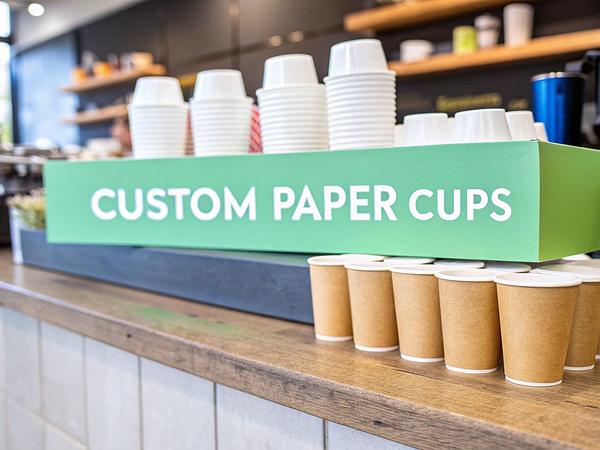
Branded cups function as mobile advertising. Every customer who walks out with your cup becomes a walking billboard, and the cost per impression is remarkably low compared to traditional advertising. For a small cafe spending £150 on 100 custom cups, that's £1.50 per cup. If each cup gets seen by even 10 people during its lifespan, you're paying 15p per impression. Try getting that rate on social media ads.
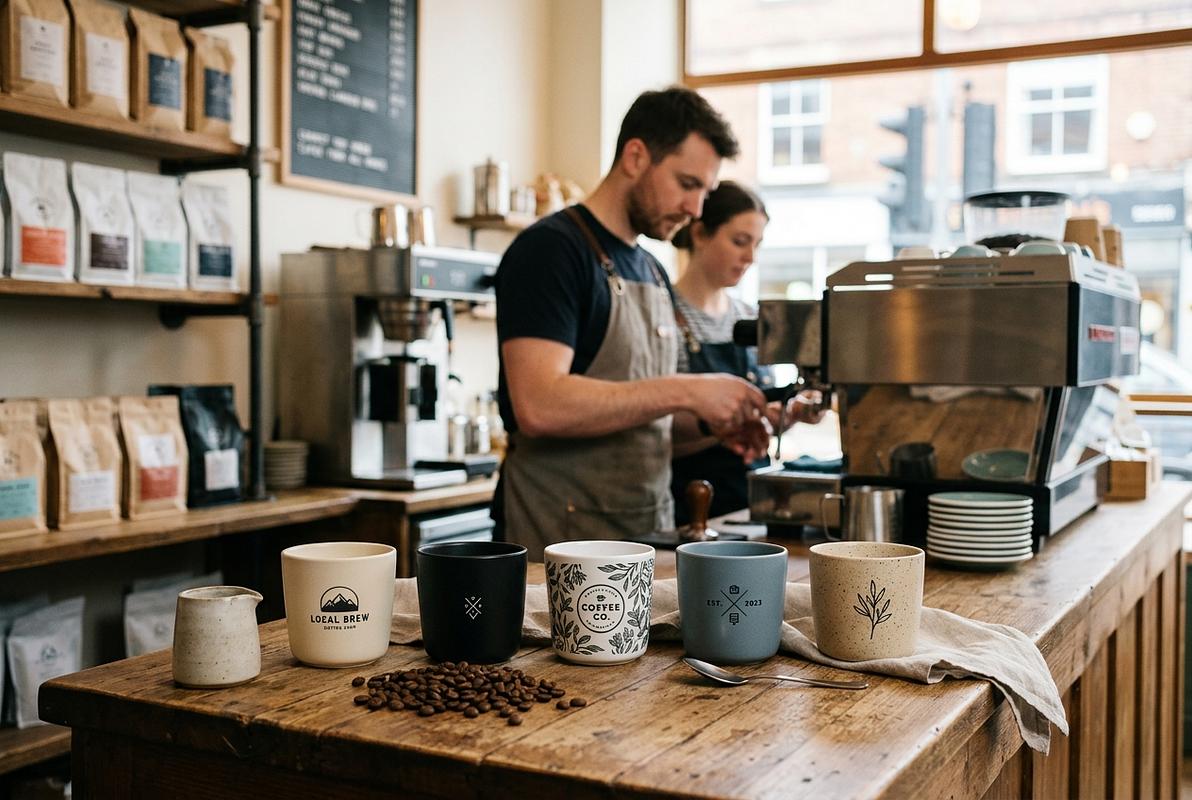
The real value comes from brand recognition. Customers remember businesses with consistent visual identity. A distinctive cup design creates recall value that generic white cups simply cannot match.
Reducing Storage Needs and Waste
Small orders solve a practical problem: storage. Most independent coffee shops operate from compact spaces where every square metre matters. Ordering 5,000 cups means dedicating valuable storage to inventory that might take 18 months to use.
There's also the waste consideration. Cup designs go stale. Businesses rebrand. Seasonal promotions end. Ordering 250 cups at a time means you can refresh your design quarterly without binning thousands of outdated cups. From an environmental standpoint, this approach reduces the likelihood of disposing unused stock when your business needs change.
Some suppliers have started tackling the storage problem from a different angle. Rather than forcing you to choose between small expensive orders and large unwieldy ones, they hold your stock in their own warehouse and ship it to you in batches as you need it. Afida, for example, offers an inventory storage service where they print your full run, store it at their facility, and dispatch smaller quantities on your schedule. You get the per-cup savings of a larger order without needing the floor space to store it all. For a small cafe with limited back-of-house space, this approach can be a genuine game-changer.
Top Online Platforms for Small Batch Orders
Print-on-Demand Giants for Single Unit Purchases
Platforms like Vistaprint and Printed.com have entered the custom cup market, offering minimums as low as 25-50 units. These services excel at convenience: upload your design, select your cup size, and receive your order within 7-14 days. Pricing typically runs £2-4 per cup at these ultra-low quantities.
The trade-off is material selection. Print-on-demand services usually offer standard single-wall paper cups, which limits your options for premium presentations. Print quality is generally good but not exceptional, with some colour variation between batches.
Specialised Packaging Suppliers for 50-100 Units
For better quality and more material options, look to packaging specialists like Catering24, Alliance Online, or Biopak's custom printing service. These suppliers typically start at 50-100 units minimum, with prices dropping significantly at the 250-unit mark.
What you gain is access to proper food-service grade materials: double-wall insulation, compostable PLA-lined options, and cups rated for temperatures up to 85°C. Many offer Pantone colour matching and higher-resolution printing than consumer-focused platforms.
Scaling Up: Suppliers Starting at 1,000 Units
Once your business is established and you're confident in your branding, stepping up to a 1,000-unit minimum unlocks significantly better per-cup pricing and premium options. Suppliers like Afida offer custom branded double-wall coffee cups starting from 1,000 units with no setup fees and delivery in around 20 business days. For businesses working to a tighter deadline, Afida also offers a fast-track service that cuts turnaround to roughly one week for a flat fee of around £180. At this volume, you're typically paying well under £1 per cup, which represents a substantial saving over the ultra-small-batch suppliers. If you've tested your design with a smaller print-on-demand order and you're happy with it, moving to a supplier like Afida for your ongoing orders is often the sweet spot between affordability and manageable stock levels.
The storage concern that comes with larger orders is worth addressing here. As mentioned earlier, Afida's inventory storage service means you can commit to a 1,000-unit print run for the better pricing but only take delivery of, say, 250 cups at a time. The rest stays in their warehouse until you need it. This effectively gives you the economics of a bulk order with the practicality of a small one.
Comparing Pricing and Turnaround Times
Expect to pay approximately £1.80-3.50 per cup for orders under 100 units, dropping to £0.80-1.50 for 250-500 units. At the 1,000-unit mark with suppliers like Afida, prices drop further still. Turnaround times vary considerably: print-on-demand services often deliver in 5-10 working days, while specialist suppliers may require 2-4 weeks, especially for custom Pantone colours. If you need custom cups from a specialist supplier in a hurry, it's worth asking whether they offer an expedited option. Afida's fast-track service, for instance, brings their standard 20-day turnaround down to around a week, which can be a lifesaver if you're preparing for a launch or event with a tight timeline.
Always factor in delivery costs. Many suppliers offer free delivery above £75-100, but small orders often incur £8-15 shipping charges that significantly impact your per-cup cost. Afida, for instance, offers free UK delivery on orders over £100, which most custom cup orders at their minimum quantity will exceed.
Choosing the Right Cup Material for Your Brand
Eco-Friendly and Compostable Paper Options
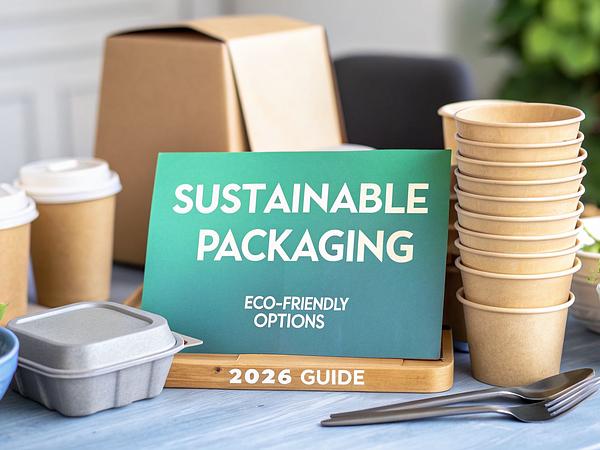
If sustainability matters to your brand, material choice becomes critical. Standard paper cups have a PE (polyethylene) lining that makes them difficult to recycle through normal streams. Compostable alternatives use PLA (polylactic acid) or aqueous coatings that break down in industrial composting facilities.
Look for EN13432 certification, which confirms the cup meets European composting standards. Bagasse (sugarcane fibre) cups offer another option, though print quality on these textured surfaces can be inconsistent. Budget an additional 15-25% for genuinely compostable options compared to standard PE-lined cups. Suppliers with a sustainability focus, such as Afida, tend to carry a wider range of eco-friendly cup materials as standard, which simplifies the sourcing process if green credentials matter to your brand.
Double-Wall Insulated vs. Single-Wall Design
Double-wall cups cost roughly 40-60% more than single-wall equivalents but eliminate the need for separate sleeves. For a small cafe, this simplifies operations and often works out cheaper when you factor in sleeve costs and the labour of applying them.
Single-wall cups work fine for iced drinks or when you're providing sleeves anyway. They're also lighter, which reduces shipping costs on small orders. Heat tolerance is the key consideration: single-wall cups become uncomfortable to hold above 65°C, while quality double-wall designs handle 85°C without issue.
Design Considerations for Small Print Runs
Optimizing Logos for Digital vs. Screen Printing
Small orders typically use digital printing rather than traditional flexographic or screen printing. Digital printing handles complex designs, photographs, and gradients well, but struggles with large areas of solid colour, which can appear slightly uneven.
Vector files (AI, EPS, PDF) produce the best results. If you only have a raster logo (JPEG, PNG), ensure it's at least 300 DPI at print size. Avoid fine text below 6pt and thin lines under 0.5mm, which may not reproduce cleanly.
Color Matching and Template Requirements
Most suppliers provide downloadable templates showing the printable area, which varies by cup size. A 12oz cup typically offers around 200mm x 80mm of print space, though the exact dimensions depend on the manufacturer.
For brand-critical colours, request Pantone matching, which adds £30-75 to your order but ensures consistency. CMYK printing can approximate most colours but may shift slightly between batches. Request a digital proof before production, and if colour accuracy is essential, pay the extra £15-25 for a physical proof sample.
How to Vet Local Print Shops for Custom Orders
Local print shops often offer competitive pricing for small custom cup orders, particularly if you can collect directly and save on shipping. Start by requesting samples of their previous cup work: examine print sharpness, colour consistency, and how the ink holds up when the cup gets wet or warm.
Ask specific questions about their equipment. Do they print in-house or outsource to a third party? What's their quality control process? Can they guarantee food-safe inks? Reputable shops will happily answer these questions and show you their certifications.
Check reviews specifically mentioning custom packaging orders. A shop excellent at business cards may struggle with curved cup surfaces. Request references from other food-service businesses they've supplied, and don't hesitate to call those references directly.
Final Checklist Before Placing Your Order
Before committing to any supplier, verify these essential details. Confirm the exact cup dimensions and capacity: a "12oz" cup varies by up to 30ml between manufacturers. Check whether lids are included or sold separately, and ensure compatible lids are available in your required colour.
Request written confirmation of delivery dates, particularly if you're ordering for an event. Understand the returns policy for printing errors versus design mistakes you've approved. Save all correspondence and approved proofs.
For your first order with any new supplier, start with the minimum quantity even if the per-unit cost is higher. This lets you evaluate quality before committing to larger volumes. A good way to start is by ordering a free sample pack to get a feel for material quality before committing to a custom print run. Once you've confirmed the cups meet your standards, you can confidently order larger batches at better prices. Many businesses start with a small print-on-demand run to validate their design, then graduate to a supplier like Afida at the 1,000-unit level for ongoing orders. Paired with an inventory storage service, this means you lock in bulk pricing, avoid cluttering your premises, and simply request a fresh batch whenever stock runs low.
Small-batch custom cups have become genuinely accessible for independent businesses. The key is matching your supplier choice to your priorities: speed, sustainability, print quality, or price. With the right approach, even a 50-cup order can deliver professional results that strengthen your brand with every drink served.