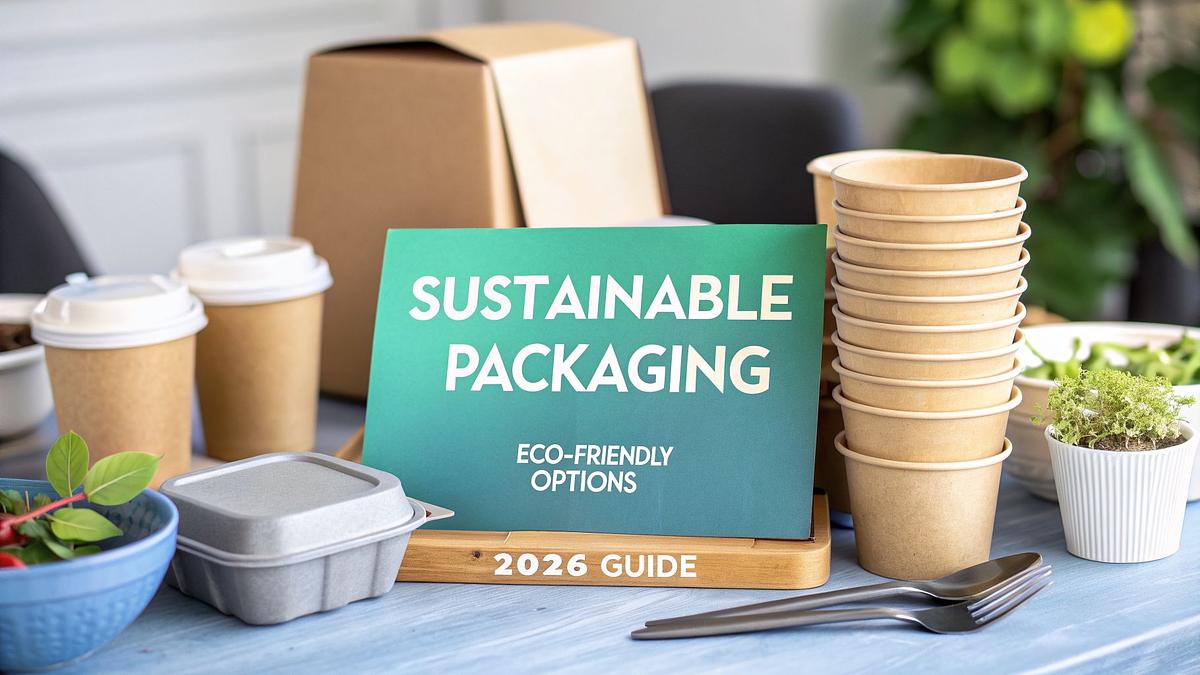
For any café, restaurant, or takeaway business in the UK, the move towards sustainable food packaging is no longer just a trend—it's a core part of day-to-day operations. The packaging you choose has a direct impact on everything from your brand's reputation to your bottom line.
Why Sustainable Food Packaging is Now Essential for Your Business

The conversation around food packaging in the UK has changed dramatically. It's no longer just about function and convenience. The difference between a plastic-lined cup and a fully recyclable paper one can genuinely shape a customer’s opinion of your business. This shift is being driven by two major forces: government regulations and customer expectations.
A real turning point was the introduction of the UK Plastic Packaging Tax in April 2022. This tax specifically targets any plastic packaging that contains less than 30% recycled material. For many hospitality businesses, this legislation made sustainable alternatives a much more attractive, and often more economical, choice.
At the same time, your customers are paying more attention than ever. People are actively looking to support businesses that show they care about their environmental impact. The coffee cups, takeaway containers, and even the napkins you provide are powerful, visible statements about your brand's values.
Making the Switch: Good for the Planet, Great for Business
As a busy hospitality operator, switching to sustainable packaging is one of the smartest decisions you can make. It’s not just about ‘being green’—it delivers tangible benefits that strengthen your business.
- Protect Your Business: Keeping up with environmental regulations like the plastics tax helps you avoid potential penalties and supply chain headaches down the line.
- Build a Stronger Brand: Choosing eco-friendly options creates a positive image that attracts and retains customers who care about sustainability.
- Meet Clear Market Demand: The UK's sustainable packaging market trends show significant growth, signalling a major shift in industry standards. Aligning with this trend keeps your business competitive and relevant.
This guide is here to help you navigate the transition. We’ve packed it with practical, straightforward advice to help you balance sustainability, performance, and cost, so you can make confident decisions for your business.
Comparing Sustainable Packaging Materials
Choosing the right sustainable food packaging can feel like a minefield. For hospitality businesses in the UK, making a confident choice starts with understanding the materials on offer. You're trying to balance performance, cost, and a genuine positive impact on the environment.
Let's break down the most common options for your takeaway cups, containers, and accessories. We'll look at what each material is best suited for and, just as importantly, what happens to it after your customer has finished their meal.
Paper and Kraft Paper
For many businesses taking their first steps away from plastic, paper-based packaging is the go-to choice. Options like natural brown kraft paper are versatile, relatively inexpensive, and come from a renewable resource, making them a solid pick for a variety of uses.
- Best Uses: Perfect for takeaway bags, napkins, straws, and food wraps. It’s also a classic choice for dry food containers like pizza boxes or sandwich packs. You'll often see double-wall paper cups used for coffee and tea, as they provide great insulation without needing a separate sleeve.
- Performance: While standard paper is absorbent, most food-grade versions come with a coating to handle grease and moisture. It's crucial to know what that lining is made of—some plastic-based (PE) or plant-based (PLA) linings can make recycling tricky.
- End-of-Life: Clean, uncoated paper and kraft paper are widely recyclable and compostable. However, items with heavy food residue, like a greasy pizza box, should head to the compost bin to avoid contaminating the paper recycling stream.
Recycled PET (rPET)
Recycled Polyethylene Terephthalate, or rPET, is plastic made from other plastic bottles and containers that have already been used. It gives you all the performance benefits of virgin plastic but with a much lower carbon footprint, making it a fantastic fit for a circular economy.
By choosing rPET, you help create real demand for recycled materials. This is absolutely essential for making plastic recycling a more effective and commercially viable system across the UK. It's a direct way to support a model where waste is treated as a valuable resource.
- Best Uses: Ideal for cold items where you want the product to shine, like smoothie cups, salad bowls, and deli pots. Its crystal-clear finish is perfect for showing off fresh, vibrant ingredients.
- Performance: rPET is strong, shatter-resistant, and non-porous, offering excellent protection. A key thing to remember is that it's not suitable for hot foods or microwave use.
- End-of-Life: rPET is widely recycled through UK kerbside collections. To give it the best chance of being recycled again, containers just need to be emptied and given a quick rinse.
Bio-Fibres and Plant-Based Materials
Bio-fibres are materials made from agricultural by-products, like sugarcane fibre (also known as bagasse) or bamboo. This is a brilliant way to use resources that might otherwise be discarded. Seeing how other sectors approach eco-friendly material choices, such as the thinking behind Sustainable Clothes Labels Eco Friendly Options, can offer a broader perspective on resourcefulness.
These materials are often championed for being compostable, but it’s vital to know the difference between home and industrial composting. For a much deeper look at this, you can read our detailed guide on the difference between compostable vs biodegradable packaging.
- Best Uses: An excellent choice for sturdy takeaway boxes, plates, and bowls. Bagasse, for instance, is naturally grease-resistant and handles hot, wet, or oily foods with ease.
- Performance: You might be surprised by how robust bio-fibre products are. They're often microwave-safe and provide good insulation for both hot and cold dishes.
- End-of-Life: The main selling point here is compostability. But—and this is a big but—most of these products require industrial composting facilities to break down correctly. They won't decompose in a landfill or a typical home compost heap, so always check your local waste capabilities first.
Sustainable Packaging Material Comparison
To help you see the options at a glance, this table summarises the key features of each material we've discussed. Use it as a quick reference when weighing up what's best for your menu and your local disposal infrastructure.
| Material | Primary Use Cases | Key Benefits | End-of-Life | Considerations |
|---|---|---|---|---|
| Paper & Kraft Paper | Takeaway bags, food wraps, cups, napkins, straws. | Renewable, widely recyclable, cost-effective. | Recyclable (if clean), home/industrial compostable (if uncoated). | Coatings (PE/PLA) can complicate recycling; not ideal for very wet foods. |
| Recycled PET (rPET) | Cold drink cups, salad bowls, deli pots, smoothie containers. | High clarity, durable, lower carbon footprint than virgin plastic. | Widely recycled in UK kerbside collections. | Not suitable for hot food or microwave use. Must be rinsed for recycling. |
| Bio-Fibres (Bagasse) | Hot/cold food containers, plates, bowls, clamshells. | Sturdy, grease-resistant, made from waste stream, often microwave-safe. | Industrial composting only. | Not home compostable; requires access to specific waste collection services. |
Ultimately, the 'best' material is the one that performs for your specific needs while also being supported by your local waste management systems. Thinking about the full life-cycle, from production to disposal, is the key to making a truly sustainable choice.
Navigating UK Food Packaging Regulations and Certifications
As a hospitality operator, getting your head around the UK’s packaging rules and green certifications is non-negotiable. Staying on the right side of the law isn't just about avoiding fines; it's about building genuine trust with your customers.
When you make informed choices, you can confidently market your eco-friendly credentials without the risk of being accused of 'greenwashing'. It shows you’re serious about your impact, which customers really do notice.
Understanding Key UK Regulations
The biggest piece of legislation you need to know about is the UK Plastic Packaging Tax. Brought in back in April 2022, this tax hits any plastic packaging made in or imported into the UK that contains less than 30% recycled plastic.
What does this mean for your bottom line? It's a direct cost issue. If you opt for packaging like rPET smoothie cups made with over 30% recycled content, your supplier doesn't have to pay the tax. That saving is often passed on to you, making it a clear financial incentive to choose materials that support a circular economy.
This flowchart is a great starting point for thinking through your options based on what you’re serving.

As you can see, the best choice really depends on matching the material's function—like insulation for a hot coffee cup or clarity for a colourful salad container—with how it can be disposed of responsibly.
Decoding Sustainability Certifications
Beyond official regulations, a few key independent certifications are your best friend for spotting genuinely sustainable products. When you're talking to suppliers, make sure to ask if their products carry these marks.
FSC (Forest Stewardship Council): This is the one to look for on any wood or paper-based items like paper cups, takeaway boxes, or napkins. The FSC logo is your guarantee that the material has come from responsibly managed forests that protect wildlife and support local communities.
EN 13432: This is the European standard for industrial compostability. If a product like a bagasse bowl or PLA-lined cup has this certification, it means it's been independently tested and proven to break down in an industrial composting facility. If you want to dive deeper into this, our complete guide to compostable food packaging covers it all.
Looking for these specific logos helps you cut through the vague marketing buzzwords. It gives you solid proof that your packaging choices are backed by credible, third-party standards, so you can talk about your green efforts with total confidence.
Arming yourself with this knowledge changes how you buy supplies. It becomes a strategic decision that strengthens your brand and your business. A good supplier will always be able to provide documentation to back up any certifications they claim. Don't be afraid to ask.
Balancing Cost with Sustainability in Your Business
Let's get straight to the point: can a food service business really afford to go green with its packaging? For most hospitality operators in the UK, this is the number one question. There's a common worry that 'eco-friendly' is just another way of saying 'more expensive', but that’s not the full story.
When you look at it properly, a smart sustainability strategy can be one of the best financial decisions you make. The real cost of your packaging isn't just the price per cup or box; it includes avoiding new taxes, building a brand people trust, and winning over loyal customers. It’s about shifting your mindset from a simple cost to a long-term investment.
Looking Beyond the Unit Price
It’s easy to get fixated on the price tag, comparing a standard plastic container to its paper alternative and stopping there. But this narrow view misses the hidden costs of sticking with old materials and the often-overlooked financial upsides of switching.
Take the UK Plastic Packaging Tax, for instance. By choosing rPET containers with over 30% recycled content, you completely sidestep that tax. That’s a direct saving. Beyond that, in a competitive market, your packaging is your walking billboard. A well-designed paper cup or a sturdy bio-fibre box tells a story about your values, helping you stand out.
It's worth remembering that a growing number of customers actively seek out and are willing to pay a little more to support businesses that are genuinely trying to do the right thing. Your choice of packaging can become a real driver of repeat business.
Practical Tips for Managing Costs
Making the switch to sustainable food packaging doesn't have to blow your budget. It’s all about being strategic and making smart choices that work for your bottom line.
Here are a few practical tips for UK food service businesses:
- Order in Bulk: It’s simple maths. Suppliers nearly always offer better prices for larger orders. If you have the storage space, buying high-use items like paper cups, napkins, or takeaway containers in bulk will significantly lower your cost per unit.
- Leverage Supplier Perks: Always check for benefits like free delivery on orders over a certain value. Shipping fees can really add up, so eliminating them is a huge win. At Afida, for example, we offer free delivery on all orders over £100 (ex. VAT).
- Match the Material to the Mission: Don't pay for performance you don’t need. Use simple, cost-effective kraft paper for dry goods like pastries. Save more specialised materials, like grease-resistant bagasse containers, for the hot or oily dishes that actually require them.
- Request Samples: Never commit to a big order blind. Ask for free samples first. This is the only way to test how different containers, lids, and cutlery perform with your actual food and drink, ensuring you don't waste money on something that isn't up to the job.
How to Implement Your Sustainable Packaging Strategy
Switching to sustainable packaging might feel like a huge task, but it doesn't have to disrupt your business. With a bit of planning, any UK hospitality operator can make the change smoothly, cutting waste and giving your brand’s reputation a real boost. Here’s a practical, step-by-step approach.

Before you place a new order, you need a clear picture of your starting point. The first, and most important, step is a simple audit of what you're using right now.
Audit Your Current Packaging Needs
Start by walking through your service area and stockroom and list every single-use item you give to customers. We’re talking about everything – from coffee cups and their lids to takeaway boxes, napkins, cutlery, and straws.
For each item, ask yourself what its job is. Does it need to handle piping hot soup, greasy chips, or just a dry croissant? This fundamental step stops you from paying for high-performance features you simply don't need.
Here’s a quick checklist to guide your audit:
* List all items: Cups, lids, containers, bags, napkins, straws, cutlery.
* Note the food type: Is it hot, cold, wet, dry, or greasy?
* Assess current performance: Is your existing packaging up to the job? Do you get complaints about leaks or flimsy lids?
* Count weekly usage: Get a handle on your volumes. How many of each item do you use per week? This is vital for forecasting your budget.
This audit gives you the data to make smart, cost-effective choices. It prevents expensive mistakes, like ordering premium containers when a simpler option would work perfectly.
Plan a Smart Stock Transition
Once you’ve selected your new eco-friendly products, resist the temptation to bin all your old stock. Throwing away perfectly usable packaging is the opposite of sustainability. Instead, map out a phased changeover.
Let one item run down completely—your plastic smoothie cups, for example—and then introduce the new rPET alternative. Using this "first-in, first-out" method ensures you minimise waste and protect your initial investment.
This changeover period is the perfect time to get your team on board with the new direction. Explain what the new products are, why the business is making the change, and how it benefits everyone.
Train Your Team and Inform Your Customers
Your staff are your ambassadors. They’re the ones who will get asked, "Can I recycle this cup?" so they need to have the right answers. Good training is what makes or breaks a sustainable packaging strategy.
- Educate on Disposal: Make the end-of-life for each new item crystal clear. Is it for the recycling bin or an industrial composter? Your team must be able to tell customers with confidence.
- Set Up Clear Bins: Use simple, bold signs on all your bins—both for customers and back-of-house—to guide everyone on how to dispose of items correctly. This is key to reducing contamination.
- Announce the Change: Let people know about the positive steps you’re taking! A small sign on the counter, a quick post on social media, or a simple message printed on your new packaging can make a huge difference.
As you roll out your new packaging, it's also a great time to look at the bigger picture. Integrating sustainable waste management solutions can help you reduce your environmental footprint across the board. Ultimately, a well-informed team that can proudly share your story transforms a simple packaging switch into a powerful statement about your brand's values.
Enhancing Your Brand with Custom Sustainable Packaging

On any busy high street, the details are what make a business stand out. Your packaging is more than a container; it's one of your most powerful marketing assets. By turning everyday items like coffee cups and takeaway boxes into eye-catching, branded pieces, you can turn an operational cost into a genuine driver for growth.
Well-executed custom branding builds immediate recognition, telegraphs the quality of your food and drink, and tells your sustainability story with every single sale. It's how you carve out your space and leave a memorable impression.
Turning Every Customer into a Walking Advert
Your packaging travels. A customer carrying your branded cup down the street is a personal recommendation in motion. A well-designed takeaway bag sitting on an office desk introduces your business to a whole new room of potential customers. For independent cafés, delis, and restaurants competing with the big chains, this kind of organic visibility is priceless.
The UK's food packaging market trends on GrandViewResearch.com show a huge shift towards sustainable materials since the 2022 Plastic Packaging Tax came into force. Businesses are swapping out single-use plastics for paper, rPET, and compostable alternatives. In this changing market, having distinctive branding on your eco-friendly packaging is a massive advantage.
Communicating Your Green Credentials
Switching to eco-friendly packaging is a great move, but branding it is how you get the credit you deserve for that investment. By printing your logo next to a simple, clear message like "This cup is recyclable" or "Made from plants," you're communicating your values directly to your customers. It's a transparent and effective way to show you’re committed to making a difference.
Customisation isn’t just about logos; it’s about storytelling. It turns a plain paper cup into a statement about your commitment to quality and the environment, reinforcing the very reasons customers choose to support your business.
This simple act forges a stronger connection. Customers who prioritise sustainability will feel good about buying from you, making them far more likely to come back. It’s a quiet but constant reminder that you’re a business that shares their values.
Why Custom Branding Is More Accessible Than Ever
Many small business owners assume that custom printing is reserved for large corporations with deep pockets, but that simply isn't the case anymore. Thanks to advances in printing and more flexible suppliers, branded packaging is now well within reach for businesses of all sizes.
Here's what makes it so much more practical today:
* Low Minimum Order Quantities: You no longer need to commit to tens of thousands of units. Many suppliers, Afida included, can start custom print runs from just 1,000 units, making it a manageable step for any business.
* High-Quality Printing: Modern digital printing ensures your logo and design look crisp, vibrant, and professional. Whether it's on a paper cup, napkin, or kraft food box, great printing reflects the quality of what you sell. Our guide on branded paper cups digs into these benefits in more detail.
* Smart Storage Solutions: Finding space to store thousands of cups can be a real headache. Some suppliers offer free storage and call-off stock services, allowing you to secure a better bulk price but only take delivery of what you need, when you need it. This frees up both your space and your cash flow.
By treating your sustainable packaging as a strategic asset, you open up a new channel for building your brand. It’s a remarkably cost-effective way to increase your visibility, broadcast your ethos, and build a loyal community around your business.
Your Sustainable Packaging Questions Answered
Switching to sustainable food packaging always brings up practical questions. If you’re a hospitality operator in the UK, you’re likely weighing up costs, logistics, and what ‘sustainable’ truly means for your business. Here are the answers to some of the most common queries.
Is Compostable Packaging Better Than Recyclable Packaging?
That’s a common question, and the answer isn’t as straightforward as you might think. It all comes down to what your local council can actually handle. Compostable packaging is only a win for the environment if it makes it to an industrial composting facility.
If your area doesn't have the right infrastructure, that compostable container will likely end up in a landfill, which cancels out the intended benefit. In many parts of the UK, widely recycled materials like rPET or paper are a more reliable and genuinely sustainable choice because the collection systems are already well-established. Your first step should always be to check with your local waste provider to see which route they support best.
Will Switching to Sustainable Packaging Hurt My Bottom Line?
Not necessarily. While some eco-friendly materials might seem more expensive at first glance, the bigger picture often looks very different. For a start, new rules like the UK Plastic Packaging Tax are already adding costs to virgin plastics, which makes certified sustainable options much more competitive on price.
Beyond the raw costs, think about your customers. A clear commitment to sustainability is a huge draw for people today. It can attract new customers and build real loyalty with your regulars, ultimately helping to boost your revenue. Smart ordering habits, like buying in bulk to lower the cost per item and taking advantage of free delivery, will also make a big difference to your overall spend.
How Can I Spot Greenwashing and Choose Genuinely Sustainable Products?
The key is to look for proof, not just promises. Any credible supplier should be happy to give you the specifics on their products, like the exact percentage of recycled content in an rPET pot or where their paper is sourced from.
Be wary of vague marketing fluff like 'eco-friendly' or 'green'. Instead, look for official, third-party certifications. The main ones to look for are the FSC (Forest Stewardship Council) logo on paper and wood items, and the 'EN 13432' standard for anything certified as industrially compostable.
These marks are your guarantee that a product's green claims have been properly checked and verified. It’s the simplest way to feel confident you’re making a responsible choice.
What Are the Most Important Packaging Items to Switch First?
My advice is always to start with your everyday essentials – the things you get through the most. Targeting these high-volume, customer-facing items gives you the biggest and fastest win in reducing plastic waste and shows everyone what your brand stands for.
For most cafés, takeaways, and food-to-go businesses in the UK, the best starting points are:
* Coffee cups and lids
* Takeaway food containers
* Cutlery and napkins
* Drinking straws
Switching these core products is a practical, high-impact way to kick off your move to more sustainable packaging.
Ready to make a confident switch to sustainable food packaging that performs for your business and impresses your customers? Afida offers a premium range of eco-friendly cups, containers, and accessories with fast, reliable UK delivery. Explore our catalogue and request your free samples today.